Saturday, June 16, 2007

We move north in Missouri


Stockton Lake State Park in Missouri was a wonderful two-day stay. It is about midway between Branson and Kansas City. There are so many birds, it sounded like we were in an aviary. Summer Tanagers and Northern Orioles were the new birds for this year’s travels. When we arrived on Wednesday, the park was largely empty. The loop with 50-amp electric (where we had reserved a site, not knowing that more than half of the 50-amp sites would be empty) had only six other rigs. We enjoyed the large sites, the privacy and quiet. I put out two hummingbird feeders and we were able to watch several birds feeding. They were sure disappointed when we removed them and drove out of the park. When we started to set up our trailer, we saw lots of bugs. They next thing we noticed was that all the other campers were wearing long pants—despite the 85 degree heat. That was probably partly due to the fact most of them are Missouri farmers. But we decided they had a good idea and we wore jeans, as well. We still ended up with bites and one tick. We were able to ride bikes at Stockton Lake, as we did at both Indian Point and Horseshoe Bend.

We had nothing but sunshine at Stockton Lake, which was a real treat after two days of rain at Indian Point. One of the things we most enjoy about RVing is being outdoors. That isn’t possible in a driving rainstorm. I don’t know how much rain we received on Table Rock Lake. But Joplin was just a little north and west and they received 13+ inches in two days.

We attended a second show in Branson, Spirit of the Dance. It was a great troop of about 18-20 dancers who do marvelous numbers in a semi-Celtic dance style. They are amazing athletes. As time for the intermission approached, I found myself wishing it would hurry so they would have a little time to rest and catch their breath. They were really working hard.

Everywhere we went in Branson, we saw discount ticket outlets. We finally asked why there were so many. The area is rapidly growing, with new resorts and condominiums being built everywhere. Each resort and condo complex has a discount ticket outlet, where you get cheaper admission in return for a 1-3 hour sales presentation. We decided to pass on the sales pitch and pay full price.

I had forgotten about the joy of seeing lightning bugs around dusk in the humid mid-west. What a treat! I’d love to chase them with my grandchildren and see if we could catch any.

Saturday, June 09, 2007

Branson Adventures

This is our fourth night at Indian Point Corps Park near Branson, Missouri. Two crows are talking to each other down the hill. As the sun sets, I can see it through the trees reflecting off Table Rock Lake. We love this park. We have extended our stay for three days, though we have to move to another site tomorrow to do that.

Today we attended the afternoon performance of the RFDTV—the Theater Revue with the Sons of Tennessee and Penny Gilley. A new venture of the 6-year-old cable channel, the audience at 3 pm was small. But the price was right. As subscribers to RFDTV Magazine, it was buy one – get one free. So we got two tickets for $25—a real bargain in Branson.
The two-year-old son of one of the Sons of Tennessee joined his dad and grandpa on stage. He was so focused and so cute. Penny is a very talented singer. The performance was very patriotic and brought tears to our eyes as the focused on our soldiers in war—especially since our son Doug will go to Iraq in September.

Earlier in the day we found this Walking Stick (that really is its name, according to our biology teacher son Eric) on our door frame. It is five inches long and we don’t know if it crawled or flew there. How interesting.

Yesterday was a lost day because we got so little sleep the night before. Thursday the weather news was filled with talk of the severe thunderstorms and tornado threat heading for the mid-west, from Michigan to Texas. That storm line went right through Kansas City and Branson. We went to sleep with the NOAA Weather Radio on and were awakened four times by alert signals regarding watches and warnings. At 4:30 am the most dramatic electric storm I’ve ever seen took place all around our trailer. Two lightning bolts were white explosions of light and sound right outside our windows. I’ve always enjoyed watching thunderstorms, but this was a little too close for comfort. Earlier in the day we had watched the noon fountain show at Branson Landing, where the waters played to the tune of the Star Spangled Banner, accompanied by cannon-like tubes belching noise and fire. “Bombs bursting in air” was the effect there and again the next morning in the space around our RV. No pictures of the fountain show or the thunderstorm, I’m sorry to say.

Tuesday, June 05, 2007

A great anniversary

Today is our 42nd anniversary. Who could ask for a better day? We were able to run 3 miles at Horseshoe Bend Corps Park, where we spent the past 5 nights. While we were running, we saw 11 deer, including two does with fawns still covered with spots. Our cat Partner spent several minutes staring down a gray squirrel on our picnic table.

After a slow, twisting drive through the Mark Twain Forest to Table Rock Lake near Branson, MO, we discovered we have reserved a site in the best loop of the park. It is paved, level, private and beautiful. It also has both water and 50-amp electric. What more could you want at $8.50 a night? We will really enjoy our visit to Branson from this spot. We have seen white-
tailed deer here, also. And we have a three-toed box turtle right below our trailer pad. That sure got Partner’s attention. (Our other cat, PC, was car sick on the way here, so he isn’t enjoying anything. He wanted to eat, then sleep.)

It is really special to spend our anniversary doing what we most enjoy—traveling. And, at age 64, being able to run 3 miles is also special. Our National Parks Senior Pass, which gives us free entry to parks and half-price camping on all federal lands, is such a bonus. It makes the cost of our travels much more reasonable.

While staying at Horseshoe Bend, we spent a pleasant day at Eureka Springs, AR, and visited Pea Ridge N
ational Military Park, where John’s great-great-grandfather fought in the battle at Elkhorn Tavern and was injured. We were able to learn a lot about what he experienced there.

Wednesday, May 23, 2007

Exploring Central Arkansas

During our two months at Hot Springs National Park, we have hiked most of the trails in the park. They are excellent trails and a good way to get away from the busyness of Central Avenue and Bath House Row.

We toured Garvan Woodland Gardens, spectacular botanic gardens near Hot Springs. The Japanese Gardens were really special, as was the waterfall. They also have built the Anthony Chapel on the grounds, a beautiful space that makes you feel you are surrounded by the forest and God’s creation.

We have gone geocaching several times. This is a sport where we use our GPS to locate treasurers that have been hidden by other geocachers and listed on the Geocaching.com web site. This activity helps us discover some of the hidden nooks and cran
nies of the community where we are staying. One geocache was located in Entergy Park, a newly developed area along Lake Hamilton. It gave us a glimpse of the lake and showed us some bike trails. We returned a couple of weeks later to test our new bike rack and ride our bikes.

Two trips to Little Rock have allowed us to visit the President Clinton Library—
really interesting and an impressive building and the Little Rock Central High School Historical Park where we relived the integration of the school 50 years ago. The exhibits in the visitor center are very well done and really brought that period back to life for us. It was very moving. We could see, read and hear what people experienced and felt during those difficult times. It is sad to see how cruel people can be to one another and how they are afraid of the unknown. One comment was especially poignant, “That was the first time I’d ever gone to school with a Negro, and it didn’t hurt a bit.”

Wrapping up at Hot Springs

Our time at Hot Springs National Park is coming to an end. We have one more week of work—three days. Two months is the right length of time to volunteer and to live somewhere. We’re ready to move on. But knowing we are about to leave helps us savor what is good about the time here and not get bothered by what we don’t like.

What has been good about Hot Springs? We’ve learned a lot about the American Spa, European-type bathing, and pre-modern medical treatment. We’ve experienced taking the baths and getting a massage. We’ve enjoyed being in a small-city urban area with all the convenience of shopping and services. Our camp site is lovely and comfortable. And we’ve gotten to know a number of very nice volunteers.

One real plus of this experience has been the opportunity to worship at St. Luke’s Episcopal Church in Hot Springs each Sunday since Easter. The worship services are very well done, the organist and music are excellent, and the Rev. C. B. Baker, rector, conducts a good liturgy and gives stimulating sermons. This is the first volunteer assignment where we have been able to worship regularly.

We learned how to operate a cash register and credit card machine. But we won’t be sad to finish the boring time in the bookstore, the repetitive questions and answers on the Visitor Desk. The staff here is stressed and doesn’t operate as a team.

We’ve yet to find a state or national park we wanted to return to the next year, but we’re glad each time we’ve taken the assignment.

We’ll pull out May 31and spend two and one-half months as tourists before we begin our next work assignment at Kodachrome State Park in Utah.

Sunday, May 13, 2007

Whole again

Finally—we’re all back together and set to go after the ladder on our 5th wheel broke March 21 in Louisiana! We were driving north on I-55—a very bumpy road—when a trucker honked at us. John looked in the mirror and saw the bikes hanging at a strange angle. When we were able to pull over, we discovered that the ladder, where the bikes were hanging, had broken. They were only hanging on one connection to the trailer. Thank God, they hadn’t fallen off and caused others to have an accident. We took them down and stored them in our RV—not an optimum solution, but the best available at the time.

When we arrived in Hot Springs, we began searching for a bike rack that would carry the bikes on the front of our truck. Two companies referred us to Truck Buddy, where we found installing hitch receivers on the front of trucks happened fairly often. That receiver was installed in April.

We then located a Keystone dealer to order a new ladder for our Keystone Montana. On Tuesday we drove 75 miles north of Hot Springs to Russellville, where the new ladder was installed. Finally, $445 later, we are good to go. We are able to climb onto the Montana roof, carry the bikes on the front of the truck and tow the 5th wheel on the back. Our ladder shouldn’t fall off again.

Tuesday, May 01, 2007

Bathing at the Buckstaff

Recently we had our bath and massage—part of our training as Interpretation volunteers at Hot Springs National Park. I didn’t get anything out of my only previous experience with a hot tub and I have never liked someone even massaging my shoulders. So I really wasn’t looking forward to a traditional bath and certainly not to a massage. For 175 years men and women have been coming to Hot Springs, Arkansas, for the baths, usually as a form of medical treatment, more recently as a form of relaxation. I found the experience better than I anticipated (or, at least, not as bad as I expected). It was relaxing and comfortable. But I am relaxed. I decided I prefer the physical sensations of running, weight training and hiking to a relaxing whirlpool bath, hot packs, steam cabinet and massage. The massage was not as uncomfortable or to be avoided at all costs as I had imagined. But, unless I’ve injured myself, pulled muscles or over-worked, it’s not to be sought.

In April Hot Springs National Park celebrated its 175th anniversary. In 1832 the springs were set aside (reserved) for the use of the people of the United States by a resolution of congress signed by President Andrew Jackson. The area was called a Reservation until 1921, when it was became a National Park. The celebration of the anniversary included festivities on April 20-21 with an actor portraying President Jackson, dignitaries and dancers from the City of Hot Springs’ sister city, Hanamaki, Japan, special concerts and art shows, and various governmental workshops in the bathhouses that are being stabilized on Bathhouse Row.

The following weekend there was a Walk Through History--living history presentations on various aspects of the history of Hot Springs National Park. I had never attended such a living history presentation and wasn’t very interested. But I did go to two talks—one concerning the depression-era program to house and treat indigent syphilis patients and another about conditions here during the Civil War. Both were excellent. If I ever have the chance to attend a similar event elsewhere, I will take advantage of it. Re-enactors add so much life to history.

Racial Relations

For the past three years we have spent two months a year in the south. Two years were in Texas, this year in Arkansas. We also have traveled in Georgia, Virginia and North Carolina in the past. Until this year, our experience has been that Blacks are largely invisible, except when shopping in stores like Wal-Mart or at a shopping mall. When we did encounter one, they seemed uncomfortable if we talked to them, they didn’t look us in the eye. The races lived largely separate.

This year we spent a couple of days in Mississippi before coming to Arkansas. There, and here in Arkansas, we found African-Americans much more open to us, responding in a comfortable way. Here in Arkansas, we see them as tourists, as employees in the park and in local businesses, and there doesn’t seem to be the discomfort and separation we saw, especially in Texas. It is refreshing.

Sunday, April 22, 2007

Kitty staff

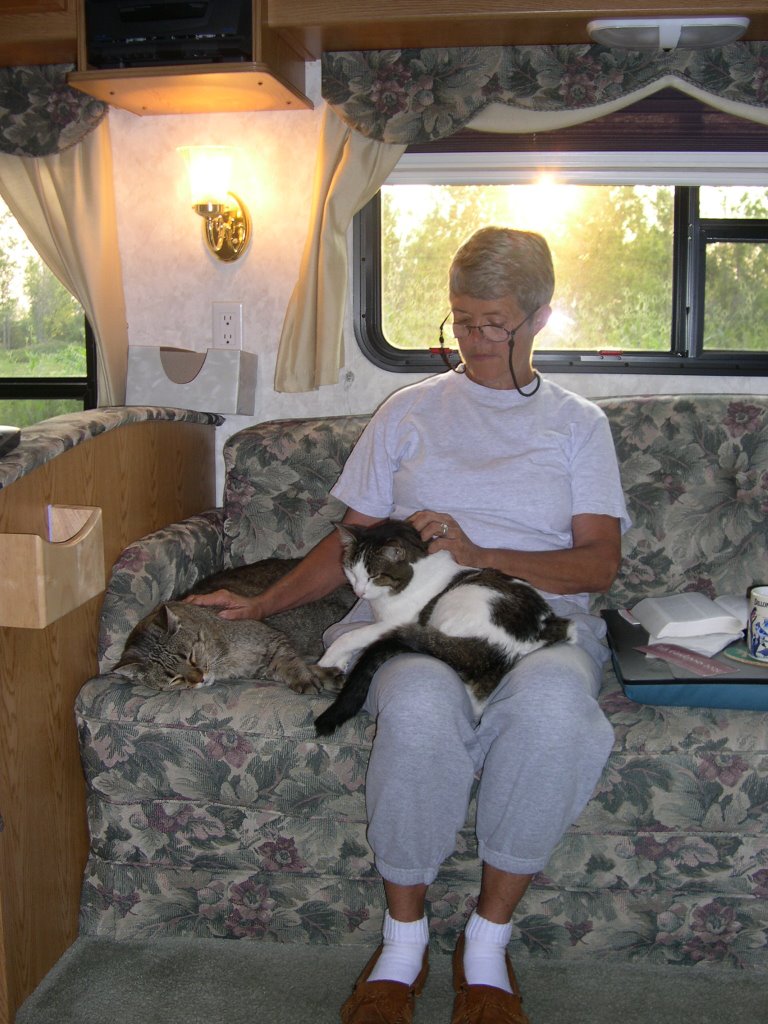
We read recently that cats don’t have owners, they have staff. We travel with two aging cats—ages 13 and 14—and decided that was an apt description of the situation. They are each on separate prescription cat foods, but want to eat the food prescribed for the other cat. Therefore, we don’t leave their food out and the staff must respond to the meows by putting out first one bowl of food, then another.

About 3 or 4 am, either PC or Partner decides it is time for breakfast. They act on that by climbing on John in bed or meowing. If I am aware of their actions, I put them both out of the bedroom and close the door. Then, sometime about 5:30 am, if no one is up, PC begins meowing. John doesn’t hear it, but I nudge him and say “your furry friends are asking for service.”

Partner really enjoys the outdoors and doesn’t hesitate to meow and tell us he wants out. If the weather is decent and we aren’t about to leave, one of his staff puts on his halter and attaches a leash and walks around with him.

We’ve found it is easier to cope with the meow demands when we realize we are staff, not owners.

Getting settled in Arkansas


Our campsite at Gulpha Gorge Campground in Hot Springs National Park is great—large, lovely green lawn, open space for over 100 feet to the small cabin where the Artist in Residence stays and another 150 or so feet to the next volunteer RV space. We have full hook-ups, birds singing in the morning. The dogwoods were beautiful when we arrived. Within one minute we have Hot Springs Mountain to hike—we’ve already been on two great hikes there. And the campground is large enough that we only need to make 4½ laps to run our three miles.

Our first week in the state was spent at Corps of Engineer Parks--$9.50 and $7 per night with our Golden Age Pass. Our son Eric and his children—Kylie, age 7 and John, age 21 months--drove out for his spring vacation and we toured the area, staying at Brady Mountain Corps park on Ouachita Lake. Despite some rain and a stomach flu that made the rounds of our family, we had fun: touring Hot Springs National Park, fishing, horseback riding, campfires and hikes.

We will be volunteering at Hot Springs National Park for April and May. They give us a full-hookup site, we work three days a week in the Visitor Center. One of us will staff the bookstore each shift, the other will be on the Visitor Information Desk. It is such an interesting place. The park protects 47 hot springs and provides the water free to the people of the United States to drink and bathe in. Established in 1832 as a reservation to protect the springs, it is celebrating its 175th anniversary this month. Once, a million baths a year were given in water from the springs. Now the number is only 100,000. The park is amazing to most visitors who don’t understand what it is all about. It also includes several mountains surrounding the springs where you instantly feel you have left the metropolitan area of 70,000+ and can hike in relative isolation.

This week most of the US has seen record low temperatures. Here a record low of 28 for April 8 was set and the daytime temperatures are 20 degrees below normal. Thankfully, we still have most of our winter clothes. One night this week we had thunderstorms and wind, ending the beautiful dogwood displays. But wildflowers are beginning to bloom in the woods and along the roadways. It is beautiful.

Thursday, March 22, 2007

New Orlenas--Post Katrina

We’ve never seen New Orleans, except in movies and news coverage of Mardi gras. And then there was Hurricane Katrina. We expected to see the destruction that hit the 9th Ward and St. Bernard Parish.

As we drove in, we did see that. FEMA trailers in the front yards of damaged houses, blue tarps covering damaged roofs and walls. That is what we had seen on the news and it still exists.

In our highly rated KOA in Kenner/River Ridge, near the Mississippi River, nearly two-thirds of the units were FEMA trailers—with steel bands tying them down to the concrete, cinder blocks supporting them instead of metal leveling devices, pvc sewer lines and metal stairways. This is 18 months after the hurricane.

We hear periodically about conditions in New Orleans on the national news. Monday night at least 10 minutes of the local New Orleans news concerned Katrina reconstruction and deadlines for removal of FEMA trailers from Jefferson Parish.

But the French Quarter is different. The trolleys operate. Bourbon and Canal and Decatur Streets are alive and serving locals and tourists. There was a huge convention at the Marriott and I walked down the street finishing my beer from lunch—it was in the obligatory plastic cup. Life seemed normal. And we saw French Quarter balconies and St. Charles Avenue trees decked out with Mardi gras beads.

We can’t speak to how far the city has come, but it still has a long way to go and it is better than we expected or imagined.

When in need

Most of the time, RVers want their privacy and respect the privacy of others. When we encounter our neighbors, we say hi and may ask where they are from or where they are headed. If it looks like someone is new to this activity and needs some help, we might go out and offer some advice. But when your yard if only six feet wide and your patio is fully visible in the next RV’s dining room, it is important to keep some distance.

Sometimes, though, an event occurs that breaks down those privacy barriers. Sunday we were eating our steaks in the trailer when a woman came to our front door and asked, “Is anyone in there? Are you home?” I went to the door as I said, “Yes, we’re here.” She told me a woman across the driveway had fallen and she wasn’t able to help her get up.

John quickly went out with her and told me to bring the cell phone. We crossed the drive to find a woman, probably in her 70s, lying on the ground at the base of the steps into her RV. She was confused and unable to sit up. John talked to her. The woman who had summoned us asked her if she was diabetic. She said she was, and the first woman said she was, too, and they discussed her blood sugar levels, medication and food intake.

I got a glass of orange juice for the fallen woman. After John ascertained that she didn’t feel she had hurt herself, she thought she had just fainted, we helped her sit up. By then the husband of the woman who had found her on the ground and a man from another trailer also had gathered. The woman who fell used her own cell phone to call her husband. We helped her up into a lawn chair. And then we stayed with her till her husband returned.

This incident broke down our privacy barriers. The next morning the woman who had found the fallen woman came out to talk to John before they left for their day’s activities. And the man from the neighboring trailer came over to see if we knew how the woman was doing. We discussed how important it is to help each other out when needed.

What we saw was that we need our privacy. But we also aren’t alone and others are there to help when someone needs it. That gives us a sense of security.

Texas and Louisiana

“Dorothy, we’re not in Kansas any more” is our response to new surroundings. We’ve sure found new surroundings in Louisiana as we visit for the first time. We see azaleas blooming in the wild and in most yards here in Lafayette. It’s green—meaning spring has arrived. And the accents are quite distinctive.

We toured the Tabasco bottling plant on Avery Island—who would have thought the chili mash had to ferment for three years before the hot sauce in that little bottle could be made? Mr. McIlhenny was quite a Renaissance man, with interests in hot sauce, the snowy egret, and cultivating camellias, among other things.

The Jungle Gardens on Avery Island, laid out by McIlhenny, were amazing. There we saw small alligators living in the wild, turtles, a Buddha in a temple, an oak tree used as a survey marker almost 200 years ago and still growing. And there are azaleas, wisteria, camellias, bamboo and holly growing in abundance. Another feature was Bird Island, a breeding place for snowy egrets for nearly a century. The once nearly extinct birds are flourishing and amazing to watch in such large numbers.

We also went on a swamp tour on the Atchafalaya Basin south of Lafayette. There we saw cypress trees and houseboats and got a little feel for living in bayou country. For two days we also sampled local foods—ettouffee, gumbo, deep-fried catfish, alligator, crawfish, oysters and shrimp, boudain and sausage. We think we will pass the next time such things are offered. We are pretty set in our eating habits. But we did give them a try.

Our last day in Lafayette, we drove to New Iberia on Bayou Teche to tour a plantation owner’s home that was built in the 1830s. We have spent a lot of time in two Colorado Historical Association historic houses in Trinidad and know that much of the furniture and appointments are not really associated with the house. But Shadows on the Teche is operated by the National Trust for Historic Preservation and about 80 percent of the furnishings actually belonged to the Weeks family that built the house. We had a great tour, given by a teenage boy, Matthew, who really knew his stuff, and the house is wonderfully maintained and fascinating. The gardens and the views from the house are wonderful.

We spent two nights in Beaumont, Texas, before coming to Lafayette, Louisiana. There it rained for hours at a time over a 24-hour period. No severe storms, but in Houston, about 90 miles southwest, there was flooding. We were glad to be in Beaumont.

Beaumont was not a planned stop. But Tuesday was a day for changed plans. We were headed out for a run. On the way, we stopped at the RV park office to find a local park to run in and to sign up for another day in Houston. We were told we could only stay if we moved to another site—there was a rodeo in town and our site was reserved for the next 10 days. Even though we planned to visit the Museum of Funeral Service in the afternoon, we decided it wasn’t worth spending an hour moving the trailer first.

So, instead of going for a run, we returned to the trailer, prepared to leave and were on the road by 9:45 am. We called the Louisiana state park we were planning to stay in and they had vacancies. But as we drove east on I-10, I suggested we could stay in Beaumont, Texas. After looking in the Trailer Life Directory, I called the Gulf Coast RV Resort and made reservations. As luck would have it, they accept Passport America, so we would be staying two nights for $30, instead of one night in Houston for $25.50.

Wednesday we went running in the Beaumont RV park. We dodged and ran through puddles, but it was good to get the exercise. This was our second run at sea level and it’s great. I can run for 3 miles and not be out of breath—tired, maybe, but not out of breath. There is so much oxygen.

Tuesday, March 06, 2007

On the Road Again

The day we took to the road again was long and a lot of work. We weren’t sure if we would leave that day or not. All day Monday we had been busy picking up the trailer from RV Interiors, then waiting at Camping World while a Shur-flo fan was installed. Tuesday morning we did our workout, went for a run, and then said, yes, we will leave today. That meant spending nearly three hours loading personal belongings and food for the seven-month trip, then driving 150 miles to Lathrop State Park in Walsenburg, Colorado.

We have camped at Lathrop numerous times, but never this early in the year. Other than the camp host, we were the only unit in the campground. It was cold and windy, but we were relatively snug and warm inside, once the furnace worked for a while. Because of the cold, we didn’t de-winterize. We had three gallon jugs of water—one to flush the toilet, one for washing and cooking, one for drinking water. We would have liked to go on after one night, but we knew that the Texas Panhandle had high wind and wildfire warnings and we didn’t want to face that. So we settled in the three nights. Part of the good news was that this year John turned 64 and is eligible for an Aspen Leaf Pass to the Colorado State Parks. That means we get half-price camping Sunday through Thursday, so we were only paying $9 a night. The savings for three nights paid for the cost of the pass.

By day two at Lathrop, we had water dripping out from the covering on the trailer underbody. We thought that must mean the holding tanks were leaking. After talking to Montana dealers in Loveland, Colorado, and Amarillo, Texas, we decided to go on to Texas to have the problem fixed.

The overnight low had been 14 degrees Tuesday to Wednesday, 19 Wednesday to Thursday, and 20 Thursday to Friday. When we broke camp on Friday, the slides stuck three times before all the ice fell off. But that morning we left early and drove to Amarillo, stopping at Jack Sisemore RV on our way into town. They couldn’t look at the RV till Monday, but said we should go ahead and de-winterize. After setting up at the Amarillo KOA, that is what we did. And for three days, we saw no dripping. Whatever the problem, it wasn’t our water or sewer system, so we left on Monday for points south.

This is the third spring we have come to Texas. The last two years we volunteered in state parks here. This year we are passing through on our way to volunteering at Hot Springs National Park in Arkansas. We know we are in Texas because we’ve seen cotton fields, long-horned cattle, oil rigs and jack rabbits. We’ve also had our first meal of bar-b-cue.

RV Makeover Complete


It’s wonderful! We love the colors we chose for the carpet, vinyl and day/night shades. And the workmanship of the installation is great. The color of the carpet, vinyl and sofa pick up the light background of the floral print already in the RV. And the new, lighter colors really brighten up the area. It seems larger inside the living/dining area. The previous green carpet, floral couch and wood flooring were darker. The new sofa is also much more comfortable.

We had been searching the yellow pages and the internet for someone to do this work. When we met Bob and Donna of RV Interiors by Donna at the RV show, we were excited to know it could be done before we left on our travels. But, since we didn’t know them, we didn’t know how it would turn out. And we weren’t sure about our choice of materials. But when we walked inside the day we picked up the trailer, we knew everything had turned out well. We are so pleased.

We loved this trailer from the minute we walked into it. We don’t understand why it had sat in the lot for months and no one bought it. But that meant we got a really good deal in 2003. We still love it. We haven’t seen another unit we like better—meaning we have never been tempted to buy something new. But it was getting a bit shabby after five to seven months of use each year. And the sofa was sagging. Now it is renewed and beautiful. We can set out for seven months in a fresh, attractive 5th wheel trailer.

Thursday, February 15, 2007

RV Makeover

This year we have taken a step in a new direction with our 5th-wheel trailer. Since we bought it in July 2003, we’ve taken it on an extended trip through New Mexico and Texas, on a five-month trip through Canada to Alaska in 2004, and lived in it as we volunteered in Texas and Utah for 6 ½ months in 2005. In 2006, we spent nearly 6 months in the trailer, volunteering in Texas and traveling to the Maritime Provinces of Canada. Our home on the road is getting a little shoddy and bedraggled inside. But we’ve never seen another model we like better. So this year we decided it needed a little work.

In the years we have owned the RV, John has added shelves beside the front door and built them into cabinets, we made removable plexiglass panels for the front door, opening that view of the outside while keeping out the heat and cold. We cut swimming noodles to protect our heads from the slide corners and installed shelves in the basement. But now we wanted to do something even bigger—redecorate the living/dining room.

In January, we attended an RV show at the Colorado Convention Center and discovered RV Interiors by Donna, a local company that does RV makeovers. After discussion with the folks there, we arranged to get a new sofa, picked out new carpet and vinyl for the living/dining area, and bought new day/night shades. Obviously, many RVers would do the installation work themselves, but we aren’t interested. We’ll let others do the work and we will enjoy the results.

Monday we will take it to the shop to be redone. Then it’s on to Camping World for a new high-tech ceiling/exhaust fan for the kitchen before we begin our travels about March 1. It will be exciting to enjoy our newly decorated home on wheels.

Friday, December 29, 2006

Planning for Next Year


Planning is a quarter to a half of the fun of our life style. Even before we returned to the Colorado house, we had been talking about what we would do in 2007. We knew for sure we wanted to spend most of our time earning a free RV site by volunteering, to make up for how much we spent traveling this year. Our first thoughts were to go to Texas for two months in the spring, and then spend a little time in Colorado, visiting state parks we haven’t camped in for years, before going to either Acadia National Park in September and October, or perhaps volunteering in a New England state park.

We have always found openings immediately in Texas, but after contacting Fort Davis, Inks Lake, Guadalupe River, Cedar Hill, Balmoreah and Nails Creek, we were unable to line up anything for March and April. We also contacted New Mexico State Parks and Utah State Parks. New Mexico uses mainly long-term (three-month or longer) volunteers in their southern parks. We weren’t interested in that. So we went onto the Volunteer.gov web site and found that Hot Springs National Park in Arkansas was looking for volunteers. We sent an on-line application and were soon contacted by a Ranger who conducted a preliminary interview by phone. Within several weeks we arranged to spend April and May working on the information desk and the bookstore, putting in three eight-hour days a week. We have spent very little time in Arkansas, and so we are excited about spending quality time exploring that state on our days off.

While working out the details with Hot Springs, we received a call from a Ranger at Kodachrome State Park in southern Utah. We arranged to spend six weeks there in August and September. Kodachrome is just south of Bryce Canyon National Park, where we spent three great months in 2005. We look forward to more time in Utah and having time to hike Bryce Canyon again. Utah is a beautiful state.

So now we know where we will volunteer in 2007. The rest of the planning will involve where to visit during March on our way to Arkansas and where to visit as we travel from Arkansas to Utah. We do know that our son, Eric, and his children, will meet us in Arkansas in late March during his spring break and we will spend time with them before beginning our work at Hot Springs.

Planning is such fun. It allows us to consider a host of options with different opportunities to experience this beautiful and interesting country we so enjoy traveling through.

Monday, October 02, 2006

Back to Colorado

It doesn't matter what the signs at the border say. We know we are back home in Colorado when we see the mountains. Today, just before we reached Limon, we could look into the haze and clouds on the horizon and see a mountain--Pikes Peak. That means we are home.
Every year we come to the time when the travels are ending and we're going back to the house in Colorado. Years ago, when that time came at the end of one month's travel, we were very sad. Today, when we are out six to seven months a year, we're ready, even glad. We will be closer to family, able to do many of the things we can't do in the RV--internet genealogy research, being part of a local church, volunteering at the Colorado Historical Society, model railroading, building doll houses, sewing, putting dishes in the dishwasher.
When it's time to head for Colorado, our travels have a different focus. We don't explore the local community or spend as much time appreciating nature. This year we stayed at the same campground twice--Shady Lakes Corps of Engineers park on the Mississippi River. When we were there in June, we celebrated watching barges go up and down the river and spent time watching the birds. In late September, we did work on the RV and shopped in town for necessities.
We've done better this year than most. The Canadian Maritimes are 2000+ miles from Colorado. We didn't want to race home like we have often done in the past. In 1997 we drove from Buffalo, New York, and Niagra Falls to the house in three days. This year we planned activities to make the trip more interesting and more relaxing. In New York we stayed at a beautiful state park, Chenango Valley, and did some genealogy research in Norwich, where my great-grandparents lived. Then we arranged to meet cousins in Indiana. When we learned about an RV rally for owners of Montana 5th wheels in Indiana, we quickly signed up and spent three days learning a lot of new information about our trailer.
After spending two days at the Mississippi River park, we were headed west on I-80 to Lincoln, Nebraska, till we learned the RV park there had been booked solid for weeks because of a University of Nebraska football game. We ended up driving to DesMoines, then south to Eagleville, Missouri (skipping Kansas City because of a NASCAR race), with later stops at Salina, Kansas, and Limon, Colorado, along I-70, instead of taking I-80, as planned. All of which means we're taking 15 days from the Niagara Falls area to our house, not three--a much better way to travel, if you have the time.
Now the question is--when will we start traveling next year?

Saturday, September 23, 2006

New England

Home--the word has many meanings. Our RV is home when we are on the road and it welcomes us after a day of sightseeing or visiting. Our house is home when we are in Colorado. And the United States is home. After two months in Canada, we are very aware of being back home. We are again using our own language, familiar units of measurement, the American dollar, our prices for gasoline and food, our television with news that really affects us. When we drove off the ferry that brought us from Yarmouth, Nova Scotia, to Bar Harbor, Maine, we were very glad to be back home.
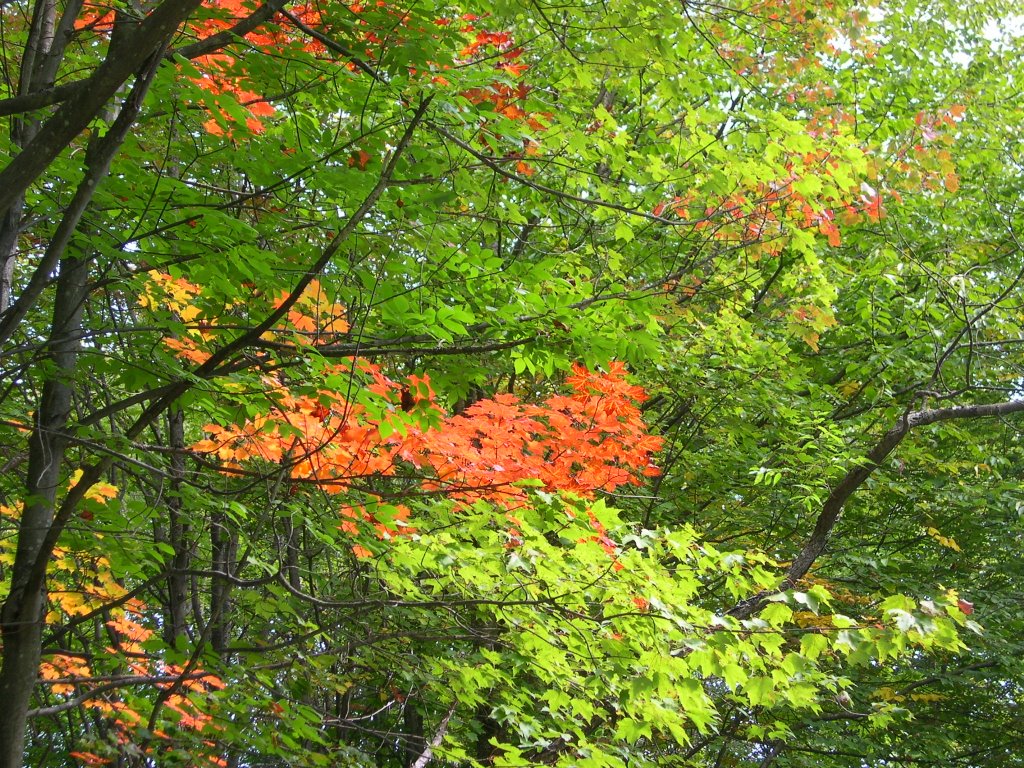
This is our first time in New England. It is so beautiful. In many ways the landscape looks like Nova Scotia and New Brunswick, which isn’t surprising, since they are all part of the same land mass. But Maine, New Hampshire and Vermont have more mountains and more granite cliffs. And the many broadleaf trees are beginning to turn magnificent shades of red, orange and yellow. The colors are just small patches here and there, but they are dramatic.
Our Cat Ferry from Yarmouth arrived on Mount Desert Island, Maine, about 7:30 pm. Our RV park was about three miles away. Still, after going though customs and signing in, we were setting up in the dark. It’s not easy to see the bubbles in the levels to check how we are doing. But everything worked out fine. That isn’t our favorite way to get settled, however. Maybe we will never have to do it again. We are usually in place no later that 2 PM.
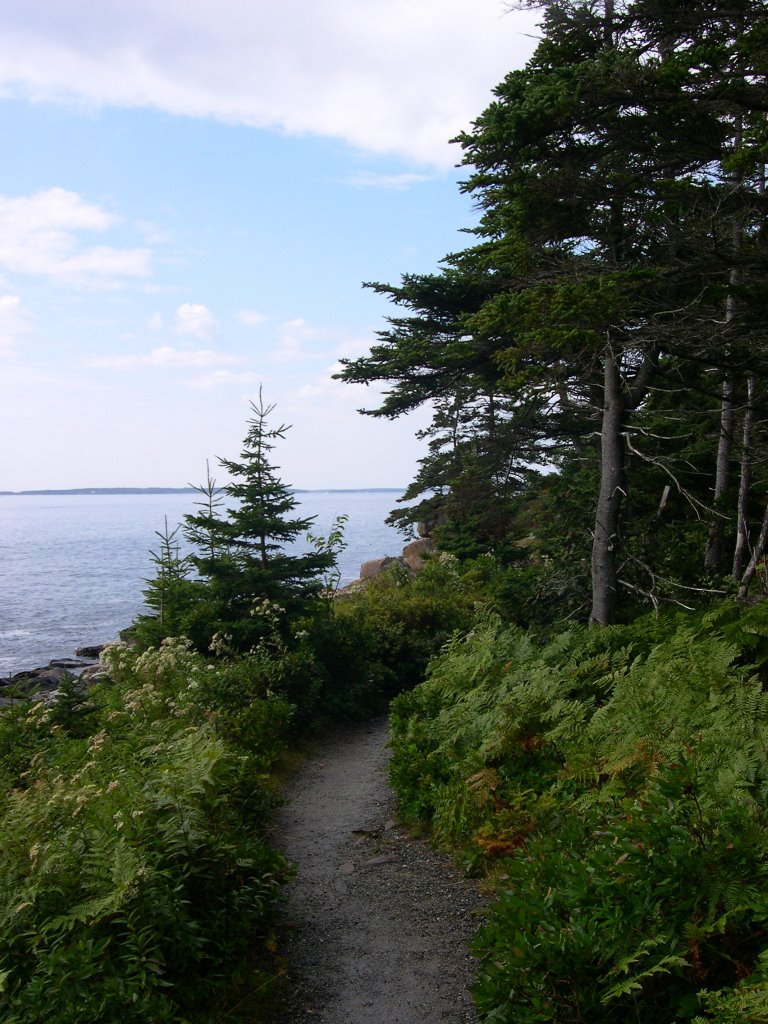
Mount Desert Island is where Bar Harbor and Acadia National Park are located. The park is beautiful, wonderful. We were so impressed after just a few hours here, we applied to be park volunteers next fall. We thought we were tired of sightseeing, but the park has so much to offer, we couldn’t wait to explore it. We drove the loop road, hiked the ocean trail, and marveled at the fog and the clear views of lobster fishing boats while hiking. We drove up Cadillac Mountain, highest point along the Atlantic seacoast from Maine to Argentina. If we can’t come back as volunteers, we will visit again as tourists when we haven’t already been on the road for three months. What makes Acadia even more attractive is Bar Harbor, a town with numerous great restaurants, bookstores, shops of all kinds, and Wal-Mart 14 miles away.
We made a one-day visit to Freeport, Maine, home of LL Bean. Their store there is truly amazing—open 24 hours a day, with a mammoth camping and clothing store, a separate building for hunting and fishing, another for biking and boats, plus an outlet store. The camping store has the biggest selection of items we have every seen. The town also houses numerous other outlet stores.
It was on to New Hampshire, where we spent four days in the White Mountains. They may not be the Rockies, but they are beautiful. The White Mountains, part of the Appalachians, are much older mountains than the Rockies—more rounded from centuries of weathering. These are the first true mountain streams we have seen since leaving Colorado—clear water rushing over rocky stream beds.
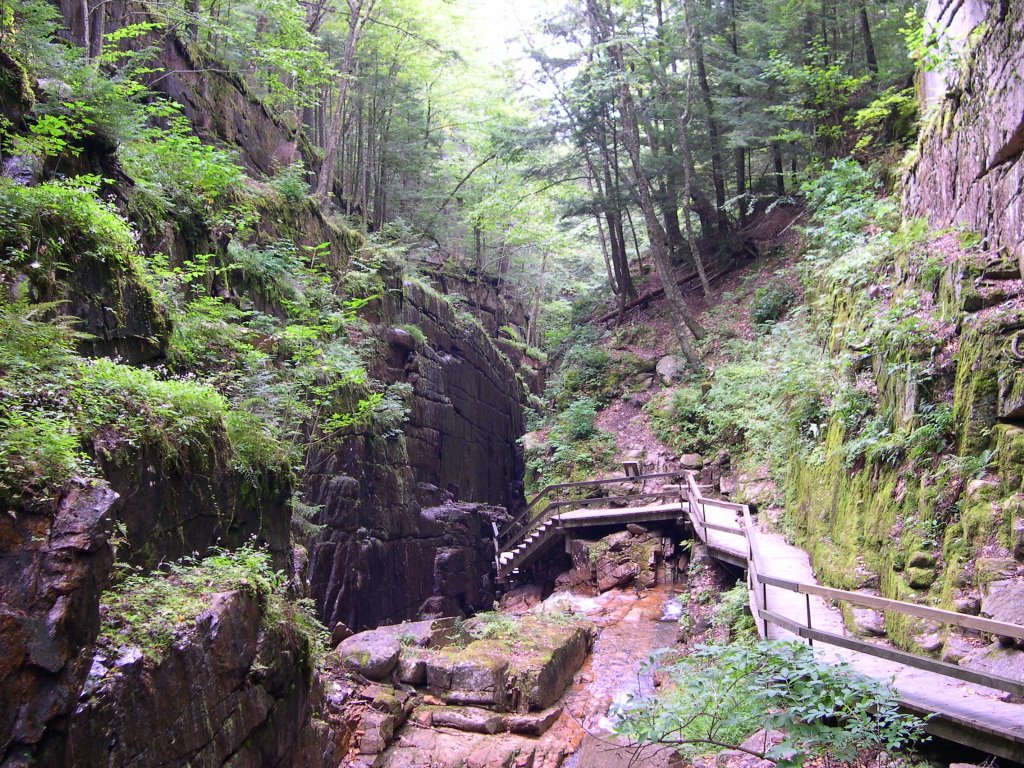
We hiked the trail at the Franconia Notch Flume—a narrow gorge with a rushing stream. Beautiful. The trail is wooden boardwalk to make it safe to walk along the steep walls of moss-covered rock. We had the area fairly much to ourselves on a cool, sunny day.
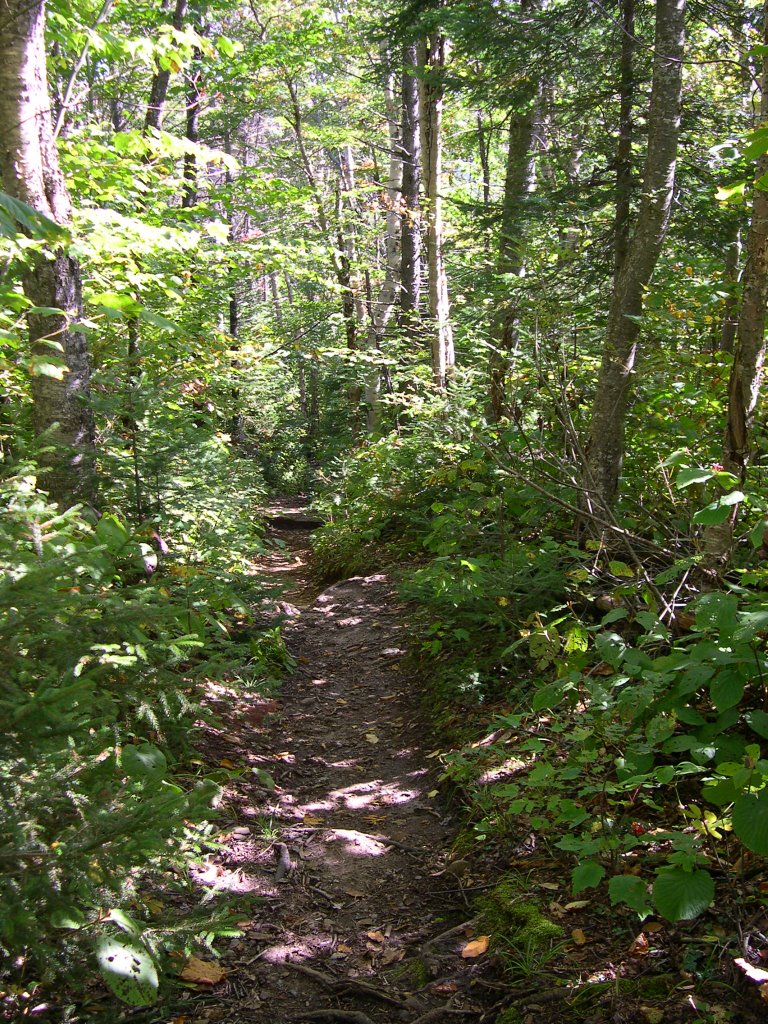
One day we hiked on the Hale Brook Trail toward Mt. Hale in the Zealand Wilderness. We are truly impressed with New Hampshire hikers. They put those of us who hike in the Rocky Mountains to shame. These trails go straight up the mountain—no switchbacks here. And the trail surface is full of rocks and tree roots.
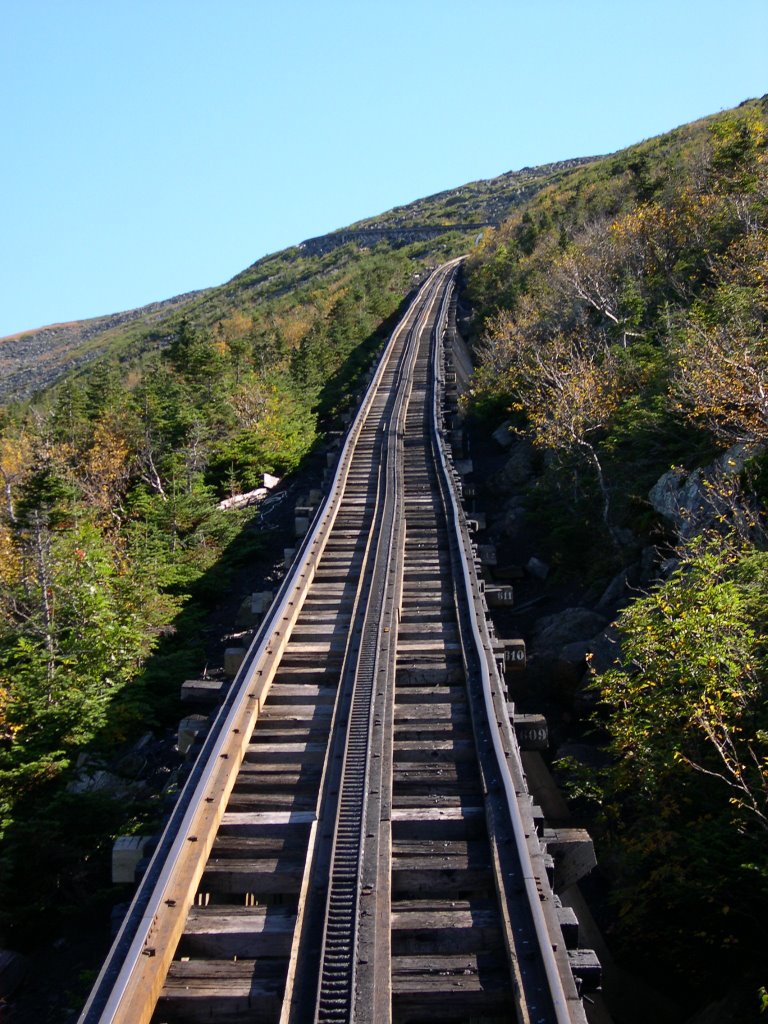
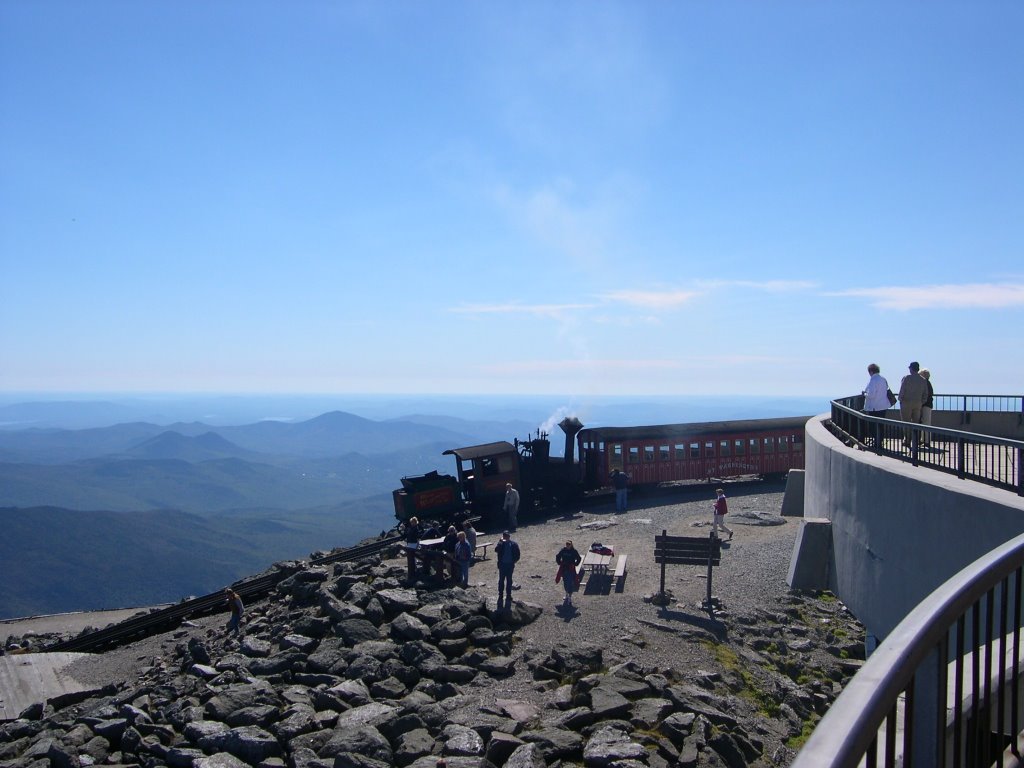
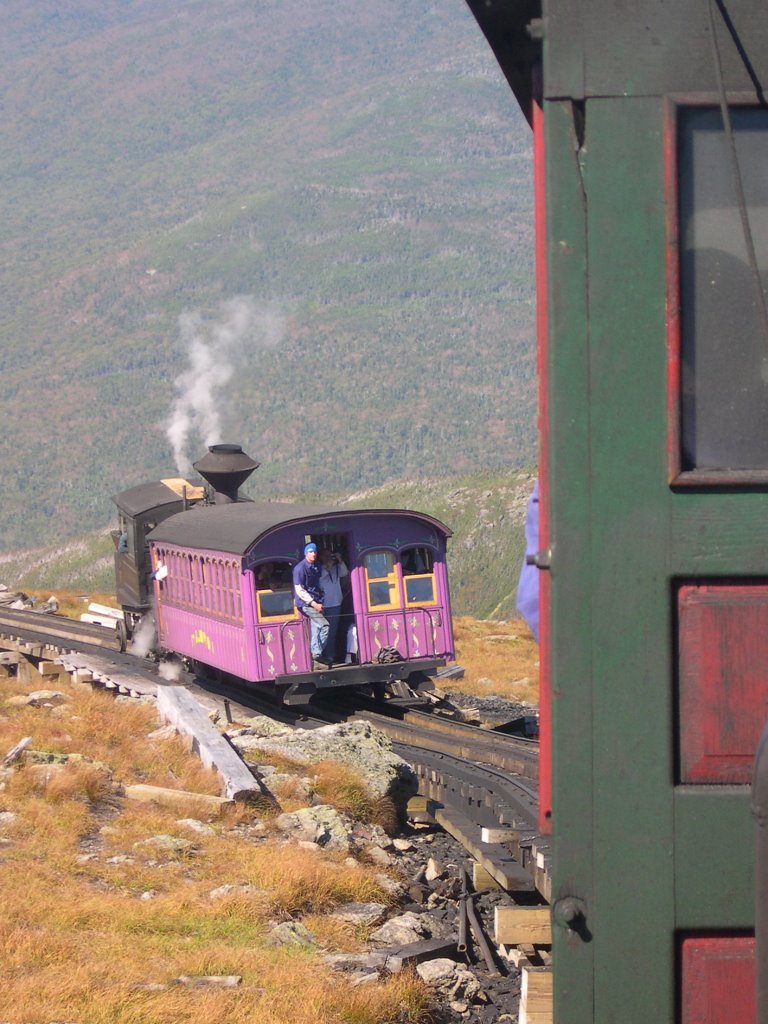
Another great day trip was riding the Mount Washington Cog Railroad. Mount Washington is 6288 ft high, highest on the east coast. Since 1859 the cog train has been climbing straight up the side of the mountain. It goes up an average grade of 25%--that means 25 feet uphill for every 100 feet traveled. The steepest part—Jacob’s Ladder—is a 37 ½ foot grade. That means someone at one end of the train car is 14 feet higher up the mountain than someone at the other end. The small engine used one ton of coal each trip up the hill and 1000 gallons of water. In September seven trips a day are made, with each train holding 60 passengers. Most trips were nearly full.
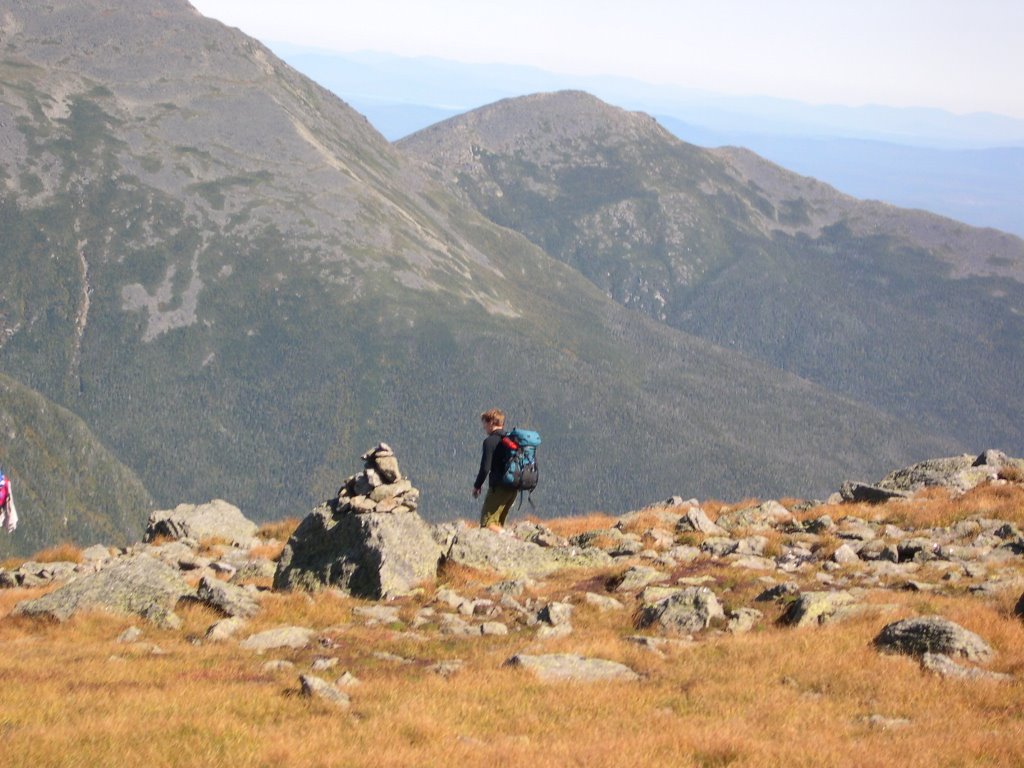
At the mountain top you can see parts of Maine, Canada, New Hampshire and Vermont, sometimes getting a glimpse of the ocean about 200 miles away. Often, however, the mountain top is shrouded in cloud. Mt. Washington, on yearly average, experiences days of hurricane force wind two out of every three days and has some of the worst weather . The Appalachian Trail goes through the White Mountains and crosses the summit of Mount Washington. The trail has numerous large stone cairns (rock piles) to guide hikers during snow and fog.
From New Hampshire, we traveled south along the eastern side of Vermont, then across the southern part of the state on Vermont 7. What a pretty state, heavily wooded and very few people driving on the roads--the state has fewer people than all others except Wyoming. Most of the people we met were very friendly: clerks and cashiers in the stores and the seasonal wokers at Molly Stark State Park. We spent four days there relaxing, getting our exericse on the trail to the Mt. Olga fire lookout tower, having the truck serviced, doing laundry and shopping for groceries.
Each day we spent in New England, a few more leaves turned red, orange or yellow. We watched them drift quietly to the ground. It really looks like fall and it is beautiful.
We definitely want to return to this part of the country, hopefully spending time there in late September and early October when we can really see the fall colors.

Thursday, August 31, 2006

Nova Scotia


Nova Scotia—when planning to come to the Maritime Provinces of Canada, this is what we were looking for: beautiful sea coasts, incredibly blue oceans, hiking trails, cool ocean breezes, wildlife.

We spent several days relaxing near Truro, NS, where we saw the Tidal Bore. That is apparently a common term, but we had never heard it till we came here. It describes a wave of water going upstream in a river when the tide comes in. Because the of the shape of the Bay of Fundy, which is between Nova Scotia and the eastern shores of New Brunswick and Maine, the tides are very high—15-20 feet in some places. At Truro, we watched this wave come up and the tide rose somewhere between six and 10 feet in about 30 minutes.

We have enjoyed eating locally-grown produce, especially corn on the cob, blueberries and potatoes. Blueberries are always expensive in Colorado, but here in season they are quite reasonable and we have bought them several times. They even sold them in the campground store at Baddeck.

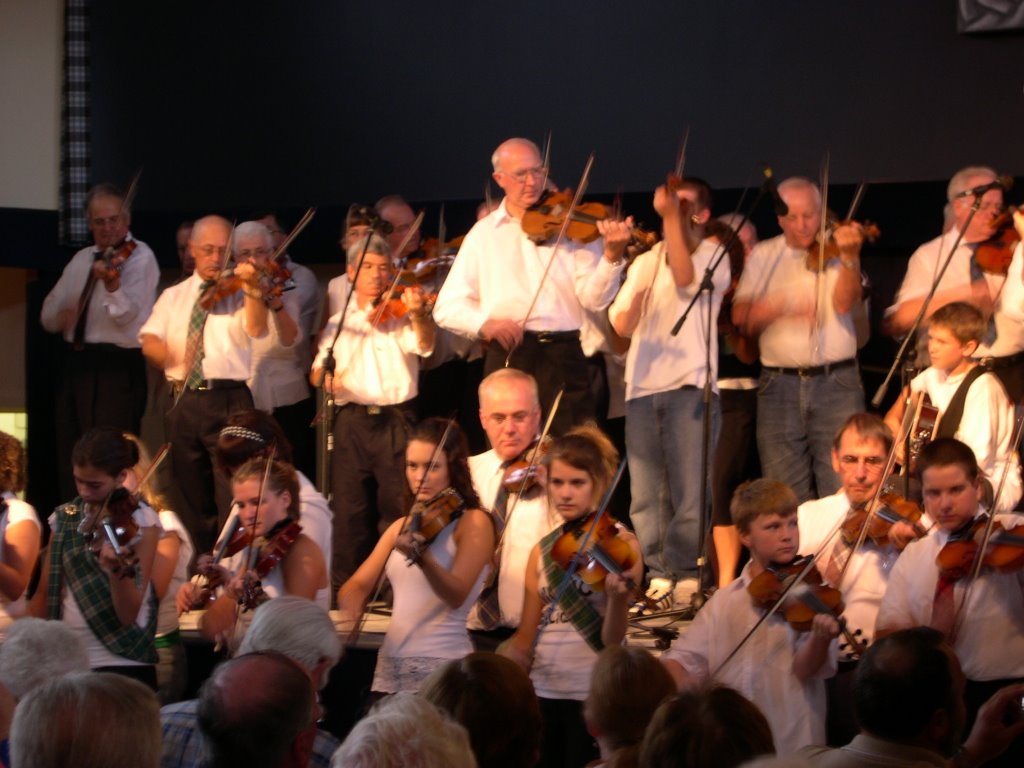
We spent a week at the Cabot Trail Campground in Baddeck on Cape Breton Island, which makes up the northeast part of Nova Scotia. We used it as a base to explore the Cabot Trail. In 1497 John Cabot of England discovered North America as he searched for a route to India. Tradition says he touched land on the northern coast of Cape Breton. Most of the island has a Scottish heritage. We attended a Fiddler Festival where we heard violins and guitars playing Celtic music. The festival was first organized to keep the Cape Breton tradition of fiddling alive and they can now bring together 200 fiddlers at one time. There is a Celtic College hear Baddeck where people come from all over to learn Celtic music and crafts and how to speak Gaelic. We have learned a Gaelic word, ceilidh (pronounced kay-lee), which means party or gathering. There are ceilidhs weekly in several communities around Cape Breton.

Bras d’Or Lake is a very large body of water in the center of Cape Breton. On the west shore of the lake near Baddeck we visited the Alexander Graham Bell Museum. Bell, who (if you remember your history) invented the telephone while living in New York, built a home on Lake Bras d’Or (pronounced bruh-door and meaning arm of gold in French) and lived and worked there for many years before his death. At the museum we learned a great deal about this amazing American inventor. His wife was deaf and he spent many years working to improve the lives of deaf persons. A hydrofoil boat and an airplane were among his inventions.

The first Europeans to settle here were the French, who built a fortress near the northeast corner of the island to protect from British invasion. Unfortunately, the two times the Louisbourg Fortress was attached by the British, it was from the landward side and both times the French were defeated—the last time in 1758. While eating lunch in a restaurant that served 18th century food at the living history restoration of the Louisbourg Fortress, we came to appreciate that we are able to travel the way we do. After ordering our lunch—heavy bread, split pea soup, and grilled cod, two women came in and sat at our table. At that point we had been on the road for 2½ months, 1½ in Canada. They were on a bus tour of the Maritime Provinces that lasted 8 days. They envied our ability to go where we wanted, when we wanted. Soon another couple also sat at our table. They had just completed 10 weeks in Newfoundland and Labrador, places we hadn’t had time to visit. We really connected with them and shared experiences. And the two women from the tour groups didn’t have a clue about our lifestyle. We caught our love of travel from my parents, who always traveled on organized tours. We know they thoroughly enjoyed their travels, but are grateful for our footloose and free way of doing things.

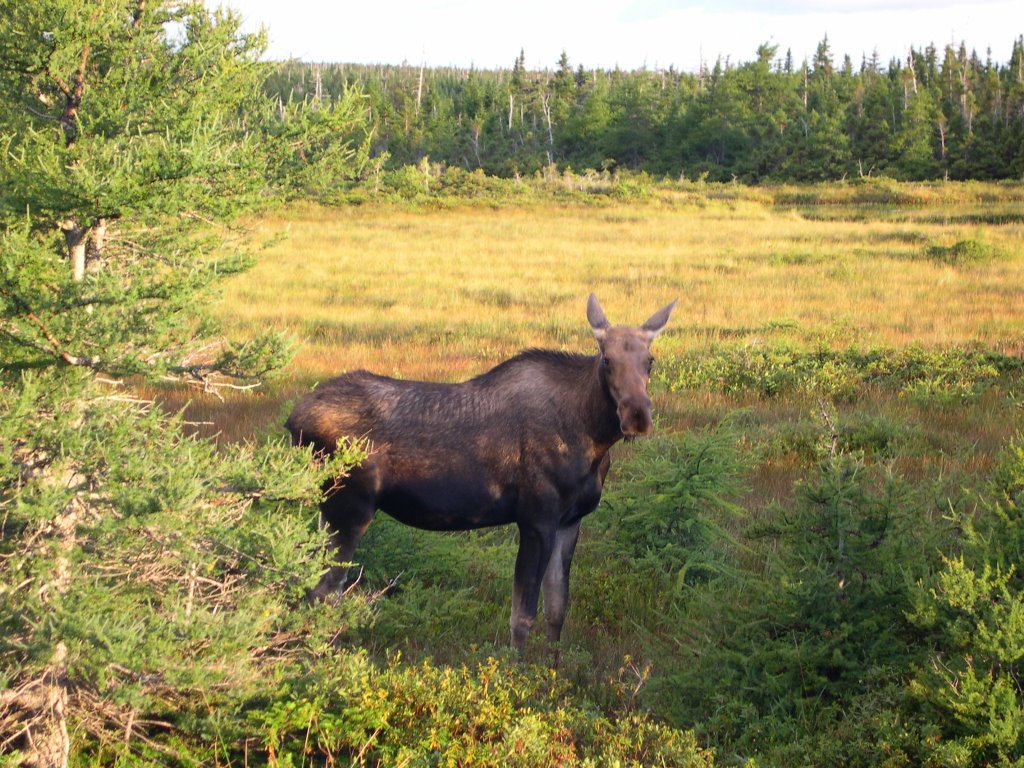
The coast of the island is dotted with isolated fishing villages, such as St. Margaret on the northern tip, and attractive harbors, like Pleasant Bay. After Baddeck we spent five nights in a campground in the Cape Breton Highlands National Park. The northern portion of the island has several mountains rising over 1200 feet from sea level, which reminded the Scottish settlers of the homeland. The scenery is spectacular and the wildlife wonderful. As we have driven across Canada, we have seen many signs warning us to be careful of the moose, but it wasn’t until Cape Breton that we actually saw them—11 in two days, plus four black bear. What a treat! Most of the sightings were early in the morning and we didn’t get good photos, but a few came out.

We have been able to make several hikes in Nova Scotia, mainly on Cape Breton. We often feel we could be hiking in the Colorado mountains, with hills, rocks, roots in the path and evergreen trees. But then we see the many different mushrooms and ferns and see the blue, blue ocean and hear the ocean waves crashing below and we know we aren’t in Colorado. This is a country with lots of moisture and therefore, lots of green. The mushrooms were especially prevalent and diverse as we hiked at Thomas Cove near the Bay of Fundy in early August. The Skyline Trail in Cape Breton Highlands National Park gave us views of moose, as well as a boardwalk over an open headland with a magnificent view of the ocean and nearby Cheticamp, a small fishing and tourist community just outside the park.

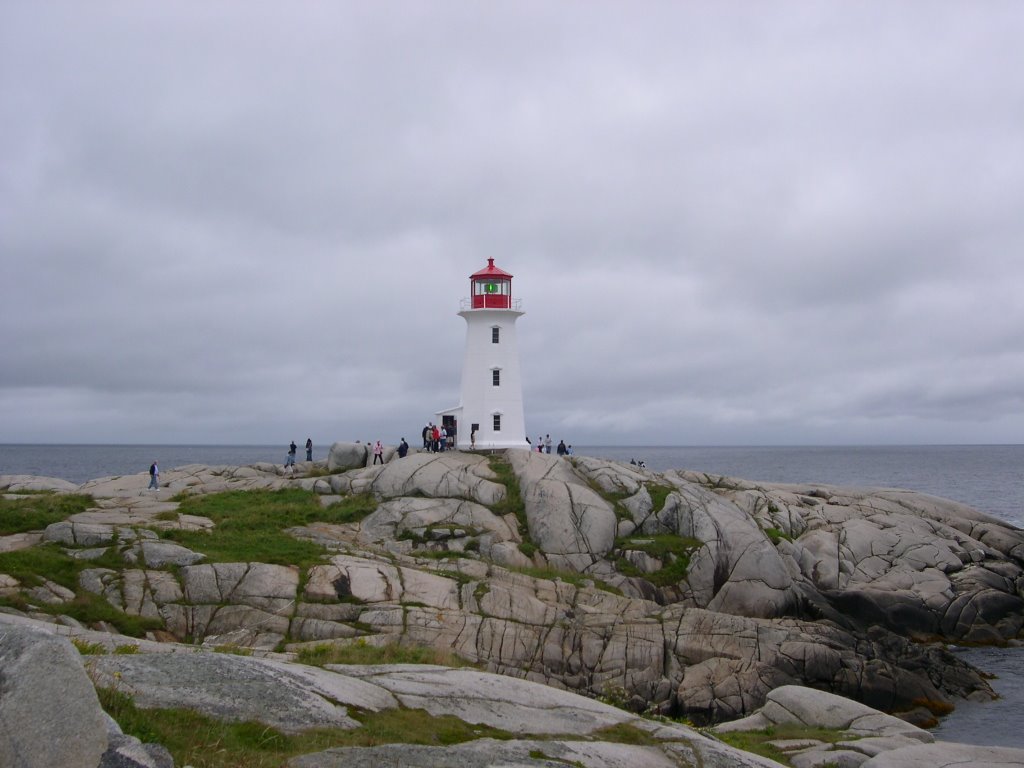
We are ending our time in Nova Scotia with a week on the southern shore of the country. Peggy’s Cove has a much photographed lighthouse on St. Margaret Bay near Halifax, the capital city of Nova Scotia. Our RV park overlooks the bay, which is beautiful.

Most of our travels in Canada have taken us to RV parks used almost exclusively by Canadians—either people on holiday or people who park their trailers there for the season and spend every weekend there. We are hearing that tourism is down considerably, in part at least due to high gas prices. Since coming to Nova Scotia we encountered tourists from the US, almost for the first time. It is interesting to see how we gravitate toward one another and share our experiences. We haven’t found most Canadians terrible friendly.

We also are learning about gas price regulation, which New Brunswick, Prince Edward Island and Nova Scotia have implemented this year. A month ago, we were paying $1.23 a liter for gas—that translates to $4.67 a gallon. By August 31, the price in Nova Scotia was down to $1.01 per liter and on the new we heard prices in Ontario were as low as $0.67 per liter. We know prices in the States are high, but not as high as here and we don’t experience such large price swings—56 cents per liter or $2.55 per gallon in two months. Whatever gas costs when we go back to the states, it will be less expensive than here.

On Labor Day we will take a ferry from Yarmouth, NS, to Bar Harbor, Maine, and begin our exploration of New England.

Wednesday, August 16, 2006

Prince Edward Island


Prince Edward Island is wonderful! The farm fields make you think of paintings by Grandma Moses. The roadsides are lined by flowers—both wildflowers and cultivated gardens. And right now the empty fields are filled with wildflowers and pink flowering clover. The wooden farmhouses come in various colors—white, cream, yellow, blue, gray, green.

There are great shops—we saw wonderful hand knit sweaters, some made of alpaca yarn, others fine sheep’s wool. Pottery and woodwork items are sold in small shops along the country roads.

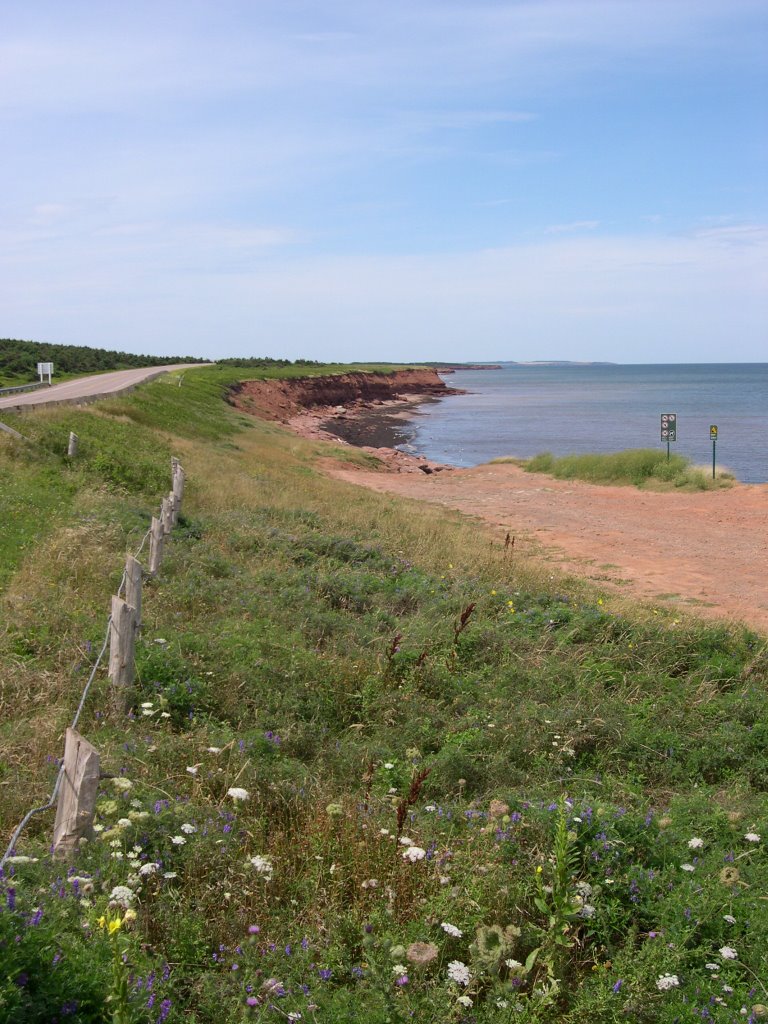
In addition, the coastline is lovely, with blue waves, red clay cliffs and narrow beaches. We drove along the coast in the Cavendish National Park on the way to Green Gables, the historic site dedicated to the writing of H. M. Montgomery, best known for her book Anne of Green Gables.

Montgomery and her creation, the red-haired Anne, are central to PEI. They have given the island its moment of fame and its identity. The book Anne of Green Gables was inspired by a house in the Cavendish area and published in 1908. Green Gables is part of the Cavendish National Park, as is the land where Montgomery grew up with her grandparents. It was interesting to visit. The site and the play that is put on there during summer months are central to PEI tourism.

The AAA tour guide to this part of Canada describes PEI as a quite, laid back place to visit and relax. We know why. In one day we saw much of what was new and different there; in a second day we visited Charlottetown, the capital. It is an interesting town (about 35,000 people) with a pretty harbor, lots of expensive pleasure boats, and some attractive old buildings. We also walked on the Confederation Trail, walking/biking trails along abandoned railroad rights of way.

We stayed in a busy destination campground. Many people place their trailers there for the summer and commute to work or come up on weekends. Their children have summer friends there and they celebrated Halloween the weekend of Aug. 12-13.

We did a lot of relaxing, like AA suggested. Not much else. We never should have planned so many nights there, since we had already had quiet time the previous weekend. Oh well, you live and learn. We got in some good walks. And the people were very friendly and helpful. We also ran into Bruce and Nancy, a couple who full-time that we had met previously in Ottawa and Quebec. We had some time to visit with them.

Unless you have traveled with animals, you can not imagine our trip to PEI from Nova Scotia. We drove about an hour to the ferry. PC and Partner ride in the truck when we are driving. Then we put them into the trailer while we waited for the ferry to arrive and for the 75-minute ride across the Northumberland Strait. As soon as possible after driving off the ferry, we stopped and moved the cats back into the truck for the hour-long drive to our RV park. We have a litter box in the truck. In the next 20 minutes we had one puke (Partner was apparently seasick), pee and two poops. Then, have you heard the term “hissy fit”? We had, but we had never fully experienced one till we were slowly driving down a bumpy road to the campground. Partner had had enough. He sat in my lap growling and hissing for 2-3 minutes. I think a hissy fit is the cat version of a temper tantrum.

Monday, August 07, 2006

New Brunswick

For several weeks now we have been vacationing with Canadians. We have been staying in RV parks and state parks where the locals spend their weekends, their holidays, or the summer season. Canadians who don’t have cottages buy an RV and park it somewhere they can stay for the summer or on weekends and holidays. We have encountered very few RVers who are traveling and seeing different parts of the country. Most of those in these parks live within a few miles (or kilometers), or at the most somewhere within the same province. We’ve known a few people in Colorado who owned cabins or condos, but we’ve never before experienced this kind of RV park. It gives us a real insight into a different lifestyle.

When we left Quebec we drove through an incredibly beautiful Matapedia valley where we saw lovely farms with lush green, long narrow fields bounded by bushes and dotted with large rolls of cut hay covered in white plastic. Then we followed the Matapedia River, obviously a mecca for fly-fishermen. There was even an Orvis shop on one town along the way.

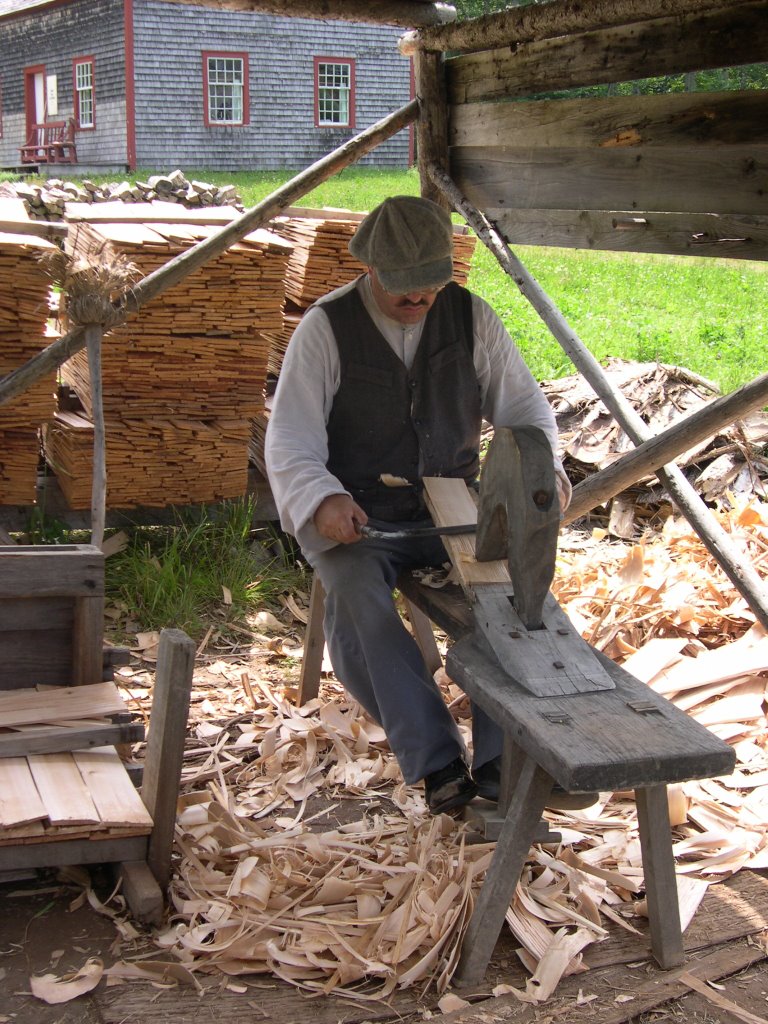
Our first stay was at Parc Malybel on the North Shore of New Brunswick. The province is officially bilingual (French and English) and so signs are in both languages and shop people speak both languages. It has been easier to function here. The highlight of our stay there, in the town of Beresford, was a visit to Village Acadien, a living history park where we could experience the lives of the French who first settled in this part of Canada in the 1600s. The French were defeated by the British twice in the 18th century and the Acadians--French settlers--were deported, forced to leave land and possessions behind. Eventually, after feelings cooled, they were able to come back and live quietly in the rural areas. Not till the 1900s was their language officially accepted. The village had staff demonstrating life at various periods over the centuries and we learned about growing hay in salt marshes, making shingles, tinsmithing and fishing. It was really well done and very interesting.

Canadians come to New Brunswick to spend time on the beaches. We have seen more women in two-piece bathing suits--all day long--who have no business wearing them except in the water. And men going all day in swim trunks or shorts with no shirt on, who would do us a favor by wearing one. We think swimsuits are for swimming, not living in. Oh well, what do we know?

The last few days in the province were filled with some of the problems of living on the road. At our RV park in Cap Pele, we had to move from one site to another in order to extend our stay for two extra days. The second site was right in front of the washrooms and other campers kept walking through it. Then we drove into Moncton to get the mail Eric had sent on to us. We planned to read it while the truck had its 3,000-mile servicing, which normally takes 30 minutes. This time we were at the dealership for 3 ½ hours. Who knows why? We didn't receive that much mail. So we read the local newspaper and got our exercise walking around the parking lot.

Then we drove to St. Martins, where we had reservations for five days. But when we arrived they said they had left a message on our cell phone that we could only stay two days. Our cell phone doesn't work well here and costs 30 cents a minutes, so we haven't checked messages. This is a holiday weekend--New Brunswick Day--and they are full.

The waters off the coast of New Brunswick are warm, "the warmest waters north of Virginia" they say. Ocean breezes make kite flying a natural occupation. Because we have been on the Northumberland Strait and then the Bay of Fundy, the waves have been gentle, the beachcombing uninteresting. But New Brunswick is beautiful and we've seen potatoes growing for the first time--at least that we are aware of. We also bought a cooked lobster, which we struggled to eat in the trailer. Hot lobster with lemon butter is good, but cold lobster without the proper tools to access the meat leaves us cold. We’d rather have a good streak, thank you.

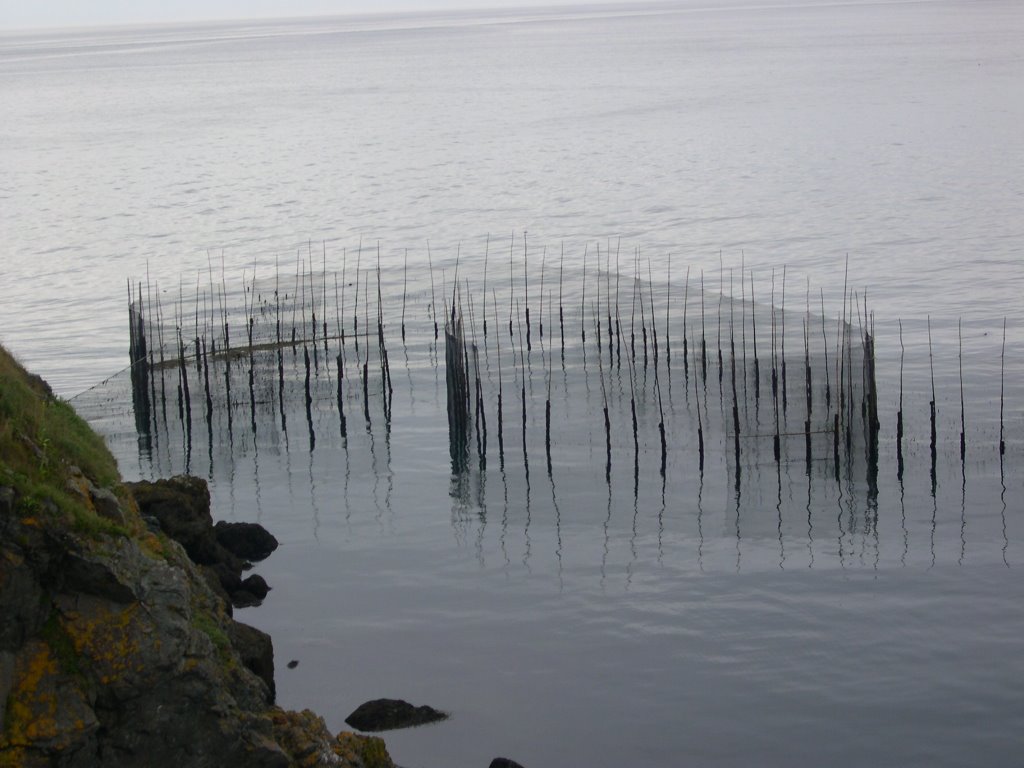
St. Martins is an old shipbuilding community on the Fundy Coast, north of St John’s. One day we drove about 80 miles to Blacks Harbor (the headquarters for fish smoking and herring export) and took the 9:30 am ferry to Grand Manan, the largest of Fundy Islands. The 90-minute ferry ride to the island is free. The return trip, round-trip fare is $10.20 per adult. On the island we hiked to the Swallowtail lighthouse on North Head, then back into town for lunch, then returned on the 1:30 ferry. It was a cool and cloudy day, but we enjoyed the ferry rides and the hike. The wooden lighthouse is called a salt shaker lighthouse. We saw seals around the herring weirs along the Pettes Cove shore and many porpoise during the day.

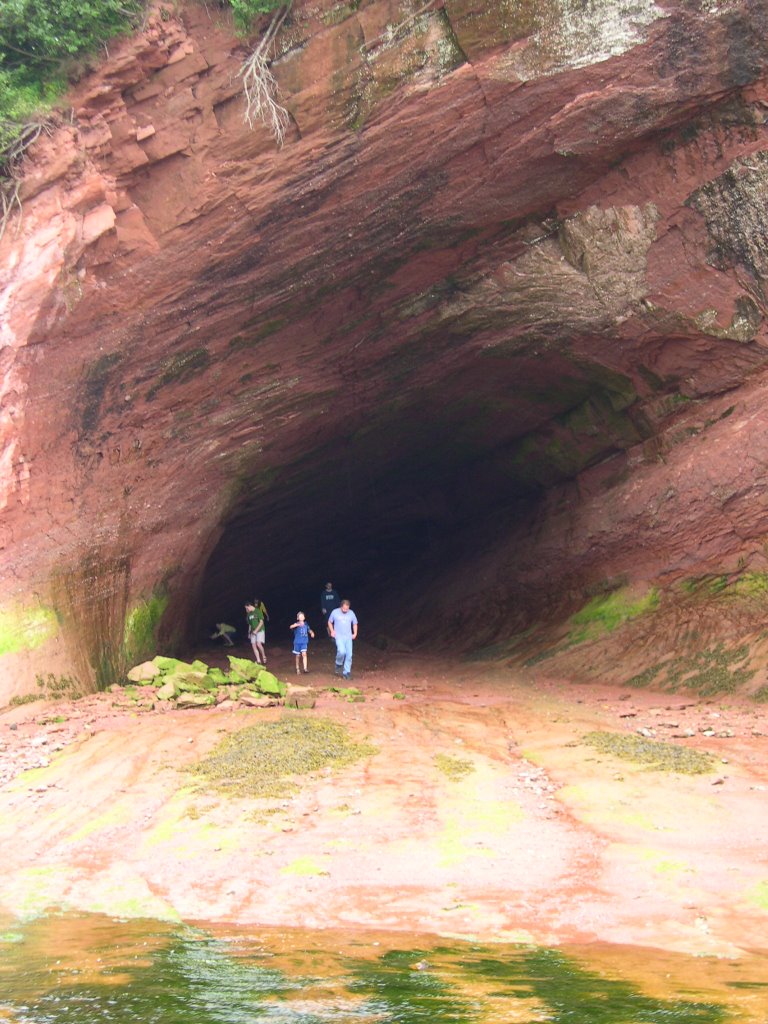
We also hiked the Fundy Coast Sentier trail for about 5 ½ miles. Another misty cloudy day, great for hiking. We felt we were in a rain forest. Then we went to sea caves, carved out by the extreme tides of the Bay of Fundy. Ontario and central Canada has been experiencing a heat wave. We’re glad to be on the Atlantic coast, where it’s been cool.

Liquor stores in Canada are operated by the provincial governments. The names changes from province to province. When we wanted to buy wine in Ontario, it is LCBO--Liquor Control Board of Ontario. In Quebec, SAQ. Don't know what that stands for. In New Brunswick, NB Alcool. What will it be in Nova Scotia? I wonder why anyone would want to buy wine or beer here. Beer is $10-$12 for a six-pack, plus bottle or can deposit. Boxed wine is $30-$40 for four liters.