During our visit to Gallup we checked out the Navajo Code Talkers exhibit in the Chamber of Commerce building downtown. It is always so inspiring to learn more about the work these men did during World War II.
This statue stands in front of the building.
In 1940, before Pearl Harbor, the Navajo Tribal Council approved a resolution stating "there exists no purer concentration of Americanism than among the First Americans" therefore "we resolve that the Navajo Indians stand ready as they did in 1918 to aid and defend our government."
Philip Johnston, son of missionary parents, who had spent many years among the Navajo, proposed to the US Marine Corps that the Navajo language be used as the basis for a combat code. The Marines recruited 29 young Navajos, most still in high school, to enlist and develop the code. Several Navajo Code Talkers received their initial combat experience at Guadalcanal and by 1942 they were so successful the recruitment of 200 more Navajos to serve as code talkers was approved. The code talkers were never a separate fighting command but were usually assigned in pairs to division headquarters, battalions, regiments and companies. During the entire 3 years of war in the Pacific there was never an instance when a message was misquoted or inaccurately deciphered.
President Ronald Reagan honored the Code Talkers and below is a section of the commendatory letter.
By the end of the war, there were more American Indian enlistments in proportion to their numbers than any other racial group in the country.
Showing posts with label World War II. Show all posts
Wednesday, May 02, 2018
Wednesday, May 24, 2017
War Memorials
With this post I will be caught up on the blog with what we have done in the past 10 days of so. It has been very busy and we also had 3 days with virtually no internet. I am glad to be up to date now.
The last time we were in Washington, D.C., was 1988. At that time we spent time at the Viet Nam Wall and John located the name of a classmate who had been killed in that war. Since then monuments have been built honoring those killed in World War II and the Korean War. This visit we explored both structures.
This is the entry to the World War II Memorial.
Brass reliefs like these line the curved walls as you enter the memorial, depicting scenes of military and civilians in both the Atlantic and Pacific theaters.
The central fountain is surrounded by pillars naming the 56 US states, territories and District of Columbia that united in a common cause in the war. Pavilions on both sides are inscribed with names of key battles of the war.
Lots of people were looking at the monument and enjoying this part of the National Mall.
A number of statements are carved into the walls of the monument, referring to civilian women who took over jobs left by men going to fight,
those who sent their sons off to war and kept the American factories working,
and the soldiers who gave their lives for our freedom.
I hope that this statement is forever true of who and what our country is and represents to the world.
The Korean War Memorial has a totally different feel.
One side of the wall with the names of those who died has background images of the same soldiers and it is reflective, almost like a mirror. This photo shoes how the modern monument visitors look like they are part of the group of soldiers.
Both of these monuments are moving and made us aware of how many people over the decades have given their lives to protect us and our country.
The last time we were in Washington, D.C., was 1988. At that time we spent time at the Viet Nam Wall and John located the name of a classmate who had been killed in that war. Since then monuments have been built honoring those killed in World War II and the Korean War. This visit we explored both structures.
This is the entry to the World War II Memorial.
Brass reliefs like these line the curved walls as you enter the memorial, depicting scenes of military and civilians in both the Atlantic and Pacific theaters.
The central fountain is surrounded by pillars naming the 56 US states, territories and District of Columbia that united in a common cause in the war. Pavilions on both sides are inscribed with names of key battles of the war.
Lots of people were looking at the monument and enjoying this part of the National Mall.
A number of statements are carved into the walls of the monument, referring to civilian women who took over jobs left by men going to fight,
those who sent their sons off to war and kept the American factories working,
and the soldiers who gave their lives for our freedom.
I hope that this statement is forever true of who and what our country is and represents to the world.
The Korean War Memorial has a totally different feel.
Lifesize statues of soldiers, dressed in rain gear, surround you as you come to the monument. You feel like you are part of the battle or reconnaissance.
One side of the wall with the names of those who died has background images of the same soldiers and it is reflective, almost like a mirror. This photo shoes how the modern monument visitors look like they are part of the group of soldiers.
Both of these monuments are moving and made us aware of how many people over the decades have given their lives to protect us and our country.
Labels:
DC,
Korean War,
monuments,
Washington,
World War II
Thursday, December 22, 2016
Don't Miss This
If you visit Fredericksburg, a visit to the World War II in the Pacific and Admiral Nimitz museum complex is a must. During the past year we have been reading a lot about World War I and II. Earlier this month we visited the George H. W. Bush Museum in College Station. But visiting these museums in Fredericksburg showed us we were familiar with the world wars in Europe but not in the Pacific.
This time we learned about the history of Japan and China for the centuries before the wars and gained information about many of the battles held in the Pacific during the first half of the 1940s. Since that is when we were born, we had heard of Midway and Guadalcanal and others but didn't understand them. We learned a lot. In fact we have never spent 4 to 5 hours in museums in one day. It was fascinating.
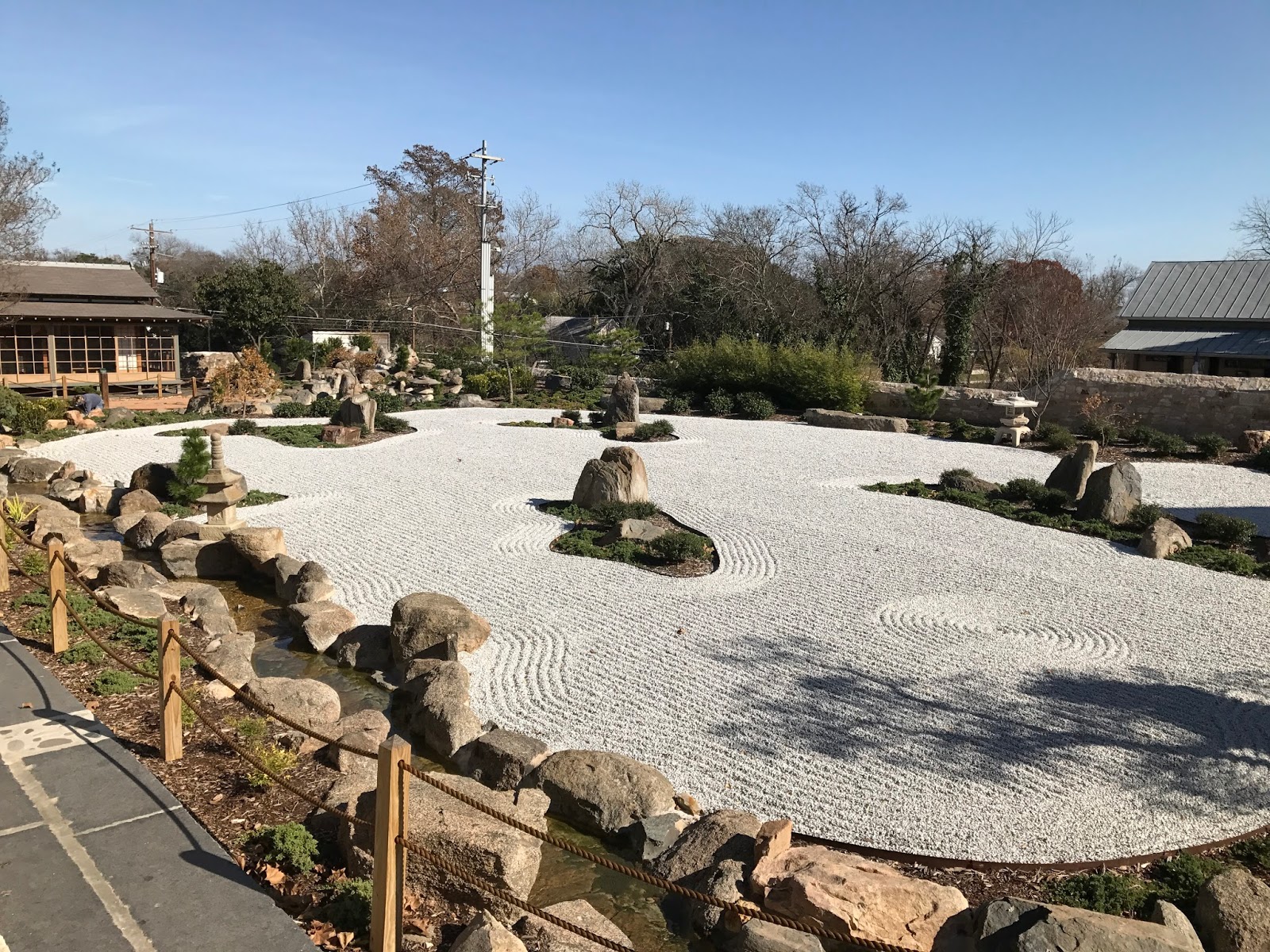
We didn't take pictures except of the Japanese Peace Garden. It was built by the Japanese in thanks for all Admiral Nimitz did to help the Japanese after the war. (Nimitz was born and grew up in Fredericksburg.) There is a small building beside the garden was was designed in Japan and the parts made there then brought to Texas and assembled by Japanese workers.
It is a very peaceful place.
This time we learned about the history of Japan and China for the centuries before the wars and gained information about many of the battles held in the Pacific during the first half of the 1940s. Since that is when we were born, we had heard of Midway and Guadalcanal and others but didn't understand them. We learned a lot. In fact we have never spent 4 to 5 hours in museums in one day. It was fascinating.
We didn't take pictures except of the Japanese Peace Garden. It was built by the Japanese in thanks for all Admiral Nimitz did to help the Japanese after the war. (Nimitz was born and grew up in Fredericksburg.) There is a small building beside the garden was was designed in Japan and the parts made there then brought to Texas and assembled by Japanese workers.
It is a very peaceful place.
Labels:
Admiral Nimitz,
Japanese Peace Garden,
museum,
Texas,
World War II
Subscribe to:
Posts (Atom)