For the first time in ages, we spent a few days in Trinidad State Park, just inside the southern border of Colorado. We hadn't been there in years. Boy have they improved the campground since our last stay.
We hike on a trail along the ridge above the campground. This was our view of the snow-capped Rockies from the ridge.
The hike wasn't difficult but there were some hills, making us feel like we were really hiking.
We saw some interesting rock formations.
/
There were also some good views of Trinidad Lake from the campground.
We will definitely stay there again.
Tuesday, May 15, 2018
Thursday, May 10, 2018
Whittington Center Campground
In three days, after our check-in at the front gate, we only spoke to 1 person in the campground at the NRA Whittington Center outside Raton, New Mexico. We know it is early in the season. Other than wind we have had great weather in the past two weeks, especially for April and early May. But this is not a time we would have gone camping before we began traveling year-round in 2009. In fact, except for one year we didn't like to go out in Colorado until after Memorial Day. This year we want to be in the Denver area before Memorial Day, so we have seen a number of uncrowded campgrounds.
This pronghorn (antelope) spent quite a bit of time in the campground yesterday. These animals are fairly common in New Mexico, Colorado and north, but we had never seen one up this close, especially in an area often frequented by humans. Look closely and you will see how many empty sites there were in the campground.
This is a close-up of the same pronghorn. Not only were we able to get up close to the animal, last night as it was getting dark I was sitting in our trailer with the front door open. I heard a sound and looked, only to discover a mule deer about 1 or 2 feet away from the door. Amazing!
We had some great sunsets during our 3 nights at Whittington.
If you are looking for a quiet campground with full hookups and some really great sites, check out the Whittington Center, especially in early May. If you are into shooting, the center has numerous ranges for shotgun, rifle, black-powder and pistols. But if you aren't into shooting and aren't a member of the NRA, it is still a great place to stay. John is a member of NRA but we have never done any shooting there. But we enjoy camping in this place.
This pronghorn (antelope) spent quite a bit of time in the campground yesterday. These animals are fairly common in New Mexico, Colorado and north, but we had never seen one up this close, especially in an area often frequented by humans. Look closely and you will see how many empty sites there were in the campground.
This is a close-up of the same pronghorn. Not only were we able to get up close to the animal, last night as it was getting dark I was sitting in our trailer with the front door open. I heard a sound and looked, only to discover a mule deer about 1 or 2 feet away from the door. Amazing!
We had some great sunsets during our 3 nights at Whittington.
If you are looking for a quiet campground with full hookups and some really great sites, check out the Whittington Center, especially in early May. If you are into shooting, the center has numerous ranges for shotgun, rifle, black-powder and pistols. But if you aren't into shooting and aren't a member of the NRA, it is still a great place to stay. John is a member of NRA but we have never done any shooting there. But we enjoy camping in this place.
Labels:
antelope,
deer,
New Mexico,
NRA,
quiet,
sunsets.,
Whittington Center
Tuesday, May 08, 2018
Scenes from Santa Fe
We have all heard of the Santa Fe Trail, a well-traveled route between Independence, MO, and Santa Fe in the mid-1800s. New Mexico had first been settled by the Spanish in the 1600s and finally became a US territory in 1850. Parts of the city of Santa Fe are very old. We love looking around the Plaza there.
Probably the oldest part of town surrounds the San Miguel Church, established in 1610.
We were there on Sunday and the Native American vendors at the Inn of the Governors had many visitors. The park in the center of the plaza had lots of visitors.
Small courtyards can be found around the square with numerous vendors. Many of their wares are very colorful.
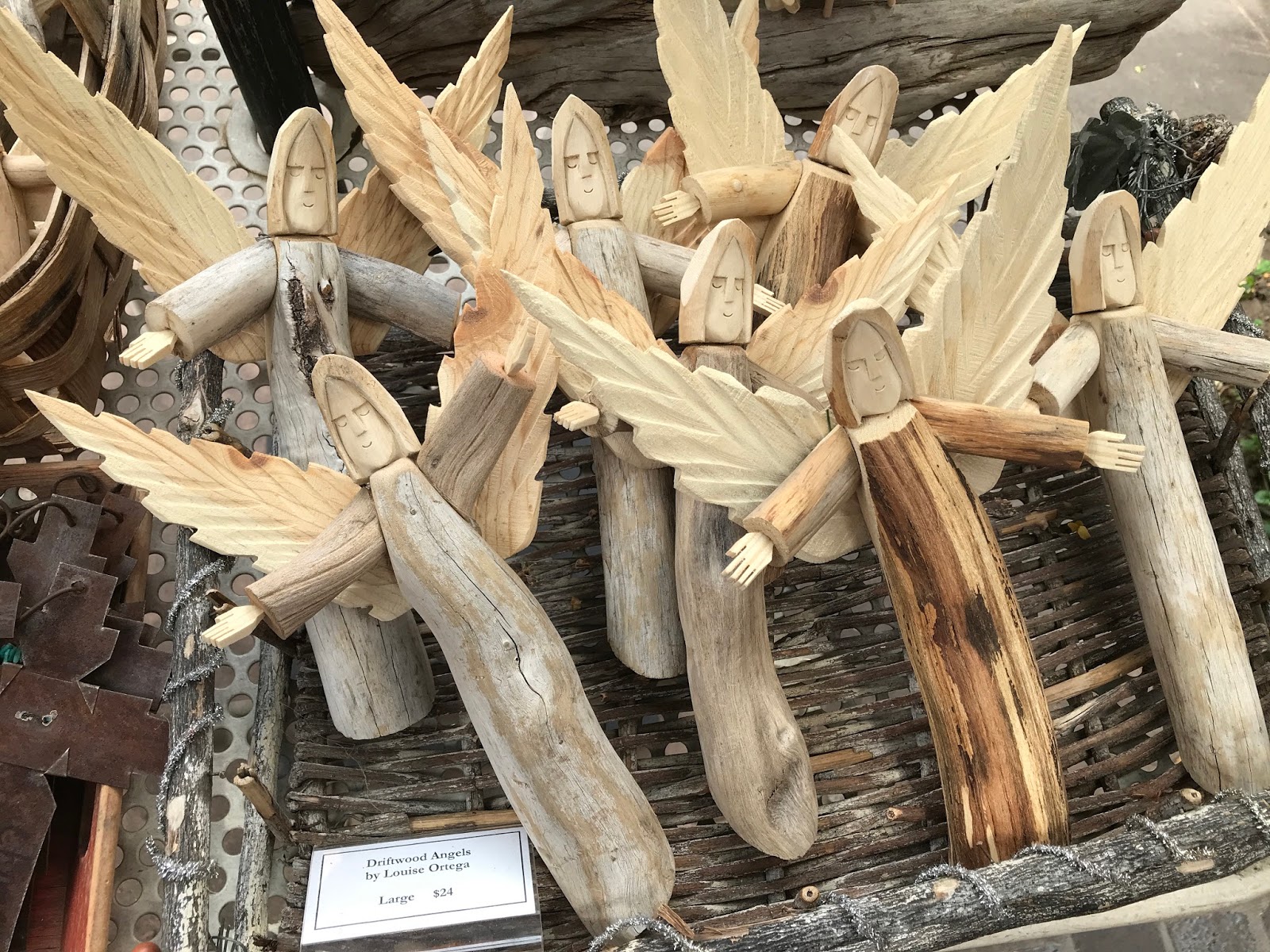
These driftwood angels are clever.
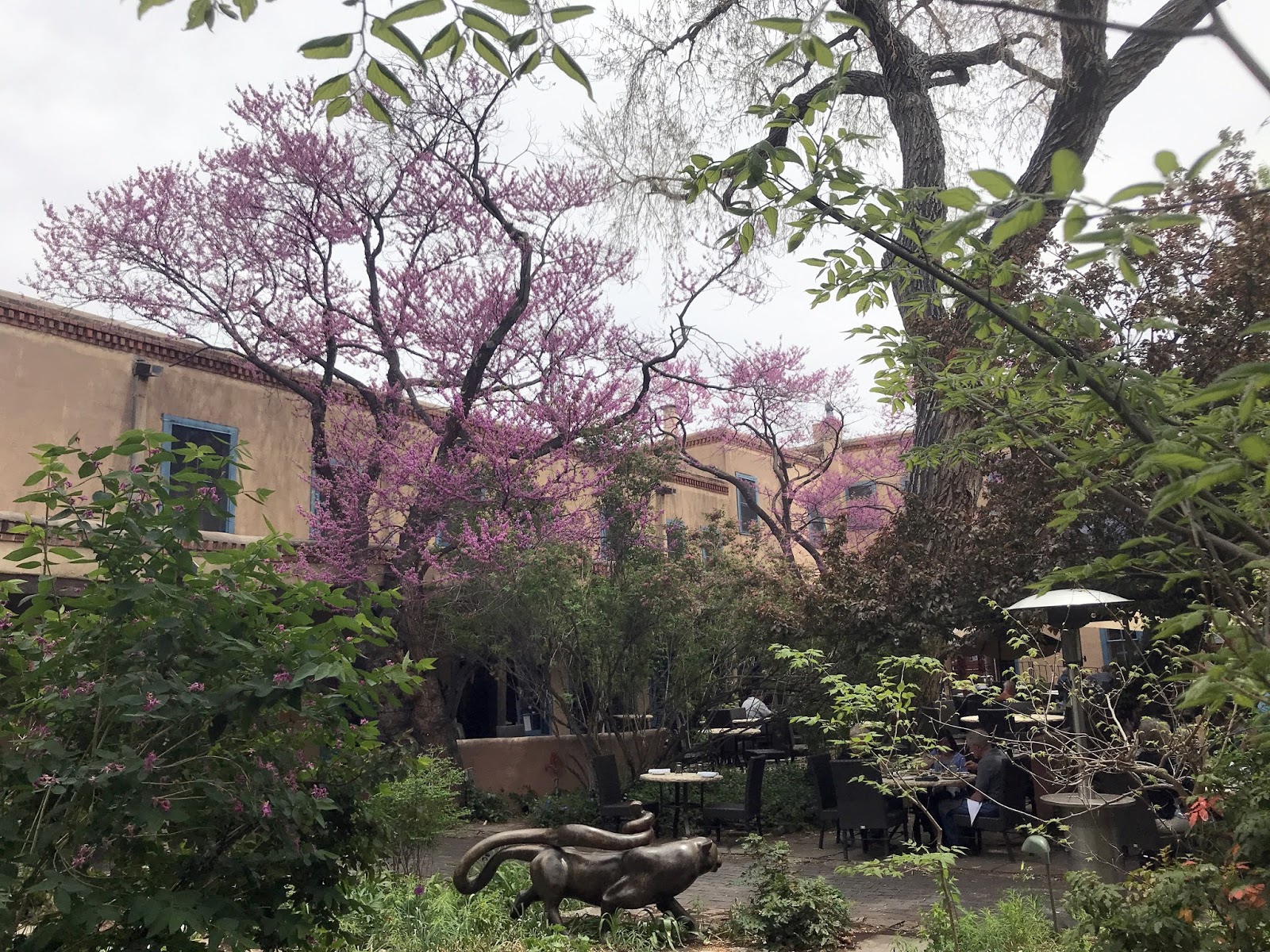
Two more courtyards.
In England--at least when we there years ago--these men would be called buskers. I guess in this country they are street entertainers.
The plaza area has a new side, as well.
This fountain is in the Cathedral Park surrounding the Cathedral Basilica of St. Francis of Assisi.
The cathedral anchors one of the streets going into the plaza.
The doorman at La Fonda Hotel on the plaza.
Probably the oldest part of town surrounds the San Miguel Church, established in 1610.
We were there on Sunday and the Native American vendors at the Inn of the Governors had many visitors. The park in the center of the plaza had lots of visitors.
Small courtyards can be found around the square with numerous vendors. Many of their wares are very colorful.
Two more courtyards.
In England--at least when we there years ago--these men would be called buskers. I guess in this country they are street entertainers.
The plaza area has a new side, as well.
This fountain is in the Cathedral Park surrounding the Cathedral Basilica of St. Francis of Assisi.
The cathedral anchors one of the streets going into the plaza.
The doorman at La Fonda Hotel on the plaza.
Labels:
courtyards,
New Mexico,
plaza,
San Miquel Church,
Santa Fe,
St. Francis Cathedral
Monday, May 07, 2018
Cochiti Lake Campground
We have been to the Cochiti Lake COE Campground several times and in many ways we really like it. Since it is a Corps of Engineers campground, we get to use our federal senior pass and the cost is only $10 a night for a 50-amp electric site. Our section site did not have a water or sewer hookup. The park gives easy access to Santa Fe and the sites are large.
One downside is the really narrow asphalt parking pad. We did have a pull-through site, but look at how close our front steps are to the edge of the pavement. We had to be careful going in and out of the door.
The site is large and has a concrete picnic table--down 7 steps from the RV. We didn't use that area. I only used the loop restroom once, but enjoyed the mural inside.
This is a view of the lake. We saw a few fishing boats on the water and saw a couple of pontoon boats moving that direction. One marina has quite a few sailboats. We only saw one out on the water.
This was one amenity we really enjoyed. Our Verizon broadband card had an excellent signal.
I found some poppies in the campground. We have seen them in Arizona and California but I didn't know they grew in northern central New Mexico.
I am sure we will stay in Cochiti Lake Campground again in our travels between Colorado and Arizona.
One downside is the really narrow asphalt parking pad. We did have a pull-through site, but look at how close our front steps are to the edge of the pavement. We had to be careful going in and out of the door.
The site is large and has a concrete picnic table--down 7 steps from the RV. We didn't use that area. I only used the loop restroom once, but enjoyed the mural inside.
This is a view of the lake. We saw a few fishing boats on the water and saw a couple of pontoon boats moving that direction. One marina has quite a few sailboats. We only saw one out on the water.
This was one amenity we really enjoyed. Our Verizon broadband card had an excellent signal.
I found some poppies in the campground. We have seen them in Arizona and California but I didn't know they grew in northern central New Mexico.
I am sure we will stay in Cochiti Lake Campground again in our travels between Colorado and Arizona.
Friday, May 04, 2018
Old Town Albuquerque
Old Town Albuquerque is a photographer's dream. So many interesting buildings and views. Originally established in 1706, the town celebrated its 300th anniversary 12 years ago. For the United States, that is really old. The entrance we went through is newly decorated but I don't know if the wall is a recent addition or part of the original settlement.
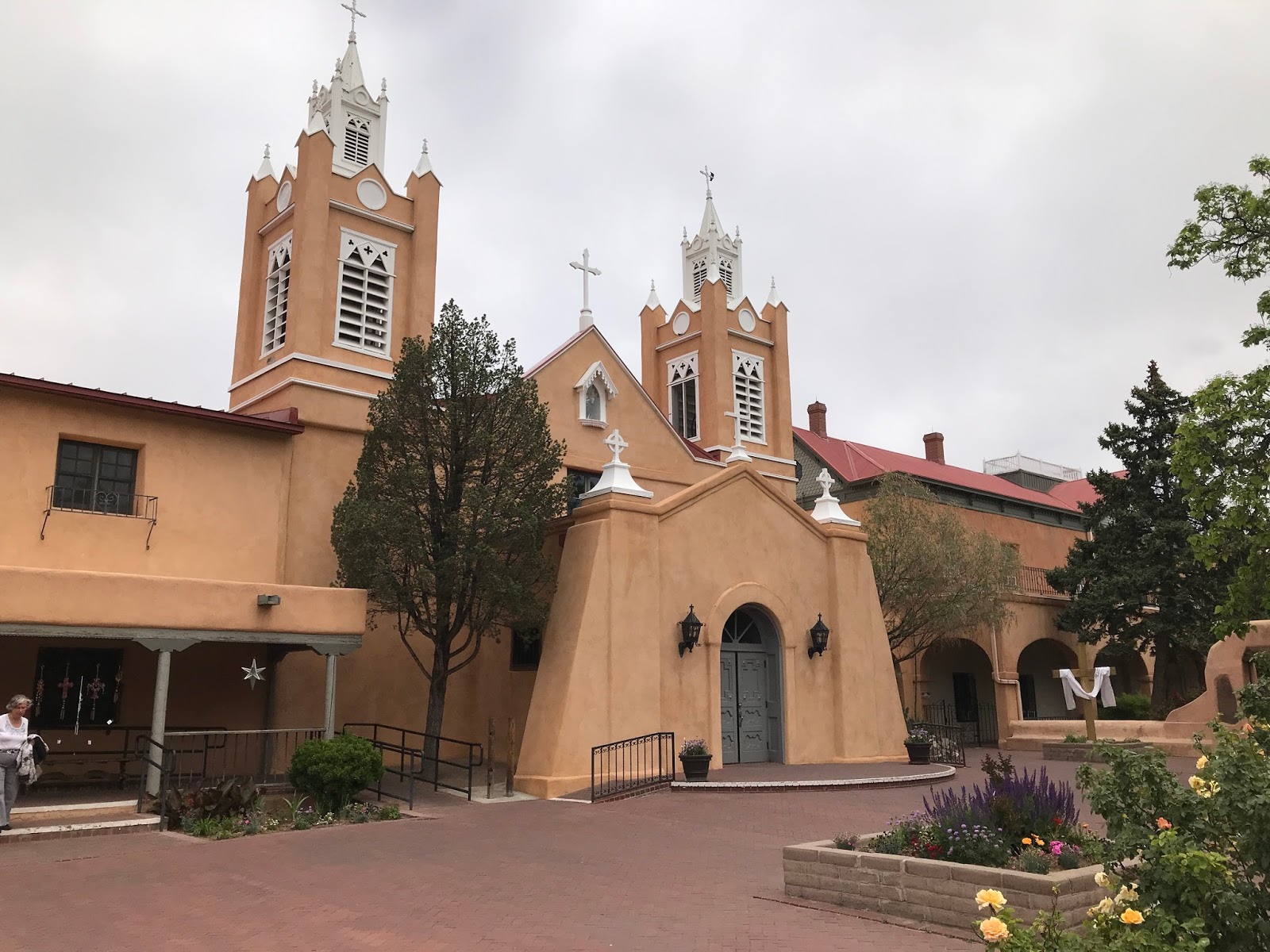
On one side of the town square we saw the church of San Felipe de Neri, the oldest New Mexico church still used for worship, one sign said.
This is the high altar in the church.
Buildings now housing shops and studios are arranged around small open areas.
This is an interesting front door.
And another one.
I'll bet this restaurant features strolling mariachi singers.
It might be difficult to read the electric meter at this house.
We didn't buy anything in the shops but we did enjoy walking around the area. The last time we were in Old Town, we felt it was run down. It seems to be in much better shape now.
On one side of the town square we saw the church of San Felipe de Neri, the oldest New Mexico church still used for worship, one sign said.
This is the high altar in the church.
Buildings now housing shops and studios are arranged around small open areas.
This is an interesting front door.
And another one.
I'll bet this restaurant features strolling mariachi singers.
It might be difficult to read the electric meter at this house.
We didn't buy anything in the shops but we did enjoy walking around the area. The last time we were in Old Town, we felt it was run down. It seems to be in much better shape now.
Labels:
Albuquerque,
church,
front doors,
New Mexico,
Old Town,
photography
Thursday, May 03, 2018
Tinkertown
We made our third visit to the Tinkertown Museum during our time in Albuquerque. We have come to this town many times over our years RVing and the museum is such a treat. Ross Ward was a sign painter who carved between sign painting jobs. He established the museum to house and show off his carvings. Over 40 years he carved and collected and filled 22 rooms. In 1996 we saw the museum on CBS and soon after made our first visit.
There is no way you can absorb the collection, no matter how long you spend in the museum. Here are a few of the things we saw.
This wall filled with bottles surrounds the museum grounds.
From the parking lot you get a feel for the things inside.
Throughout the museum there are sayings that demonstrate Ward's outlook on life.
Ward's whimsical carvings show off his talent and his view on life. He recreated the details of old-time life.
Ward loved the circus. He helped prepare exhibits for the Circus Museum in Baraboo, Wisconsin, and was a member of the circus carving association.
Look at these carvings of Emmett Kelly and other circus clowns.
I reallyappreciated this carving of a horse-drawn hearse.
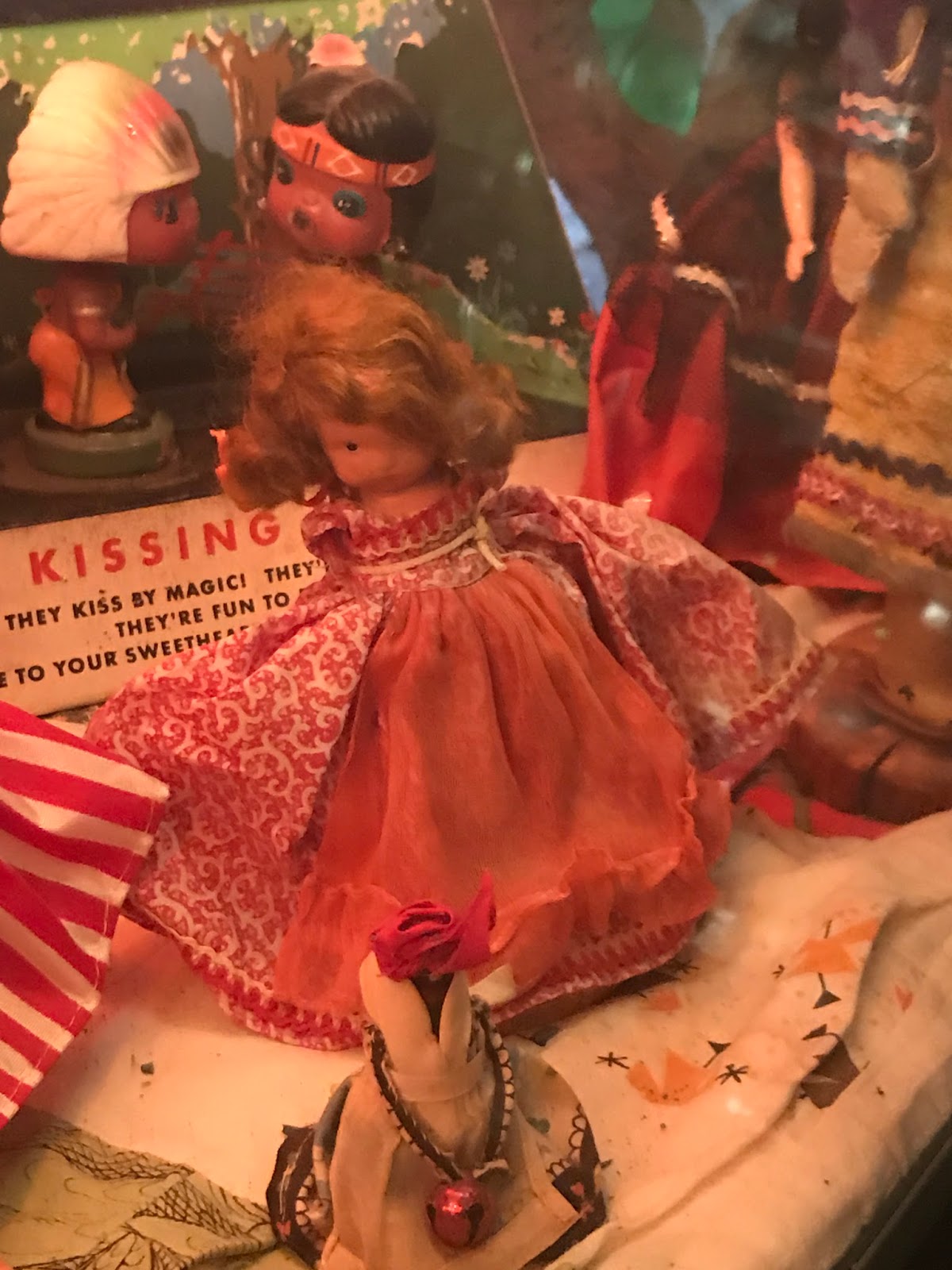
The museum includes collections of many different subjects. Did any of you have story-book dolls? I did. One of my dolls looked that this young lady. I wish I could remember her name.
John and I took a total of 60+ photos during our visit to Tinkertown. We used to make doll houses for our granddaughters and really enjoy miniatures. It was a fun visit.
There is no way you can absorb the collection, no matter how long you spend in the museum. Here are a few of the things we saw.
This wall filled with bottles surrounds the museum grounds.
From the parking lot you get a feel for the things inside.
Throughout the museum there are sayings that demonstrate Ward's outlook on life.
Ward's whimsical carvings show off his talent and his view on life. He recreated the details of old-time life.
Ward loved the circus. He helped prepare exhibits for the Circus Museum in Baraboo, Wisconsin, and was a member of the circus carving association.
Look at these carvings of Emmett Kelly and other circus clowns.
I reallyappreciated this carving of a horse-drawn hearse.
The museum includes collections of many different subjects. Did any of you have story-book dolls? I did. One of my dolls looked that this young lady. I wish I could remember her name.
John and I took a total of 60+ photos during our visit to Tinkertown. We used to make doll houses for our granddaughters and really enjoy miniatures. It was a fun visit.
Labels:
miniatures,
New Mexico,
Ross Ward,
Tinkertown
Wednesday, May 02, 2018
Navajo Code Talkers
During our visit to Gallup we checked out the Navajo Code Talkers exhibit in the Chamber of Commerce building downtown. It is always so inspiring to learn more about the work these men did during World War II.
This statue stands in front of the building.
In 1940, before Pearl Harbor, the Navajo Tribal Council approved a resolution stating "there exists no purer concentration of Americanism than among the First Americans" therefore "we resolve that the Navajo Indians stand ready as they did in 1918 to aid and defend our government."
Philip Johnston, son of missionary parents, who had spent many years among the Navajo, proposed to the US Marine Corps that the Navajo language be used as the basis for a combat code. The Marines recruited 29 young Navajos, most still in high school, to enlist and develop the code. Several Navajo Code Talkers received their initial combat experience at Guadalcanal and by 1942 they were so successful the recruitment of 200 more Navajos to serve as code talkers was approved. The code talkers were never a separate fighting command but were usually assigned in pairs to division headquarters, battalions, regiments and companies. During the entire 3 years of war in the Pacific there was never an instance when a message was misquoted or inaccurately deciphered.
President Ronald Reagan honored the Code Talkers and below is a section of the commendatory letter.
By the end of the war, there were more American Indian enlistments in proportion to their numbers than any other racial group in the country.
This statue stands in front of the building.
In 1940, before Pearl Harbor, the Navajo Tribal Council approved a resolution stating "there exists no purer concentration of Americanism than among the First Americans" therefore "we resolve that the Navajo Indians stand ready as they did in 1918 to aid and defend our government."
Philip Johnston, son of missionary parents, who had spent many years among the Navajo, proposed to the US Marine Corps that the Navajo language be used as the basis for a combat code. The Marines recruited 29 young Navajos, most still in high school, to enlist and develop the code. Several Navajo Code Talkers received their initial combat experience at Guadalcanal and by 1942 they were so successful the recruitment of 200 more Navajos to serve as code talkers was approved. The code talkers were never a separate fighting command but were usually assigned in pairs to division headquarters, battalions, regiments and companies. During the entire 3 years of war in the Pacific there was never an instance when a message was misquoted or inaccurately deciphered.
President Ronald Reagan honored the Code Talkers and below is a section of the commendatory letter.
By the end of the war, there were more American Indian enlistments in proportion to their numbers than any other racial group in the country.
Labels:
Code Talkers,
Gallup,
Navajo,
New Mexico,
World War II
Subscribe to:
Posts (Atom)