The shortest route from Canon City to Victor is driving up Phantom Canyon. Perhaps that is why the railroad carved out it's route through the canyon in 1894. It is not, however, the fastest route. The trip was just under 20 miles, creeping along the gravel road with lots of washboard sections. We climbed 4,000 feet in that 20 miles and it took us over 2 hours. The scenery made the trip worth it, but we said, "Never again."
My mother grew up in Victor and nearby Goldfield, graduating from high school there in 1932. I have been to Victor a number of times over the years. I think this is only the second time we have gone through Phantom Canyon. Victor and Goldfield are in what is called the Cripple Creek Mining District. Gold isn't found on level, soft ground unless it has traveled there by stream from higher altitudes. My grandfather was a gold miner in Victor.
The canyon walls are steep and rocky.
Since it is May, the trees have leafed out and the ground cover is green. I was sitting in the back seat of the truck and caught a few pictures of the sideview mirror as well as the scenery.
This one-way tunnel shows the hard rock the mountain is made of. The tunnel isn't long but if we had met another vehicle, someone would have had to back up. Even on the open road, there often was not space to pass another car or truck.
This is the way Colorado mountain sides should look, in my opinion. Thankfully, there are many better roads to view them from.
This was probably our best mountain excursion for the summer. Soon we will return to lower altitudes and warmer temperatures--at least until we fly to England.
Showing posts with label Victor. Show all posts
Thursday, May 31, 2018
Wednesday, July 24, 2013
Gold Rush
The Pikes Peak Gold Rush began in 1859 with news of the discovery of gold along Clear Creek in the mountains west of what is now Denver. In 1890 and 1891, major gold strikes were made in the Cripple Creek-Victor area on the southwest side of Pikes Peak. By 1907, my family participated in this gold fever. That is the first year my grandfather, George E. Polhill, is listed as a miner in the area. By that time, the gold production was declining, but the family lived there until the early to mid 1940s. My mother, Dorothy Polhill Robinson, graduated from Victor High School as valedictorian in 1932.
What has that got to do with my life now, or this blog? We are spending our summer at Mueller State Park, 16 miles from Victor. Sunday afternoon, we attended Gold Rush Days in Victor. This weekend event was better attended than the first special event we attended in Cripple Creek on June 15. There were only two chuck wagons that participated in the Chuck Wagon Cook-off that weekend.
The main streets were lined with booths offering many different items for sale. There was live and recorded music, a parade, bicycle races and a chili supper.
Children were trying their hand at panning for gold.
We knew the Elks Club would be open during the event. My grandfather was a member of the Elks and is buried in their plot in the local cemetery. We knew his name is listed on the wall in the lodge meeting room and wanted to see it.
Although it's no longer being used as a school, the high school my mother graduated from is still standing. Imagine climbing these stairs to get to class.
We checked out the old Isis theater, which is now a vintage clothing shop. I think I went to a movie there once when I was very young and I know my mom would have watched movies there.
The Victor Lowell Thomas Museum contains lots of information about early gold mining in the area. This picture shows how the miners got down into the mine to work. I would have found another way to earn a living.
This is how the ore cars were put into the mine shafts.
A couple of weeks ago, we were able to see the inside of the building where my grandmother, Lydia Doolin Polhill, lived when I was very young. The building now houses the offices of the Cripple Creek and Victor Mining Company (CC&V). It had once been an office building, before being converted to apartments. A window like this was in one of the two rooms in her apartment. The space had originally been used as a doctor's office. And the bathroom was down the hall!
There is a great, wide staircase leading up from street level.
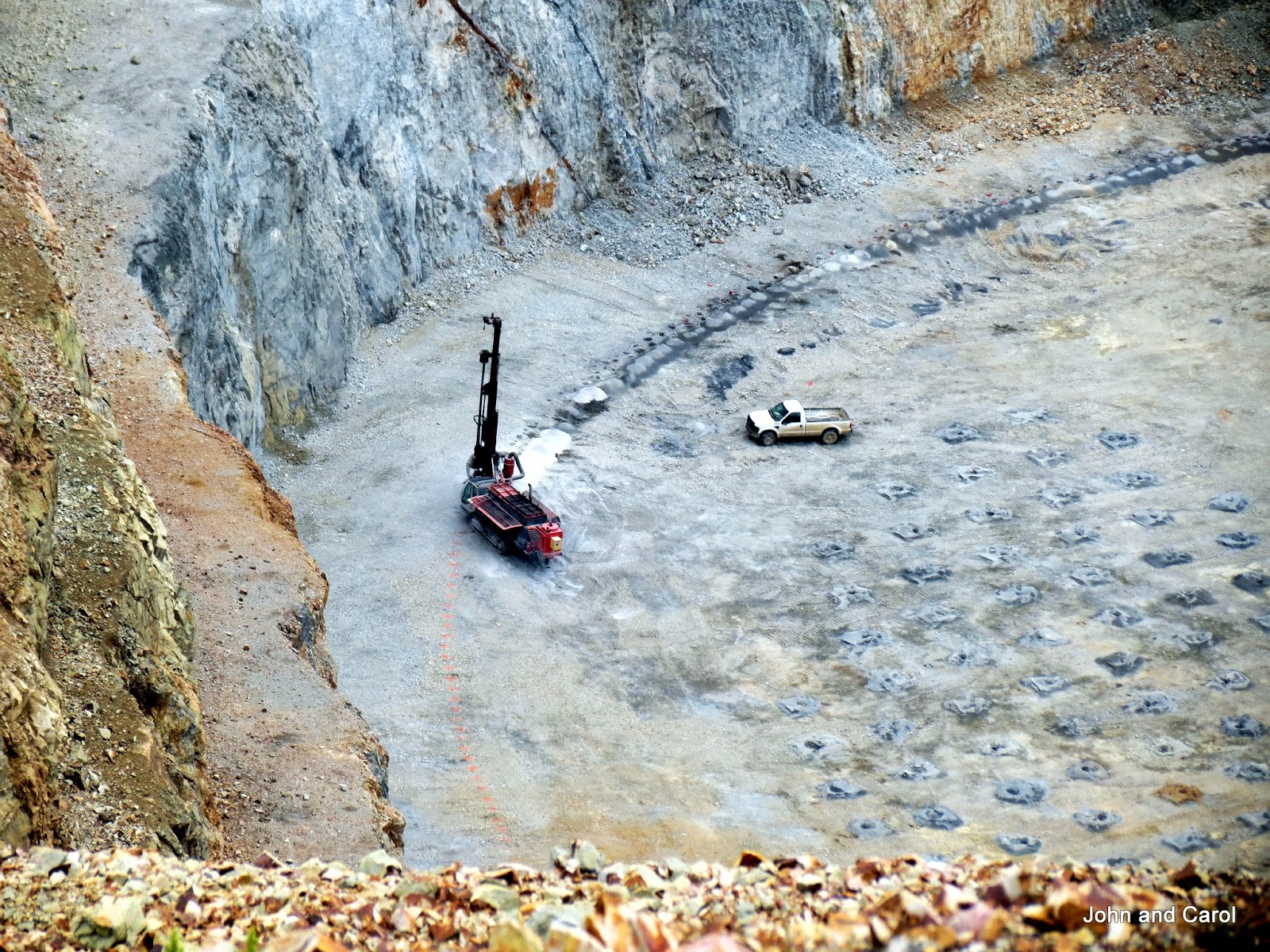
Miners no longer go underground to find gold in this area. Instead, the CC&V has a massive open pit mine above the city. We drove up to the overlook to see what goes on there. It is an impressive operation.
What has that got to do with my life now, or this blog? We are spending our summer at Mueller State Park, 16 miles from Victor. Sunday afternoon, we attended Gold Rush Days in Victor. This weekend event was better attended than the first special event we attended in Cripple Creek on June 15. There were only two chuck wagons that participated in the Chuck Wagon Cook-off that weekend.
The main streets were lined with booths offering many different items for sale. There was live and recorded music, a parade, bicycle races and a chili supper.
Children were trying their hand at panning for gold.
We knew the Elks Club would be open during the event. My grandfather was a member of the Elks and is buried in their plot in the local cemetery. We knew his name is listed on the wall in the lodge meeting room and wanted to see it.
Although it's no longer being used as a school, the high school my mother graduated from is still standing. Imagine climbing these stairs to get to class.
We checked out the old Isis theater, which is now a vintage clothing shop. I think I went to a movie there once when I was very young and I know my mom would have watched movies there.
The Victor Lowell Thomas Museum contains lots of information about early gold mining in the area. This picture shows how the miners got down into the mine to work. I would have found another way to earn a living.
This is how the ore cars were put into the mine shafts.
A couple of weeks ago, we were able to see the inside of the building where my grandmother, Lydia Doolin Polhill, lived when I was very young. The building now houses the offices of the Cripple Creek and Victor Mining Company (CC&V). It had once been an office building, before being converted to apartments. A window like this was in one of the two rooms in her apartment. The space had originally been used as a doctor's office. And the bathroom was down the hall!
There is a great, wide staircase leading up from street level.
Miners no longer go underground to find gold in this area. Instead, the CC&V has a massive open pit mine above the city. We drove up to the overlook to see what goes on there. It is an impressive operation.
Labels:
Colorado,
family history,
Gold Rush,
Mueller State Park,
Victor
Tuesday, June 04, 2013
Celebrating 70
Since my 70th birthday came on a Friday when we had to work, John took me out to breakfast at the Hungry Bear in Woodland Park. We had read that they served some of the best pancakes in Colorado and I have to agree. My berry pancakes were delicious. John really enjoyed his southwestern scramble, too.


To continue the celebration, yesterday we rode the cog train to the top of Pikes Peak.

This was my third trip to the top of the 14,110 ft peak, which was first spotted by Zebulon Pike in 1806. He failed in his attempt to climb it in November of that year (no wonder, they were climbing through waist-deep snow), but it was named after him. This was John's fourth trip up the peak. He went with his family as a child and we took our sons on the cog train when they were children. More recently, we drove up with John's cousin Birgitta, from Sweden. We must have adapted to our life here in the mountains because this is the first time I didn't have trouble walking from the train to the Summit House.
The cog train ride is 8.9 miles long at an average incline of 16%. The steepest grades are 25%. The trip up the mountain is beautiful. First the train goes through dense conifer and aspen forest.

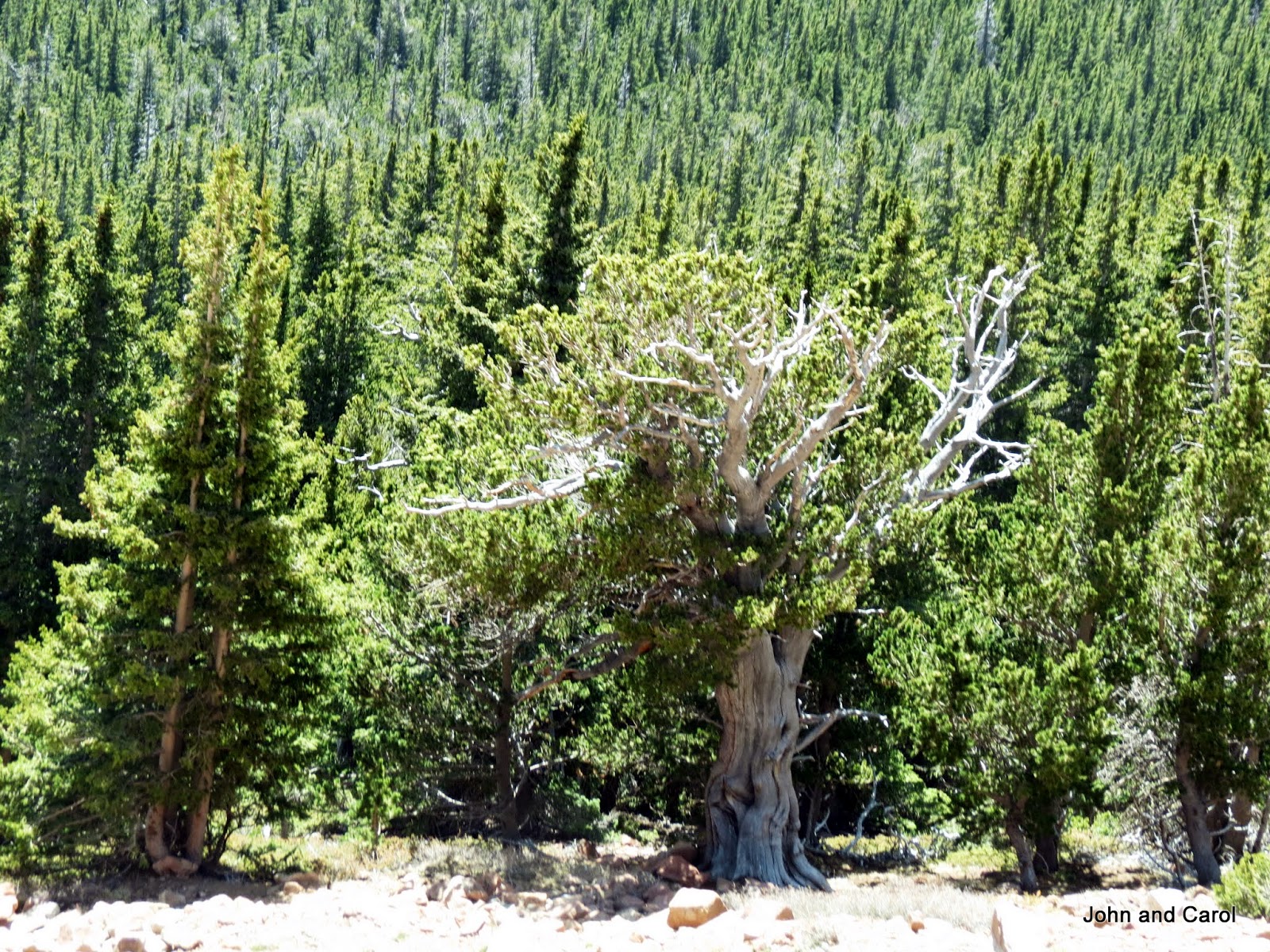
This large tree is a bristle cone pine, thought to be 2,200 years old.

When we crossed the tree line or timber line (the altitude at which trees can no longer grow), the vistas were larger.
l


There are several sidings where we passed other trains, as well as a work train.

At times we could see where the track was ahead of us.

When the track was very steep, the front of the train was 3 stories higher or lower than the rear--and the train was only 2 cars long. Maybe you can get an idea of that from this photo. I took it looking straight ahead so you might be able to see that the front is downhill from where we were sitting.

After Katharine Lee Bates visited Pikes Peak in 1893, she wrote a poem that we know as the song "America the Beautiful." that poem is contained on a monument at the summit.

Several bicycle riders had ridden to the summit in a van and then headed out to ride down the mountain. It must be an exciting ride with the cold and wind, as well as the steep descent.

This is the end of the line for the cog train. We were so glad the train stopped in time.

The views from the summit were amazing. And look at how blue the sky is.


From the summit, we could see an open pit gold mine near Cripple Creek and Victor.

The Cripple Creek district was the last great gold mining boom area in Colorado. It is also where my mother was born and raised. Cripple Creek is 44 miles southwest of Colorado Springs, near the western base of Pikes Peak. According to Wikipedia,
"Through 2005, the Cripple Creek district produced about 23.5 million troy ounces (979 1/6 troy tons /888.3 metric tons ) of gold. The old underground mines are exhausted, but open pit mining has operated since 1994 east of Cripple Creek, near its sister city of Victor, Colorado.... $500,000,000 worth of gold ore was dug from Cripple Creek."
Of course, we had our picture taken under the summit sign.

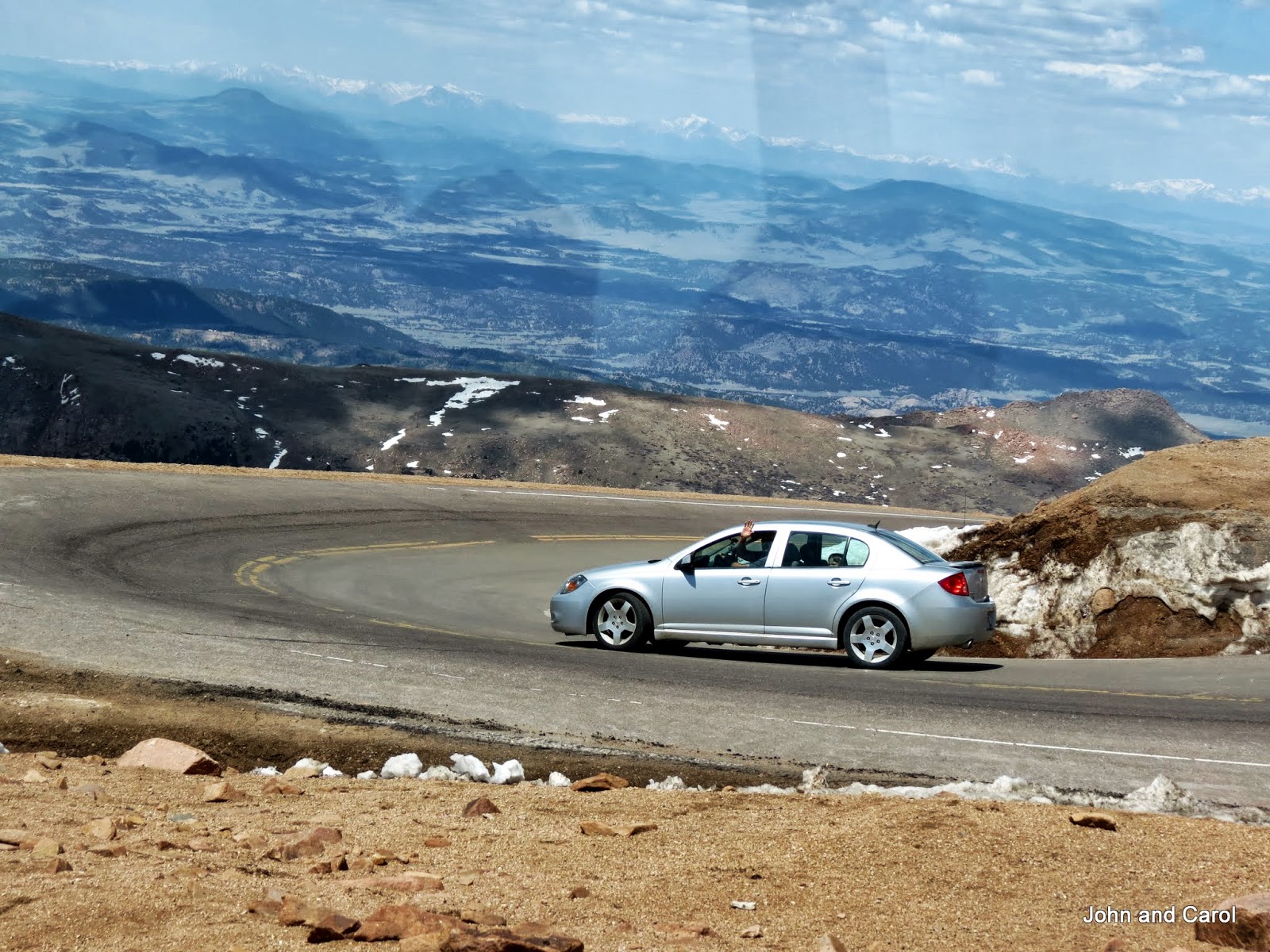
The rail line crosses the automobile road to the summit. We passed this car on the road.

When we returned to Manitou Springs, where the cog railroad station is located, we continued on down to Colorado Springs to do some shopping. We could look up at the mountain where we had been only a couple of hours earlier. At the summit, we had been wearing down coats and hats. In Colorado Springs, it was 91 degrees and we wished we were in shorts.
To continue the celebration, yesterday we rode the cog train to the top of Pikes Peak.
This was my third trip to the top of the 14,110 ft peak, which was first spotted by Zebulon Pike in 1806. He failed in his attempt to climb it in November of that year (no wonder, they were climbing through waist-deep snow), but it was named after him. This was John's fourth trip up the peak. He went with his family as a child and we took our sons on the cog train when they were children. More recently, we drove up with John's cousin Birgitta, from Sweden. We must have adapted to our life here in the mountains because this is the first time I didn't have trouble walking from the train to the Summit House.
The cog train ride is 8.9 miles long at an average incline of 16%. The steepest grades are 25%. The trip up the mountain is beautiful. First the train goes through dense conifer and aspen forest.
This large tree is a bristle cone pine, thought to be 2,200 years old.
When we crossed the tree line or timber line (the altitude at which trees can no longer grow), the vistas were larger.
l
There are several sidings where we passed other trains, as well as a work train.
At times we could see where the track was ahead of us.
When the track was very steep, the front of the train was 3 stories higher or lower than the rear--and the train was only 2 cars long. Maybe you can get an idea of that from this photo. I took it looking straight ahead so you might be able to see that the front is downhill from where we were sitting.
After Katharine Lee Bates visited Pikes Peak in 1893, she wrote a poem that we know as the song "America the Beautiful." that poem is contained on a monument at the summit.
Several bicycle riders had ridden to the summit in a van and then headed out to ride down the mountain. It must be an exciting ride with the cold and wind, as well as the steep descent.
This is the end of the line for the cog train. We were so glad the train stopped in time.
The views from the summit were amazing. And look at how blue the sky is.
From the summit, we could see an open pit gold mine near Cripple Creek and Victor.
The Cripple Creek district was the last great gold mining boom area in Colorado. It is also where my mother was born and raised. Cripple Creek is 44 miles southwest of Colorado Springs, near the western base of Pikes Peak. According to Wikipedia,
"Through 2005, the Cripple Creek district produced about 23.5 million troy ounces (979 1/6 troy tons /888.3 metric tons ) of gold. The old underground mines are exhausted, but open pit mining has operated since 1994 east of Cripple Creek, near its sister city of Victor, Colorado.... $500,000,000 worth of gold ore was dug from Cripple Creek."
Of course, we had our picture taken under the summit sign.
The rail line crosses the automobile road to the summit. We passed this car on the road.
When we returned to Manitou Springs, where the cog railroad station is located, we continued on down to Colorado Springs to do some shopping. We could look up at the mountain where we had been only a couple of hours earlier. At the summit, we had been wearing down coats and hats. In Colorado Springs, it was 91 degrees and we wished we were in shorts.
Labels:
birthday,
cog train,
Colorado,
Cripple Creek,
Pikes Peak,
trains,
Victor,
weather
Friday, September 21, 2012
Aspen Leaves and Mining Towns
Yesterday we drove to the mountains between Colorado Springs and Cripple Creek. The aspen trees painted the hillsides with gold and orange.


These colors never last long so we are glad we had the opportunity to see them this year. It has been several years since we last had the time or opportunity to see them. We could see the nearby hillsides well, but the longer vistas are covered with a haze of smoke. Fires in Wyoming, Idaho, Montana and Washington are really filling the Colorado skies.

The smoke makes the sun glow red in the morning and evening. When I take a picture of it, the sun shines through and the smoke looks red.

Cripple Creek and the nearby mining towns of Victor and Goldfield are important to me because this is where my mother grew up. This sign at the edge of Cripple Creek is new.

A tourist train operates in town and this engine is named Goldfield, for the town where my mother was born.

Buildings in town were constructed right next to one another. This shows what is left when one building is torn down.

Some of the buildings have been spruced up, usually to house one of the casinos. This is the home of the Brass Ass.

This sign is very appropriate for one of the richest gold mining districts in the country.

We walked through a combination antique store and ice cream parlor. We saw this old advertising sign.

Anybody need a foot bath?

This is the high school my mother graduated from in Victor, about 7 miles beyond Cripple Creek. You can also see some of the smoke in the picture.

A few people still live in nearby Goldfield, but this house has seen better days.

The day was both a beautiful drive and a walk down memory lane.
These colors never last long so we are glad we had the opportunity to see them this year. It has been several years since we last had the time or opportunity to see them. We could see the nearby hillsides well, but the longer vistas are covered with a haze of smoke. Fires in Wyoming, Idaho, Montana and Washington are really filling the Colorado skies.
The smoke makes the sun glow red in the morning and evening. When I take a picture of it, the sun shines through and the smoke looks red.
Cripple Creek and the nearby mining towns of Victor and Goldfield are important to me because this is where my mother grew up. This sign at the edge of Cripple Creek is new.
A tourist train operates in town and this engine is named Goldfield, for the town where my mother was born.
Buildings in town were constructed right next to one another. This shows what is left when one building is torn down.
Some of the buildings have been spruced up, usually to house one of the casinos. This is the home of the Brass Ass.
This sign is very appropriate for one of the richest gold mining districts in the country.
We walked through a combination antique store and ice cream parlor. We saw this old advertising sign.
Anybody need a foot bath?
This is the high school my mother graduated from in Victor, about 7 miles beyond Cripple Creek. You can also see some of the smoke in the picture.
A few people still live in nearby Goldfield, but this house has seen better days.
The day was both a beautiful drive and a walk down memory lane.
Labels:
Colorado,
Cripple Creek,
fall colors,
Goldfield,
mining,
Victor
Subscribe to:
Posts (Atom)