Thursday, August 31, 2006

Nova Scotia


Nova Scotia—when planning to come to the Maritime Provinces of Canada, this is what we were looking for: beautiful sea coasts, incredibly blue oceans, hiking trails, cool ocean breezes, wildlife.

We spent several days relaxing near Truro, NS, where we saw the Tidal Bore. That is apparently a common term, but we had never heard it till we came here. It describes a wave of water going upstream in a river when the tide comes in. Because the of the shape of the Bay of Fundy, which is between Nova Scotia and the eastern shores of New Brunswick and Maine, the tides are very high—15-20 feet in some places. At Truro, we watched this wave come up and the tide rose somewhere between six and 10 feet in about 30 minutes.

We have enjoyed eating locally-grown produce, especially corn on the cob, blueberries and potatoes. Blueberries are always expensive in Colorado, but here in season they are quite reasonable and we have bought them several times. They even sold them in the campground store at Baddeck.

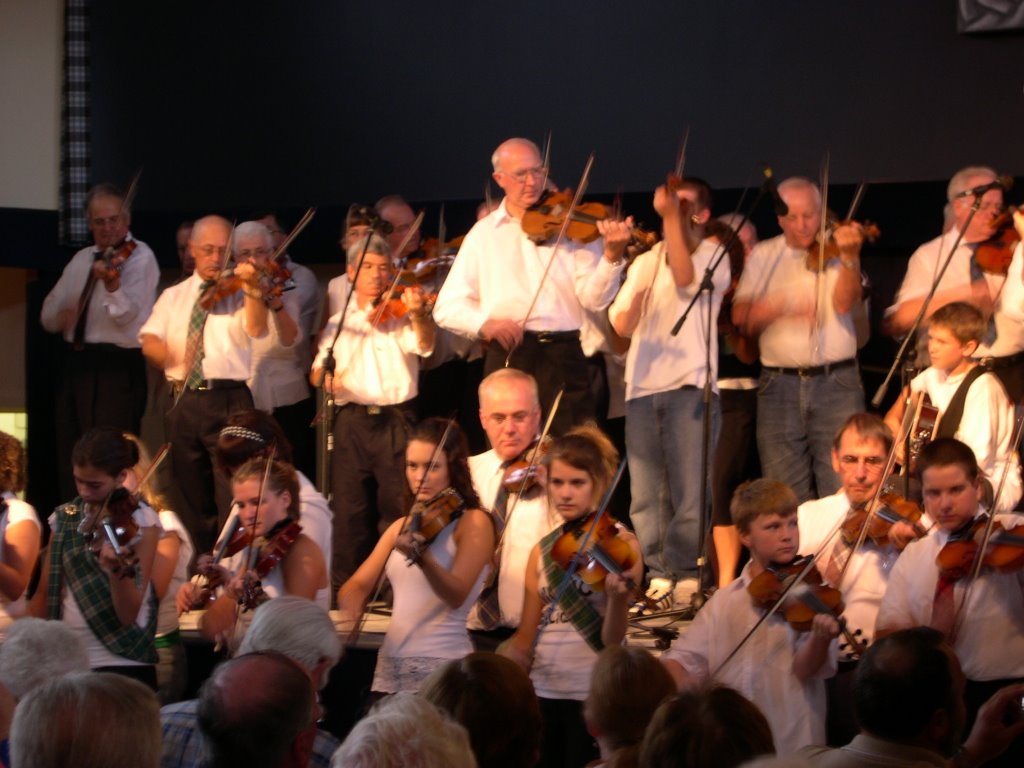
We spent a week at the Cabot Trail Campground in Baddeck on Cape Breton Island, which makes up the northeast part of Nova Scotia. We used it as a base to explore the Cabot Trail. In 1497 John Cabot of England discovered North America as he searched for a route to India. Tradition says he touched land on the northern coast of Cape Breton. Most of the island has a Scottish heritage. We attended a Fiddler Festival where we heard violins and guitars playing Celtic music. The festival was first organized to keep the Cape Breton tradition of fiddling alive and they can now bring together 200 fiddlers at one time. There is a Celtic College hear Baddeck where people come from all over to learn Celtic music and crafts and how to speak Gaelic. We have learned a Gaelic word, ceilidh (pronounced kay-lee), which means party or gathering. There are ceilidhs weekly in several communities around Cape Breton.
Bras d’Or Lake is a very large body of water in the center of Cape Breton. On the west shore of the lake near Baddeck we visited the Alexander Graham Bell Museum. Bell, who (if you remember your history) invented the telephone while living in New York, built a home on Lake Bras d’Or (pronounced bruh-door and meaning arm of gold in French) and lived and worked there for many years before his death. At the museum we learned a great deal about this amazing American inventor. His wife was deaf and he spent many years working to improve the lives of deaf persons. A hydrofoil boat and an airplane were among his inventions.

The first Europeans to settle here were the French, who built a fortress near the northeast corner of the island to protect from British invasion. Unfortunately, the two times the Louisbourg Fortress was attached by the British, it was from the landward side and both times the French were defeated—the last time in 1758. While eating lunch in a restaurant that served 18th century food at the living history restoration of the Louisbourg Fortress, we came to appreciate that we are able to travel the way we do. After ordering our lunch—heavy bread, split pea soup, and grilled cod, two women came in and sat at our table. At that point we had been on the road for 2½ months, 1½ in Canada. They were on a bus tour of the Maritime Provinces that lasted 8 days. They envied our ability to go where we wanted, when we wanted. Soon another couple also sat at our table. They had just completed 10 weeks in Newfoundland and Labrador, places we hadn’t had time to visit. We really connected with them and shared experiences. And the two women from the tour groups didn’t have a clue about our lifestyle. We caught our love of travel from my parents, who always traveled on organized tours. We know they thoroughly enjoyed their travels, but are grateful for our footloose and free way of doing things.

The coast of the island is dotted with isolated fishing villages, such as St. Margaret on the northern tip, and attractive harbors, like Pleasant Bay. After Baddeck we spent five nights in a campground in the Cape Breton Highlands National Park. The northern portion of the island has several mountains rising over 1200 feet from sea level, which reminded the Scottish settlers of the homeland. The scenery is spectacular and the wildlife wonderful. As we have driven across Canada, we have seen many signs warning us to be careful of the moose, but it wasn’t until Cape Breton that we actually saw them—11 in two days, plus four black bear. What a treat! Most of the sightings were early in the morning and we didn’t get good photos, but a few came out.
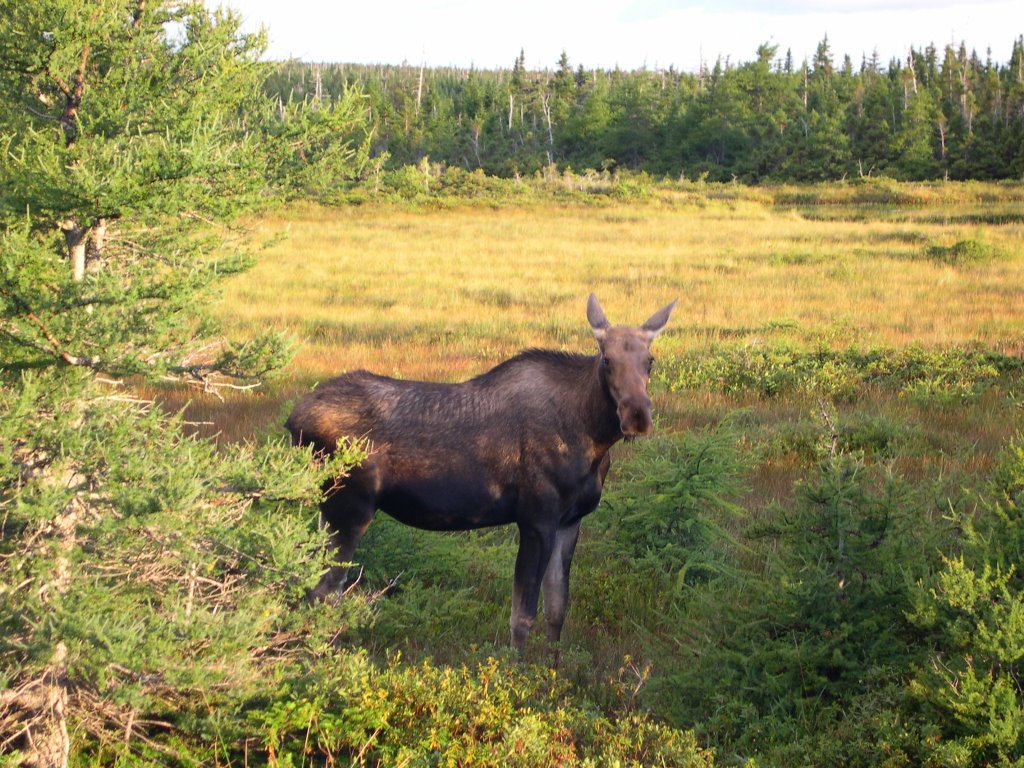
We have been able to make several hikes in Nova Scotia, mainly on Cape Breton. We often feel we could be hiking in the Colorado mountains, with hills, rocks, roots in the path and evergreen trees. But then we see the many different mushrooms and ferns and see the blue, blue ocean and hear the ocean waves crashing below and we know we aren’t in Colorado. This is a country with lots of moisture and therefore, lots of green. The mushrooms were especially prevalent and diverse as we hiked at Thomas Cove near the Bay of Fundy in early August. The Skyline Trail in Cape Breton Highlands National Park gave us views of moose, as well as a boardwalk over an open headland with a magnificent view of the ocean and nearby Cheticamp, a small fishing and tourist community just outside the park.

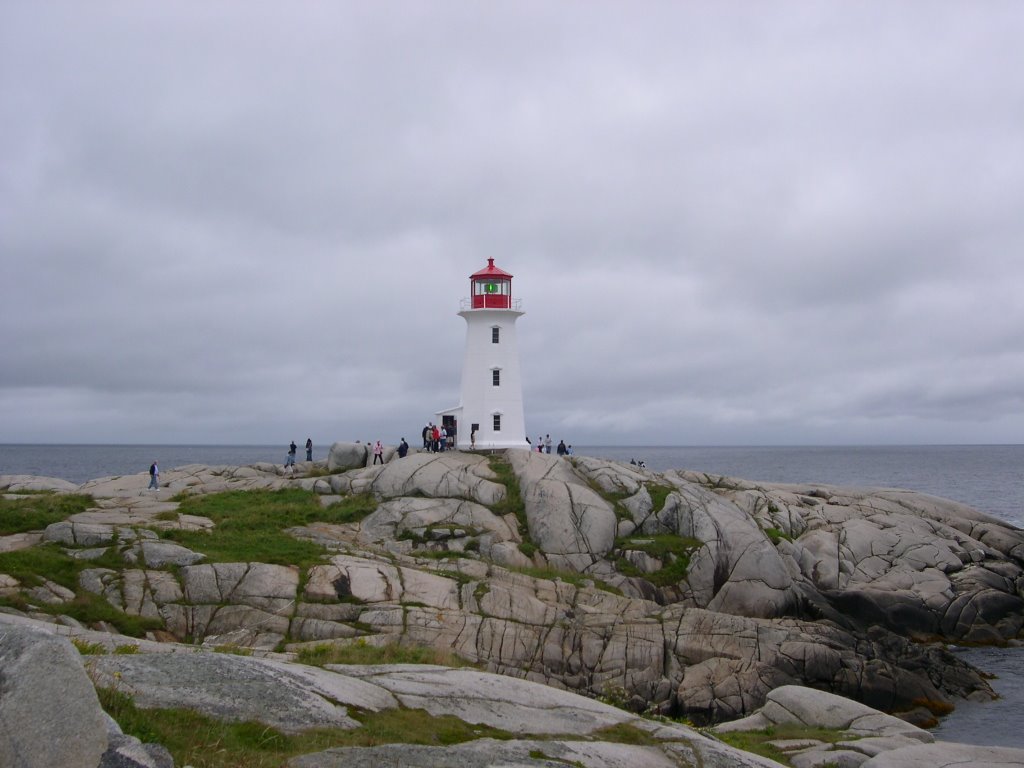
We are ending our time in Nova Scotia with a week on the southern shore of the country. Peggy’s Cove has a much photographed lighthouse on St. Margaret Bay near Halifax, the capital city of Nova Scotia. Our RV park overlooks the bay, which is beautiful.
Most of our travels in Canada have taken us to RV parks used almost exclusively by Canadians—either people on holiday or people who park their trailers there for the season and spend every weekend there. We are hearing that tourism is down considerably, in part at least due to high gas prices. Since coming to Nova Scotia we encountered tourists from the US, almost for the first time. It is interesting to see how we gravitate toward one another and share our experiences. We haven’t found most Canadians terrible friendly.

We also are learning about gas price regulation, which New Brunswick, Prince Edward Island and Nova Scotia have implemented this year. A month ago, we were paying $1.23 a liter for gas—that translates to $4.67 a gallon. By August 31, the price in Nova Scotia was down to $1.01 per liter and on the new we heard prices in Ontario were as low as $0.67 per liter. We know prices in the States are high, but not as high as here and we don’t experience such large price swings—56 cents per liter or $2.55 per gallon in two months. Whatever gas costs when we go back to the states, it will be less expensive than here.

On Labor Day we will take a ferry from Yarmouth, NS, to Bar Harbor, Maine, and begin our exploration of New England.

Wednesday, August 16, 2006

Prince Edward Island


Prince Edward Island is wonderful! The farm fields make you think of paintings by Grandma Moses. The roadsides are lined by flowers—both wildflowers and cultivated gardens. And right now the empty fields are filled with wildflowers and pink flowering clover. The wooden farmhouses come in various colors—white, cream, yellow, blue, gray, green.

There are great shops—we saw wonderful hand knit sweaters, some made of alpaca yarn, others fine sheep’s wool. Pottery and woodwork items are sold in small shops along the country roads.

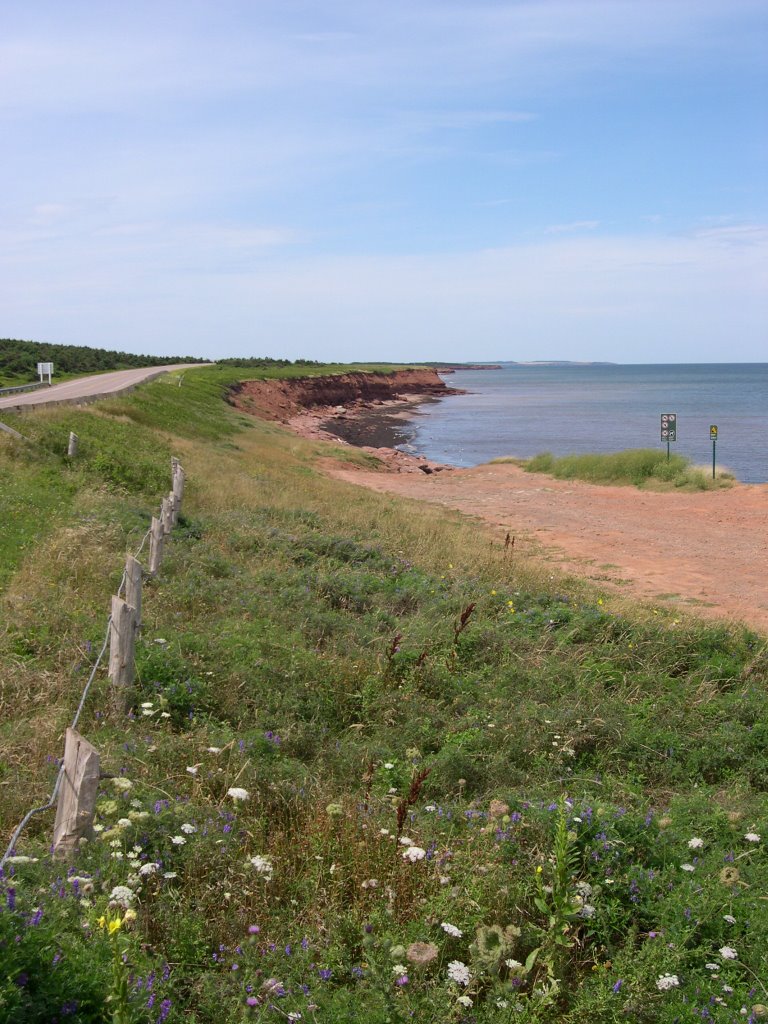
In addition, the coastline is lovely, with blue waves, red clay cliffs and narrow beaches. We drove along the coast in the Cavendish National Park on the way to Green Gables, the historic site dedicated to the writing of H. M. Montgomery, best known for her book Anne of Green Gables.

Montgomery and her creation, the red-haired Anne, are central to PEI. They have given the island its moment of fame and its identity. The book Anne of Green Gables was inspired by a house in the Cavendish area and published in 1908. Green Gables is part of the Cavendish National Park, as is the land where Montgomery grew up with her grandparents. It was interesting to visit. The site and the play that is put on there during summer months are central to PEI tourism.

The AAA tour guide to this part of Canada describes PEI as a quite, laid back place to visit and relax. We know why. In one day we saw much of what was new and different there; in a second day we visited Charlottetown, the capital. It is an interesting town (about 35,000 people) with a pretty harbor, lots of expensive pleasure boats, and some attractive old buildings. We also walked on the Confederation Trail, walking/biking trails along abandoned railroad rights of way.

We stayed in a busy destination campground. Many people place their trailers there for the summer and commute to work or come up on weekends. Their children have summer friends there and they celebrated Halloween the weekend of Aug. 12-13.

We did a lot of relaxing, like AA suggested. Not much else. We never should have planned so many nights there, since we had already had quiet time the previous weekend. Oh well, you live and learn. We got in some good walks. And the people were very friendly and helpful. We also ran into Bruce and Nancy, a couple who full-time that we had met previously in Ottawa and Quebec. We had some time to visit with them.

Unless you have traveled with animals, you can not imagine our trip to PEI from Nova Scotia. We drove about an hour to the ferry. PC and Partner ride in the truck when we are driving. Then we put them into the trailer while we waited for the ferry to arrive and for the 75-minute ride across the Northumberland Strait. As soon as possible after driving off the ferry, we stopped and moved the cats back into the truck for the hour-long drive to our RV park. We have a litter box in the truck. In the next 20 minutes we had one puke (Partner was apparently seasick), pee and two poops. Then, have you heard the term “hissy fit”? We had, but we had never fully experienced one till we were slowly driving down a bumpy road to the campground. Partner had had enough. He sat in my lap growling and hissing for 2-3 minutes. I think a hissy fit is the cat version of a temper tantrum.

Monday, August 07, 2006

New Brunswick

For several weeks now we have been vacationing with Canadians. We have been staying in RV parks and state parks where the locals spend their weekends, their holidays, or the summer season. Canadians who don’t have cottages buy an RV and park it somewhere they can stay for the summer or on weekends and holidays. We have encountered very few RVers who are traveling and seeing different parts of the country. Most of those in these parks live within a few miles (or kilometers), or at the most somewhere within the same province. We’ve known a few people in Colorado who owned cabins or condos, but we’ve never before experienced this kind of RV park. It gives us a real insight into a different lifestyle.

When we left Quebec we drove through an incredibly beautiful Matapedia valley where we saw lovely farms with lush green, long narrow fields bounded by bushes and dotted with large rolls of cut hay covered in white plastic. Then we followed the Matapedia River, obviously a mecca for fly-fishermen. There was even an Orvis shop on one town along the way.

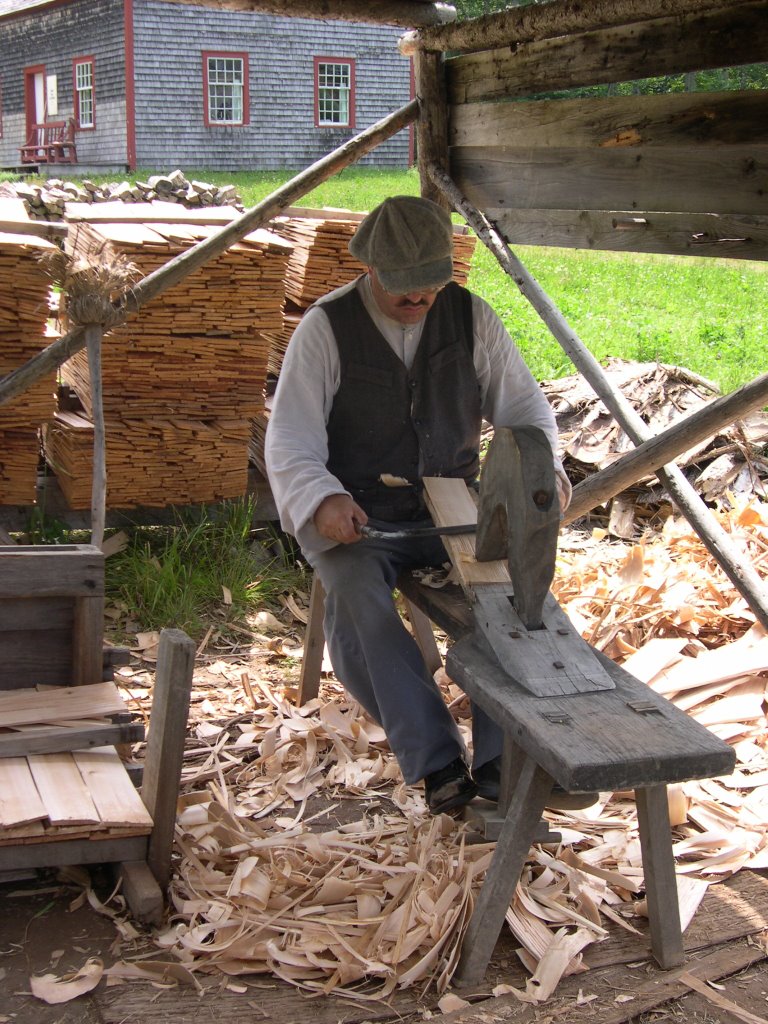
Our first stay was at Parc Malybel on the North Shore of New Brunswick. The province is officially bilingual (French and English) and so signs are in both languages and shop people speak both languages. It has been easier to function here. The highlight of our stay there, in the town of Beresford, was a visit to Village Acadien, a living history park where we could experience the lives of the French who first settled in this part of Canada in the 1600s. The French were defeated by the British twice in the 18th century and the Acadians--French settlers--were deported, forced to leave land and possessions behind. Eventually, after feelings cooled, they were able to come back and live quietly in the rural areas. Not till the 1900s was their language officially accepted. The village had staff demonstrating life at various periods over the centuries and we learned about growing hay in salt marshes, making shingles, tinsmithing and fishing. It was really well done and very interesting.

Canadians come to New Brunswick to spend time on the beaches. We have seen more women in two-piece bathing suits--all day long--who have no business wearing them except in the water. And men going all day in swim trunks or shorts with no shirt on, who would do us a favor by wearing one. We think swimsuits are for swimming, not living in. Oh well, what do we know?

The last few days in the province were filled with some of the problems of living on the road. At our RV park in Cap Pele, we had to move from one site to another in order to extend our stay for two extra days. The second site was right in front of the washrooms and other campers kept walking through it. Then we drove into Moncton to get the mail Eric had sent on to us. We planned to read it while the truck had its 3,000-mile servicing, which normally takes 30 minutes. This time we were at the dealership for 3 ½ hours. Who knows why? We didn't receive that much mail. So we read the local newspaper and got our exercise walking around the parking lot.

Then we drove to St. Martins, where we had reservations for five days. But when we arrived they said they had left a message on our cell phone that we could only stay two days. Our cell phone doesn't work well here and costs 30 cents a minutes, so we haven't checked messages. This is a holiday weekend--New Brunswick Day--and they are full.

The waters off the coast of New Brunswick are warm, "the warmest waters north of Virginia" they say. Ocean breezes make kite flying a natural occupation. Because we have been on the Northumberland Strait and then the Bay of Fundy, the waves have been gentle, the beachcombing uninteresting. But New Brunswick is beautiful and we've seen potatoes growing for the first time--at least that we are aware of. We also bought a cooked lobster, which we struggled to eat in the trailer. Hot lobster with lemon butter is good, but cold lobster without the proper tools to access the meat leaves us cold. We’d rather have a good streak, thank you.

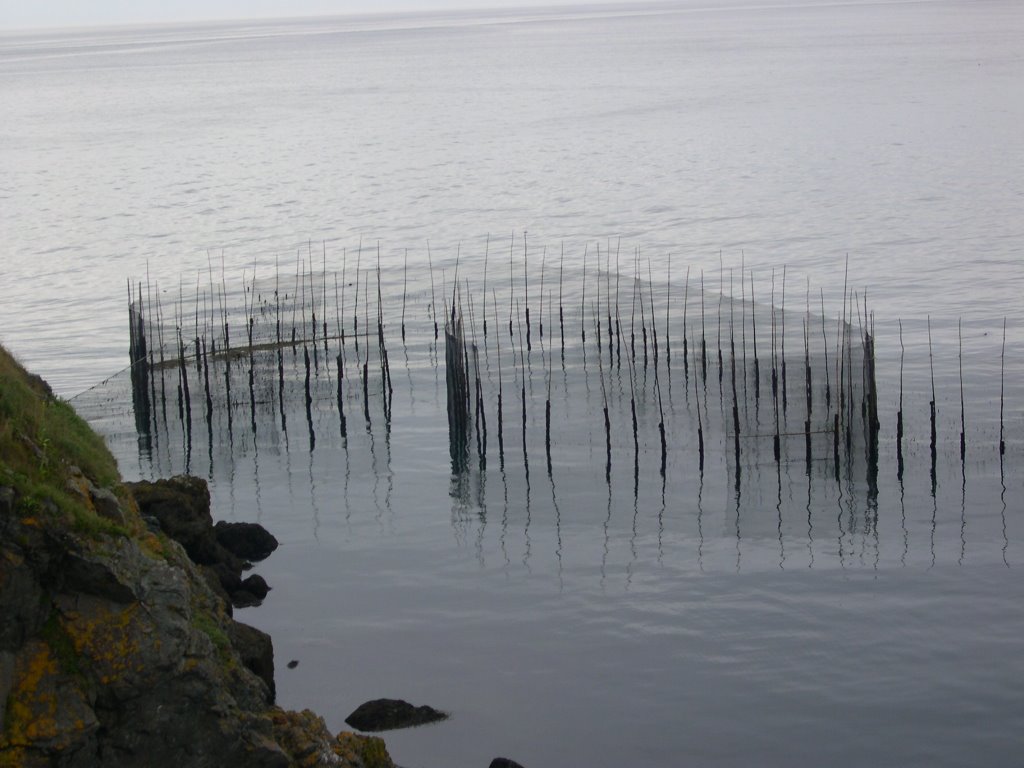
St. Martins is an old shipbuilding community on the Fundy Coast, north of St John’s. One day we drove about 80 miles to Blacks Harbor (the headquarters for fish smoking and herring export) and took the 9:30 am ferry to Grand Manan, the largest of Fundy Islands. The 90-minute ferry ride to the island is free. The return trip, round-trip fare is $10.20 per adult. On the island we hiked to the Swallowtail lighthouse on North Head, then back into town for lunch, then returned on the 1:30 ferry. It was a cool and cloudy day, but we enjoyed the ferry rides and the hike. The wooden lighthouse is called a salt shaker lighthouse. We saw seals around the herring weirs along the Pettes Cove shore and many porpoise during the day.

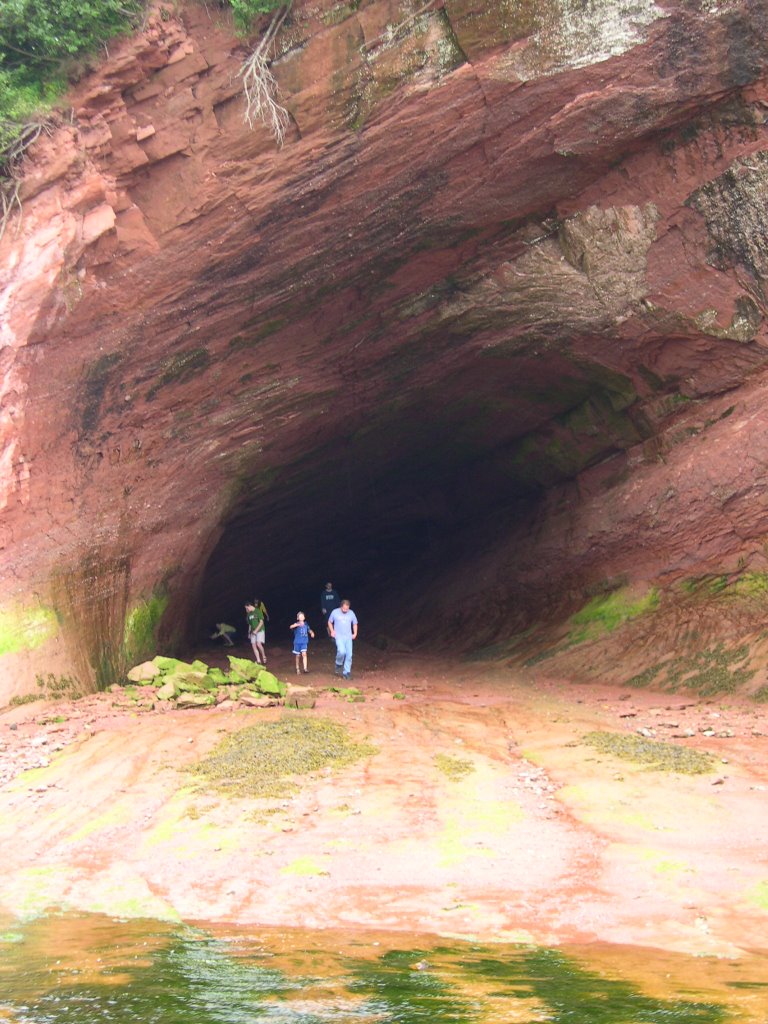
We also hiked the Fundy Coast Sentier trail for about 5 ½ miles. Another misty cloudy day, great for hiking. We felt we were in a rain forest. Then we went to sea caves, carved out by the extreme tides of the Bay of Fundy. Ontario and central Canada has been experiencing a heat wave. We’re glad to be on the Atlantic coast, where it’s been cool.

Liquor stores in Canada are operated by the provincial governments. The names changes from province to province. When we wanted to buy wine in Ontario, it is LCBO--Liquor Control Board of Ontario. In Quebec, SAQ. Don't know what that stands for. In New Brunswick, NB Alcool. What will it be in Nova Scotia? I wonder why anyone would want to buy wine or beer here. Beer is $10-$12 for a six-pack, plus bottle or can deposit. Boxed wine is $30-$40 for four liters.

Wednesday, July 26, 2006

Quebec

We were not looking forward to driving in Quebec, since the road signs are only in French. In Ontario, they were in both French and English. While in Ottawa, we drove across the Ottawa River into Gatineau, Quebec, and had a really hard time navigating. However, our trip from Ottawa to Montreal went without a hitch. The signs had many international symbols on them, the traffic lanes inside the city were clearly marked with straight ahead, right turn only, etc. We were in a real traffic jam, caused by a construction detour, and I was navigating for John with the map in my hand and Partner in my lap. A truck driver looked down and motioned for me to open the window. When I did, he asked if we were lost. I said no. He said just go straight ahead to the tunnel in this lane, then he stopped and motioned us into his lane. A little further on, as he turned off to the right, he motioned us to stay in the lane where we were driving. Sure enough, it took us right into the tunnel under the St. Lawrence River and directly to our RV park. We saw other example of drivers yielding to trucks and large vehicles in Montreal. In Ontario, the drivers were rude. In Quebec, they are speeding just as much and tail-gating, but more polite.

We stayed in Camping Alouette near Montreal, a wonderful park with wi-fi, large sites, inexpensive washing machines and very helpful bi-lingual office staff and publications. We took the subway into town and enjoyed seeing the many old buildings still being used, with modern skyscrapers built next door. Some old buildings (from the 1700 and 1800s) are several stories high, with dressed stone on the fronts and rough stone on the side walls. Another building down the street might be an all-glass 25-story office building. Many of the streets are very narrow, with restaurants, cafes and shops lining them. Finally we came to Place Jacque Cartier, where there were many tourist oriented shops and restaurants, including an amazing number of Italian restaurants. Why here? We don’t know. We ate across the street from the Montreal Town Hall, a beautiful building with green-copper roof.

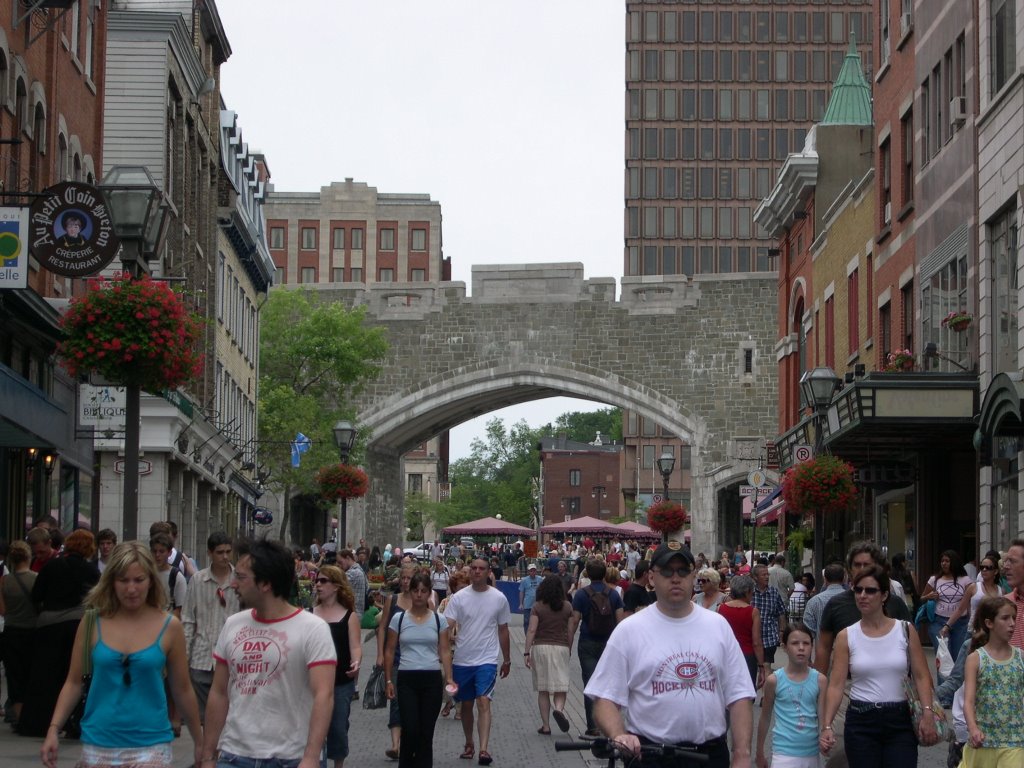
Next we were on to Quebec. What a wonderful old city! We love it. We stayed at Camping Transit south of the city in Levis. The office staff is bilingual, though the brochure is all in French. They are equally helpful and the sites are large. The park was crammed full on Saturday night. Apparently everything in town was as crowded—it is construction holiday. (During the last two weeks of July most construction workers and some of the businesses that support construction shut down for a summer holiday.) The streets in the Petit Champlain and Rue St. Jean areas of Quebec were just as packed and there wasn’t even anything special going on that weekend. We took the ferry from Levis to Quebec, a 10-15 minute ride across the St. Lawrence River. Many people spend their Saturdays bicycling here and a number took the ferry to visit the other side of the river.

We packed our own lunch and ate in a small park, which included sparrows begging for food and a children’s sand box. Quebec is the only walled city in North America north of Mexico. We walked part of the Remparts (French spelling), saw the Citadel, Cathedral of Notre Dame and many interesting shops, as well as two streets lined with artists drawing portraits or selling street scenes. The weather has finally cooled a little and it was a great day.

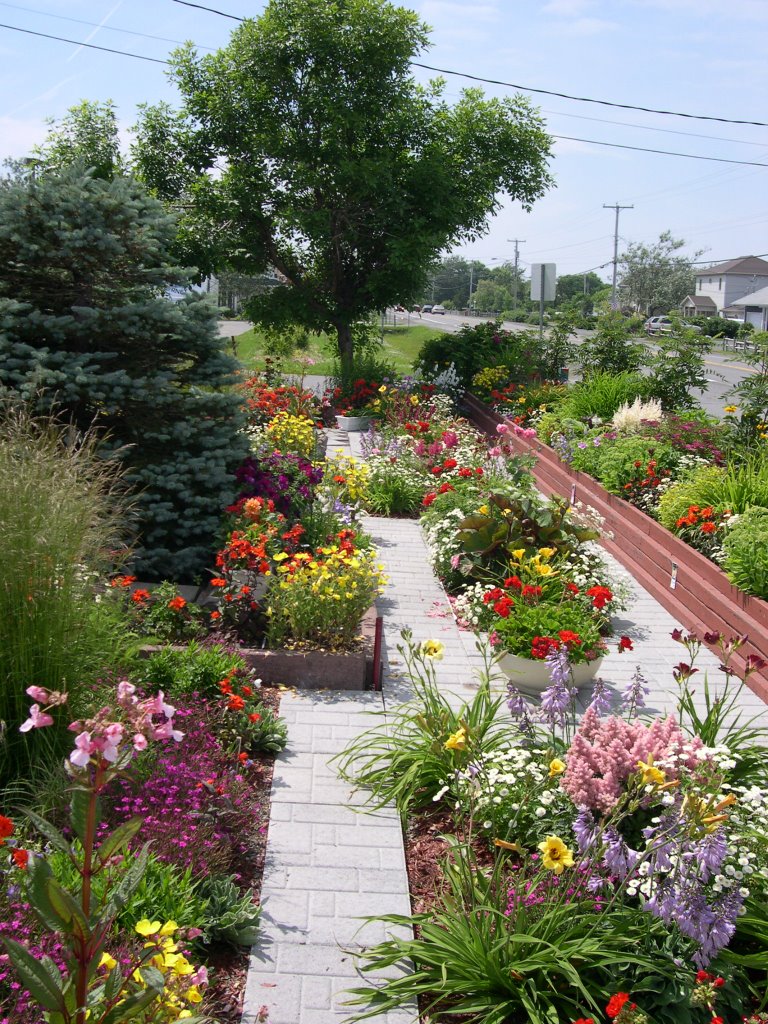
When we left Quebec City, we drove east along the St. Lawrence River to Rimouski, a smallish city right along the river. We can look across the street and see the St. Lawrence, looking more like the ocean. The RV park is full, mainly with people from throughout the Province of Quebec. It is definitely summer holiday time. While in Rimouski we walked about five miles on a lovely biking/walking trail along the river, then drove to Sainte Flavien, a small artist colony about 15 miles downriver, where we visited several galleries and boutiques. Next door to the tourist information office was a house with an absolutely beautiful garden. What a treat!

Some of the differences between the Province of Ontario and Quebec are amazing. Ontario is so oriented to recycling, even provincial parks have bins for metal, plastic and paper. One park even had a sign saying garbage only, no recyclables, on the dumpster. But in Quebec, we had one park with a bin to recycle paper, but no emphasis on metal or plastic, even though we pay a deposit on a 12-pak of Coke.

Carrying out everyday activities in a French-speaking province is a challenge. In Ontario we encountered a traffic sign “Advance green when flashing.” We had to ask what it meant—you can make a left turn on flashing green lights. Then we get to Quebec and the sign says “----- ------ ----- ----- vert.” From buying haricots verts (green beans) we learned what vert means. When the green traffic light flashed and the opposing traffic didn’t move, we decided the French sign meant left turn on flashing green. All pre-packaged food has labels in both French and English throughout Canada. But signs in the aisles, and on fresh fruits and vegetables and some meats are only in French. “Frommes and Legumes” means fruits and vegetables. It makes going to the grocery store exciting.

From Rimouski we are on to New Brunswick.

Tuesday, July 18, 2006


Ontario

The Big Chute is the only marine railway in North America. Here boats are moved from the Severn River to Gloucester Pool on the east side of Georgian Bay, part of Lake Huron. Originally built in 1917 and expanded in 1977, the chute lifts or lowers boats 58 ft. in a carriage which travels on rails, taking the place of a lock. When we were there, we were fortunate enough to see two small pleasure boats hauled up the rails into Gloucester Pool. The chute operates during the warm-weather months and, along with 20 locks, helps commercial and pleasure boats navigate the Trent-Severn Waterway from Lake Ontario to Lake Huron. Georgian Bay is frozen over several months of the winter.

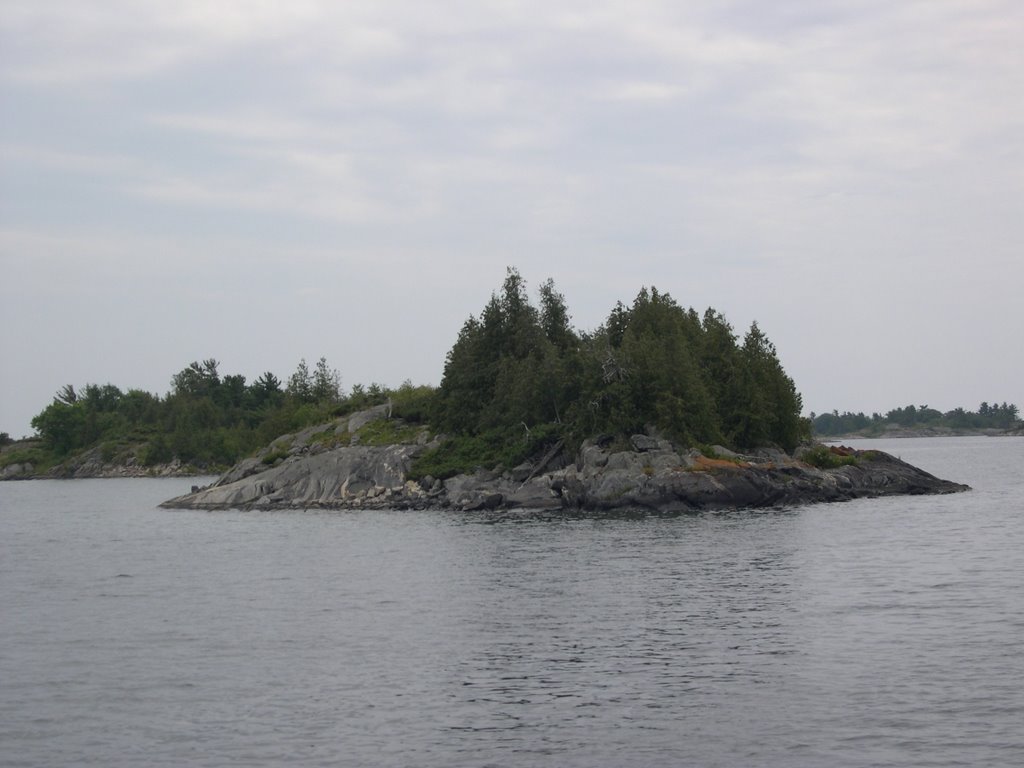
In past travels we had seen Lake Michigan and Lake Superior, but this trip is our first time to spend time along Lakes Erie, Ontario and Huron. We sailed on the Island Princess Cruise out of Parry Sound on a three-hour trip to view many of the 30,000 islands in Georgian Bay. It was a beautiful and relaxing trip on a warm (not hot), partly sunny day. This is cottage country. Canadians don’t have mountain cabins, they have cottages on the lake and Ontario is filled with many more than Minnesota’s 10,000 lakes. The map is dotted with lakes, small and large. Apparently, many Canadians, especially those who live in the Toronto area (the largest metropolitan area in Canada) drive to Cottage Country along Georgian Bay most weekends of the summer. Some rent cottages, some own cottages on rented land, others own islands in the Bay. These islands today sell for $1 million and more. Some cottages have electricity, many use lanterns and propane to meet their energy needs. A fascinating look at life very different from what we know in Colorado.

That is really why we travel—to see what is different. In many ways, Canada is very like the US—divided highways, same language (they spell some things differently), same modern way of life. But speed limits are in kilometers per hour, distances in kilometers, gas is sold by the liter, and some highway signs are different—and almost non-existent on country roads. What are “collector” highways vs. express highways? We don’t know and it made navigating through Toronto on Sunday morning a real challenge, but we made it. We are spending a little over $4 a gallon for gas--$1.08 per liter. When we were in Canada two years ago, the cost was 97 cents a liter, so their costs haven’t increased as much as our since then.

Sometimes your way of life depends on what “hydro” means. If to hydrate yourself is to drink water and hydro electric power is created through the power of water, we thought a “hydro campsite” meant it had water as well as electricity. However, after we had parked the trailer and set up everything in Port Burwell Provincial Park, we learned hydro in Canada (or at least in Ontario) means electricity, not water. We had an electrical connection, but no water hook-up. And we hadn’t filled the tank before parking. So we spent two days dry camping, depending on a 5-gallon water jug. A test, but not bad once we adjusted to the concept. Washrooms and showers were nearby. We also learned that the electrical hookups have been positioned between two campsites, with no consideration for the distance to where a trailer would be parked. At Six Mile Lake we borrowed a 30-ft cord to add to our 25-ft cord; at Bronte Creek we moved to another campsite so our cord would reach. If everything were just like in Colorado, we wouldn’t have a reason to travel here.

We enjoyed visiting downtown Toronto with its old buildings converted to new uses, many new skyscrapers and beautiful gardens. We rode the GO train in from our campsite—a modern railroad that carries commuters and was mostly full at 9:30 am, as well. We visited the St. Lawrence Market, an old building now housing many shops, selling mainly specialty meats, cheeses and bakery goods. We walked to the Distillery District, where old distilleries have been converted to restaurants, art studios and elite shops. Downtown Toronto has many gardens and we saw several. Canadians who have very cold winters spend as much time outdoors during summer as possible and many office workers take their lunch to one of these gardens.
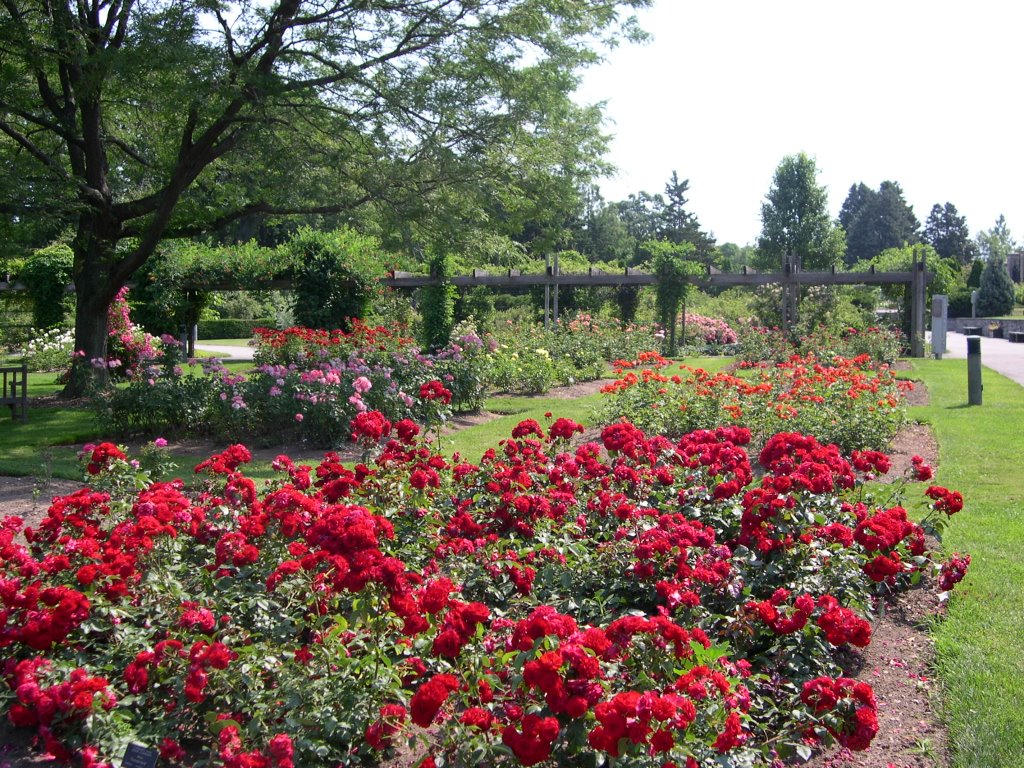
The next day we also visited the Royal Botanic Gardens in Burlington, west of Toronto, where we especially enjoyed the many day lilies and the rose garden. Lakeshore Drive along the edge of Lake Ontario took us by many beautiful homes and gave us lovely glimpses of the lake. It’s a great area, and home to the Canadian headquarters of Ford Motor Company, along with many other international concerns. Toronto is Canada’s financial capital—like New York City.

Ever since Ohio, we have seen orange day lilies growing wild along the roads. As we drove north to Georgian Bay, the highway medians were full of all sorts of wildflowers. Driving east toward Ottawa, the underlying granite often shows as cliffs or rocky slopes. It is a country of lush green forests, rolling hills, vibrant small towns. Every few turns in the road gave another view of a beautiful lake or river. Town names are based on the Huron or Mohawk native inhabitants, English towns or Irish or Polish heritage. Our last stop on Ontario is Ottawa, the Canadian capital.
State Park Camping
We have spent more than two weeks recently parked in state and Corps of Engineer parks. For those who think of RV parks in terms of the KOA along the highway, our experience lately has been very different. Most state and Corps parks have large grassy sites, well laid our so our neighbor isn’t right beyond our awning or looking into our dining room as we eat.
We stayed in one park in Iowa, two in Ohio, and one in Michigan, as well as the Corps park in Illinois along the Mississippi River. In Ohio, neither park was full. In fact, outside Columbus in Delaware State Park, we had the whole area—10-12 sites down one driveway—to ourselves for two nights. Michigan was different, but we were there leading up to the 4th of July weekend. Though full of campers, the sites were still large.
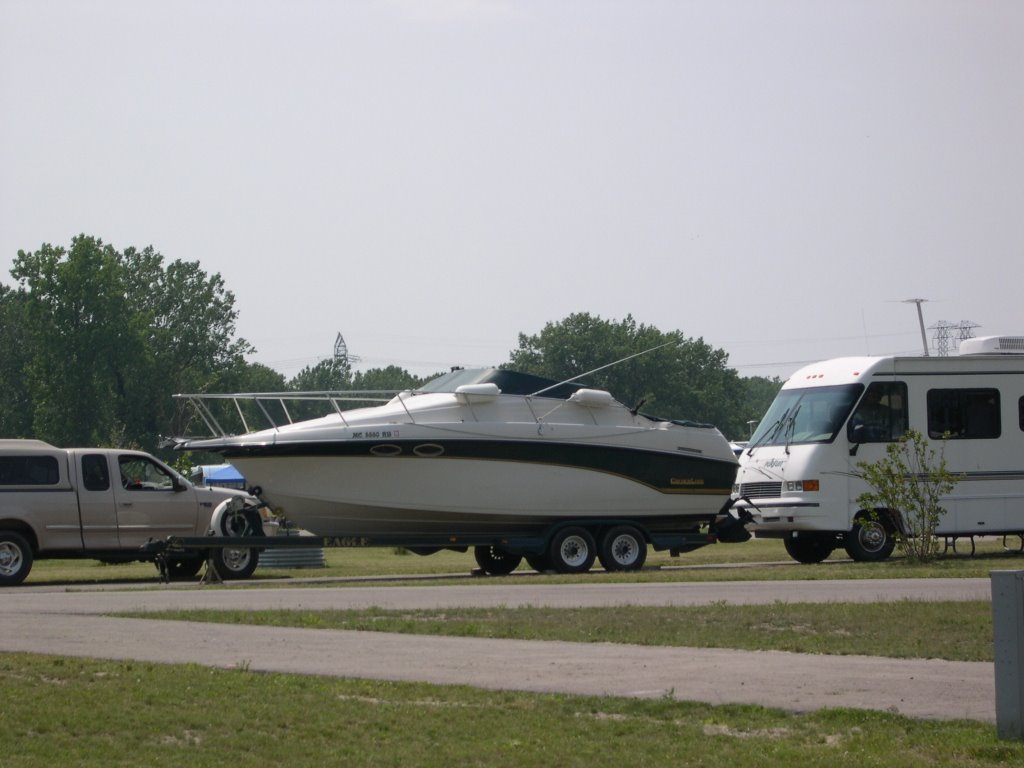
It is amazing how different camping is from one part of the country to another. In Colorado, the parks are tourist destinations. People come from all over the country and the parks are full almost every day of the summer. Reservations are necessary weeks or months in advance. In many states, the parks are used mainly by locals who live nearby. We saw neighbors gathering in Ledges State Park in Iowa. Many of them came numerous weekends of the summer and enjoyed their time together. At Sterling State Park along the coast of Lake Erie in Michigan, most of the campers were from Michigan. They really take their weekend outings seriously—large RVs, screened shelters over the picnic tables, party lights hanging from the awning, extra refrigerators and freezers for the fish they catch, coolers for the beer and soda, decorations like the solar lights that line many suburban driveways and sidewalks. Many Colorado parks focus on fishing, but the boats used on Lake Erie are much larger. There is a steady stream of trucks and boats leaving by 5 am. Camp sites often include 2 or 3 trucks, an RV, a tent, a screened shelter and a boat. No wonder they are so large. We decided campers there buy up scrap lumber from the local Home Depot, based on the stacks of short boards next to the fire rings.
One of the pleasures of our travels is seeing how people do things in other places. We also experience birds and plants and animals we don’t have in Colorado and meet people from all over. In this Canadian park, we have seen Canada Day being celebrated with flags and campfires and family time together, just as we say the people in Michigan celebrating the 4th of July. And we have been surprised at how many Canadian campers display both US and Canadian flags. We haven’t found out why.

Monday, June 19, 2006


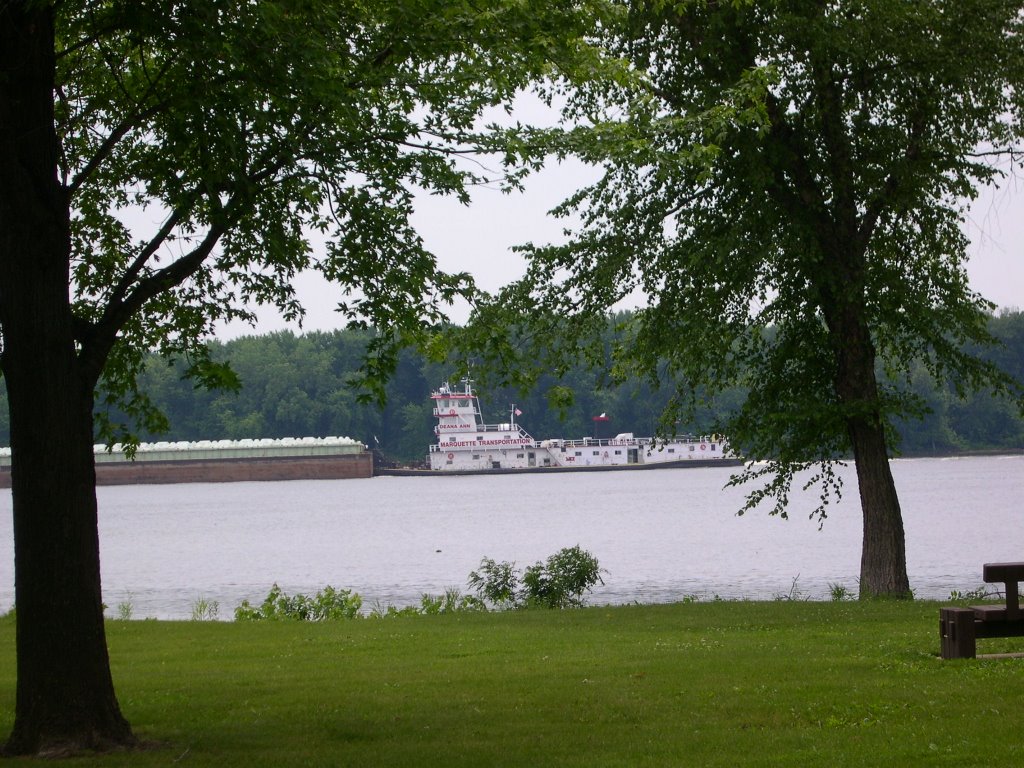
Here we are, parked maybe 75 feet from the Mississippi River between Muscatine, Iowa, and Rock Island, Illinois. Shady Creek Corps of Engineers Park has 50-amp electric hookups and large sites, many with concrete pads, and Silver Leaf Maple trees for shade. We can watch barges being pushed up and down river, as well as fishing dingys and speed boats pass by. It is a great place to spend Father’s Day weekend. And only $9 a night, since we have our National Golden Age Pass, which gives us half-price camping at all federal parks.

So far, June has been a time for family—research about family long dead and visiting with family members who are close and those we hardly know. We visited Lakin, the county seat of Kearny County in southwestern Kansas, where we learned about both scandal and success in the lives of John’s great grandparents. His great-grandmother had an affair with a nearby single homesteader that resulted in a new baby boy. A few years later, his great-grandfather was the first elected Registrar of Deeds in the county. And these grandparents separated or divorced.

Then we crossed Kansas to Olathe, where we found the graves of great, great- and great, great, great-grandparents and learned John’s family were truly Kansas pioneers, as well as “Gone to Texas Pioneers”. (Carol is from a Colorado pioneer family and probably Illinois pioneer family, as well.)

Next it was on to Boone, Iowa, for an Andrews-Whitmore family reunion. (Hazel Whitmore, Fred Andrews and Doug Andrews were sister and brothers and the parents, grandparents and great-grandparents of the 60 plus people present.)

We spent Friday through Sunday renewing relationships and getting to know relatives we’d never met. Our son, Eric, his wife, Liz, and children, Kylie, 6, and John, 11 months, joined us there. Our two families stayed at beautiful Ledges State Park south of Boone. Many of those attending the reunion stayed at the Greater Des Moines “Y” Camp north of Boone. Others came from their nearby homes.

Saturday morning a large group braved record low temperatures (for June 10) to canoe on the Des Moines River. Saturday afternoon a large part of the Colorado Andrews contingent rode the Boone and Scenic Valley Railroad. The reunion crowd at the Y Camp waved as the trained passed our meeting hall there.

After the reunion, we crossed the Mississippi River to Mercer County, Illinois, where Carol’s family has lived at least since the 1860s. There we had lunch with a cousin and his wife who live nearby. We also did family research at the county courthouse and at the Essley Noble Museum. It was back to the Iowa side of the Mississippi for the weekend, to relax and watch the birds and boats on the river. As I write, there is a Great Blue Heron standing just off shore. We drove to Burlington, Iowa, to do more research on Carol’s family. Then we head east across Illinois to Onarga to learn more about John’s family.

Thursday, June 01, 2006


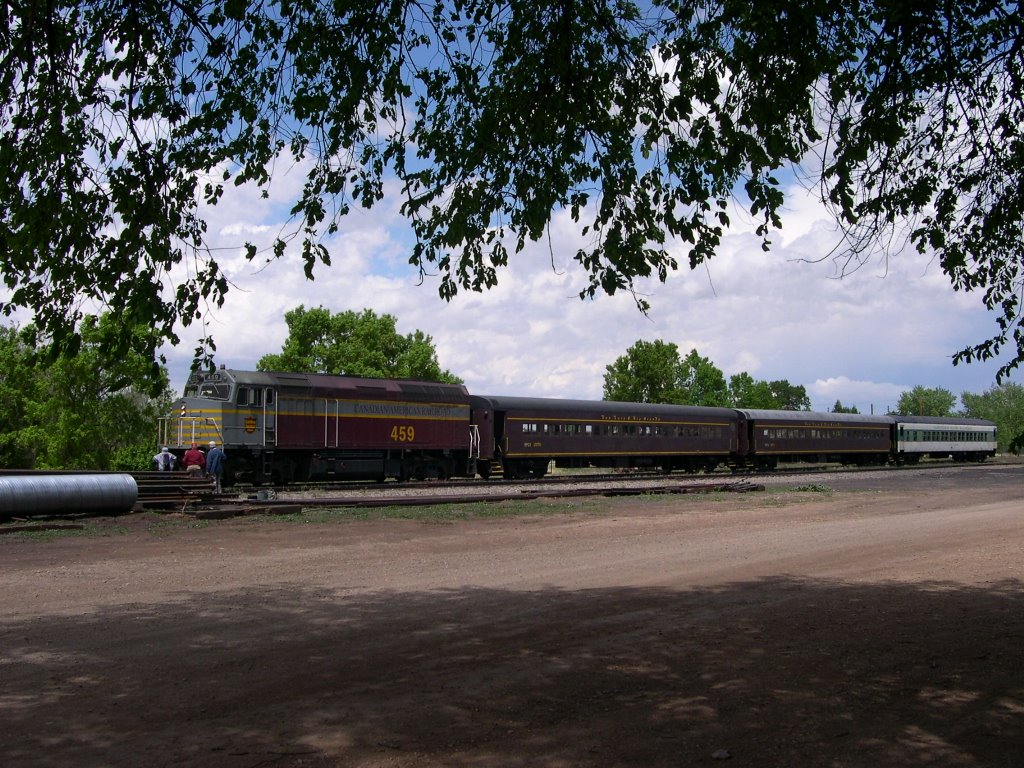
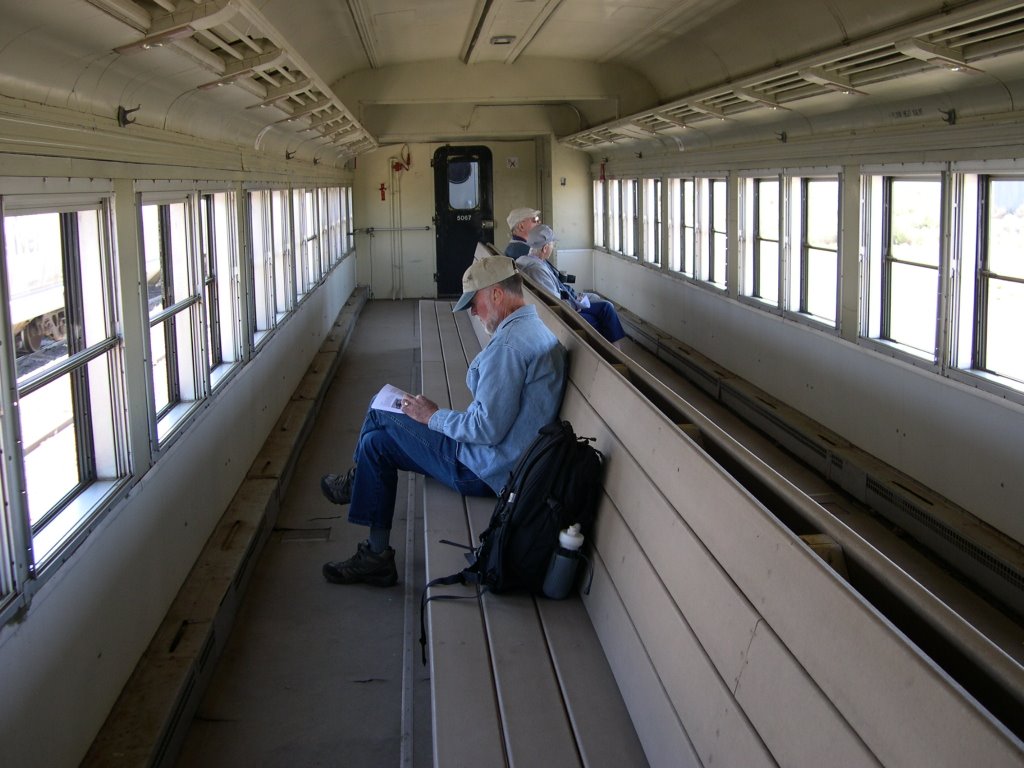
This week we were able to ride on the newest tourist railroad in Colorado during its first week of operation. The Rio Grand Scenic Railroad San Luis Express, operated jointly by the San Luis & Rio Grande Railroad and the Denver & Rio Grande Historical Foundation, is taking passengers over track between Antonito and La Veta in south-central Colorado. These tracks haven’t seen passenger trains for more than 50 years. What a thrill to go that route yesterday.

We boarded the train in Antonito. We were the only north-bound passengers at that point. Another couple had ridden down from Alamosa to ride the Cumbres and Toltec Scenic Railroad, which was departing from Antonito that day.

The train was pulled by Engine 459, owned by the San Luis and Rio Grand Railroad, a 3000 hp engine built for Amtrak and used to haul passengers for about 20 years before being converted for use as freight locomotives. The coaches—we had three on our train—were built by the Pullman Company in the 1950s as commuter cars for the Long Island Railroad.

Because the passenger load was so small—we picked up 37 more people in Alamosa—for a train that would carry 150 or more people, we had lots of time to talk with Train Manager Bob Shank and his brother, who are officers of the Denver & Rio Grande Historical Foundation, a private group that sponsors the passenger travel on these tracks today. Bob and his brother have had many years experience riding passenger trains in Colorado and use their love of trains to bring new opportunities to rail buffs in the state.

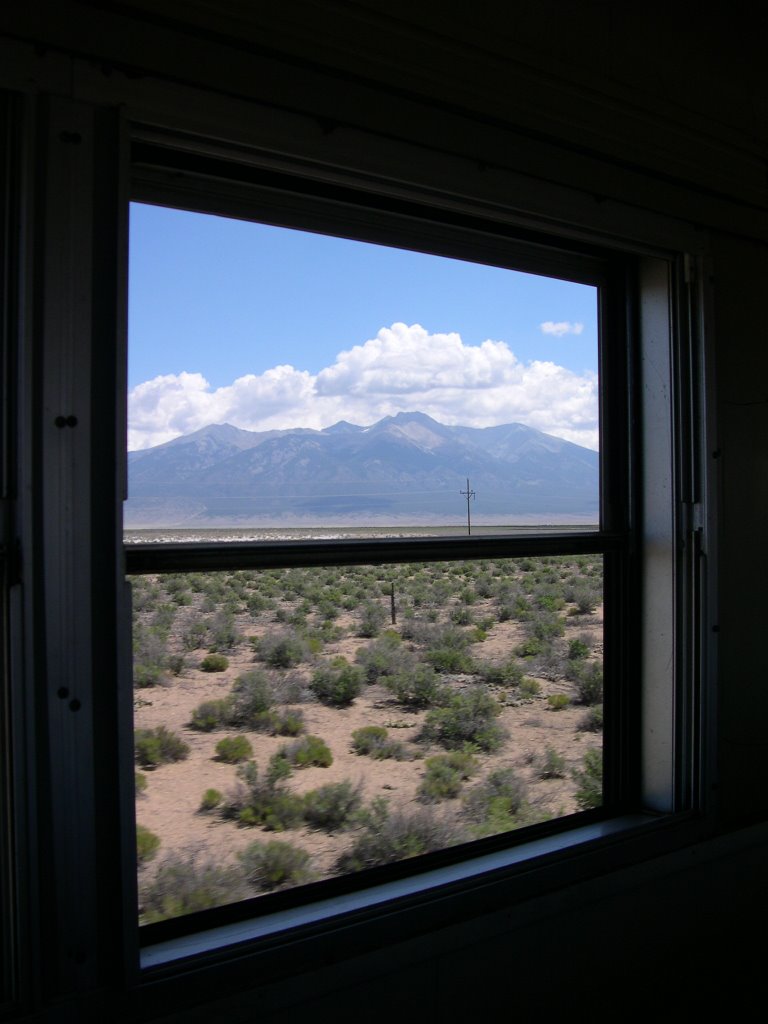
Our trip took us by the Great Sand Dunes National Park outside of Alamosa, gave great views of the San Luis Valley—a major agricultural area in Colorado—and over La Veta Pass. The original narrow gage tracks over La Veta Pass were built in 1878.

We saw remote mountain valleys that haven’t been accessible to tourists for five decades. Along the way there were elk and white tailed deer. From Fort Garland—a US Army fort built before the Civil War and now a Colorado Historical Society museum—to La Veta the scenery was superb. The pine and fir forest also had large stands of quaking Aspen, which will provide wonderful fall color.

In La Veta we had one and one-half hours for lunch and shopping. We had good food and excellent service at the LaVeta Inn, just down the road from the train depot.

The train had been running late all day and by the time we returned to Alamosa we were nearly two hours late. That was complicated by the fact a freight train was blocking the tracks to Antonito because their crew had gone dead—meaning that had worked the maximum 12 hours allowed by federal regulations and had to stop working. This delay also meant our crew would go dead before the train could go to Antonito and return to Alamosa. So we sat in the station, talking with Bob, while a new crew was brought in from six miles away to move the freight train into Alamosa, then take our train down south to Antonito and back. We sure learned a lot about Colorado railroad history while we waited.

Arrival in Antonito was at 7:20 pm—way past the scheduled 5:15. But that is how it goes when you ride on a railroad during its first week of operation. We wouldn’t have missed it for the world and recommend it to all.

Saturday, May 27, 2006

We have two homes—an 1800-sq-ft house and a 5th wheel trailer. We spend six to seven months a year in the trailer. This time we have only been in the house for three weeks, but we still had to bring with us everything we use in both places—computer, printer, most of our clothes, some kitchen gear, perishable food, books, cat food and supplies, mail.

While we’ve been here, we have painted the fence, repaired the front door, cleaned the house so it will be ready to return to in the fall, been to the dentist, spent time with our son, his wife and our two grandchildren, bought new tires for the trailer, and prepared for the coming four months of travel and a family reunion. It has been a whirlwind. In addition, Carol had cataract surgery. We’ve bought gifts for three birthdays coming up over the summer.

This week we have been focused on packing to move back into the trailer. There is so much we can do without in day-to-day living. But some things are essential to us and we don’t want to buy two of everything. Therefore, we pack and move.

Living on the road part or all of the year is only possible with good support from family or friends. We are very grateful for our son, Eric, who watches our house, takes care of getting the sprinkler system turned on and off, collects and forwards our mail, waters the plants. How would we do it without him? Part of our time at the house is devoted to spending quality time with him and his family. We also depend on neighbors who are more than wiling to taken in our recycle just after we leave and keep an eye on the house while we are away.

One of our most valuable possessions is our computer. That is how we keep in touch while traveling—checking on bank accounts, credit cards, investments, paying bills, sending and receiving email. The challenge is to find places to go online while we are on the road. And with the computer goes the printer, cables, inkjet cartridges, etc. Second in importance is a cell phone. What did people do without them? But so many places we visit have absolutely no signal or we are subject to roaming charges. Pay phones are still important. And I guess one advantage of being on the road is not having to be available to others every minute of the day. We have found that a ringing phone at the house feels like a rude interruption.

On Monday we leave for four months of travel and adventure. First stop—a train ride in southern Colorado. Check back later to hear about that.

Thursday, May 25, 2006

Our Cats


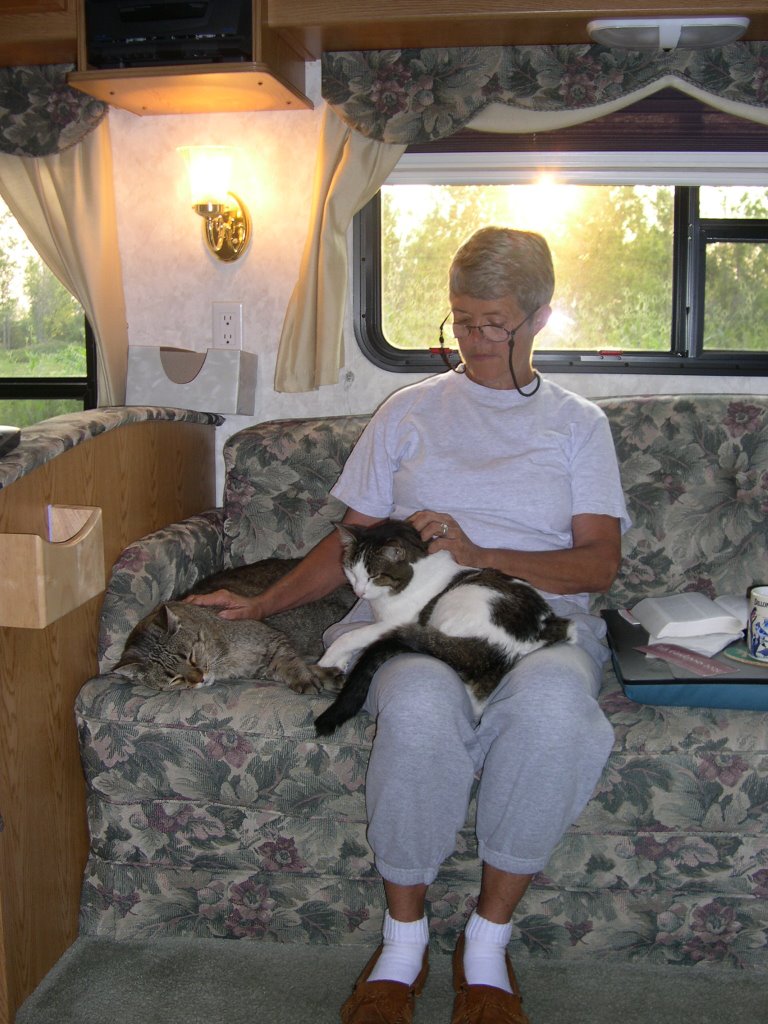
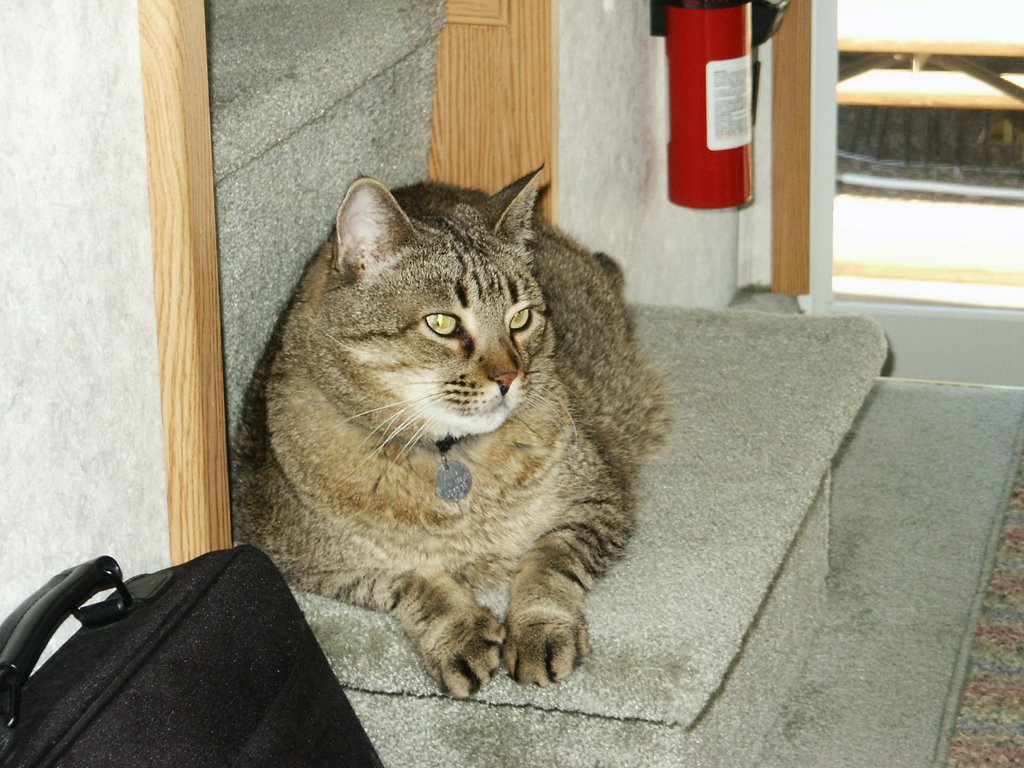
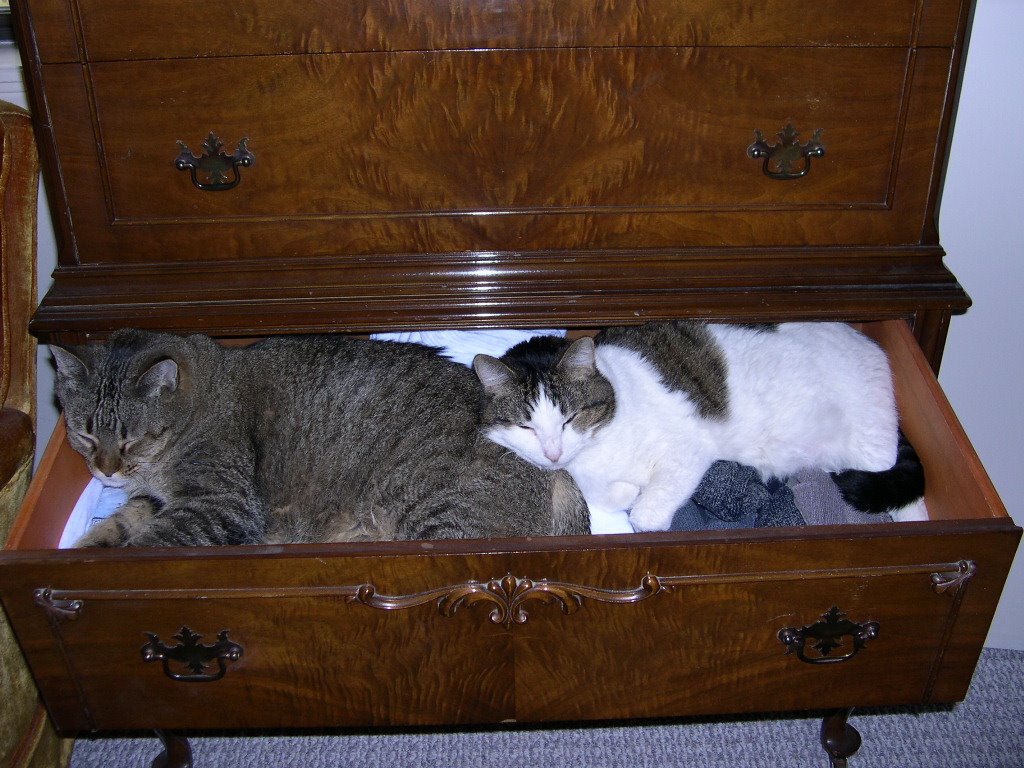
  • Our two traveling companions are 14-year-old PC (Presiding Cat), a gray tabby, and 13-year-old Partner, a black and white American shorthair. The two are great companions and seem to enjoy trailer life as much as we do. Partner has his doubts about traveling and the truck, however.
    Our 5th Wheel


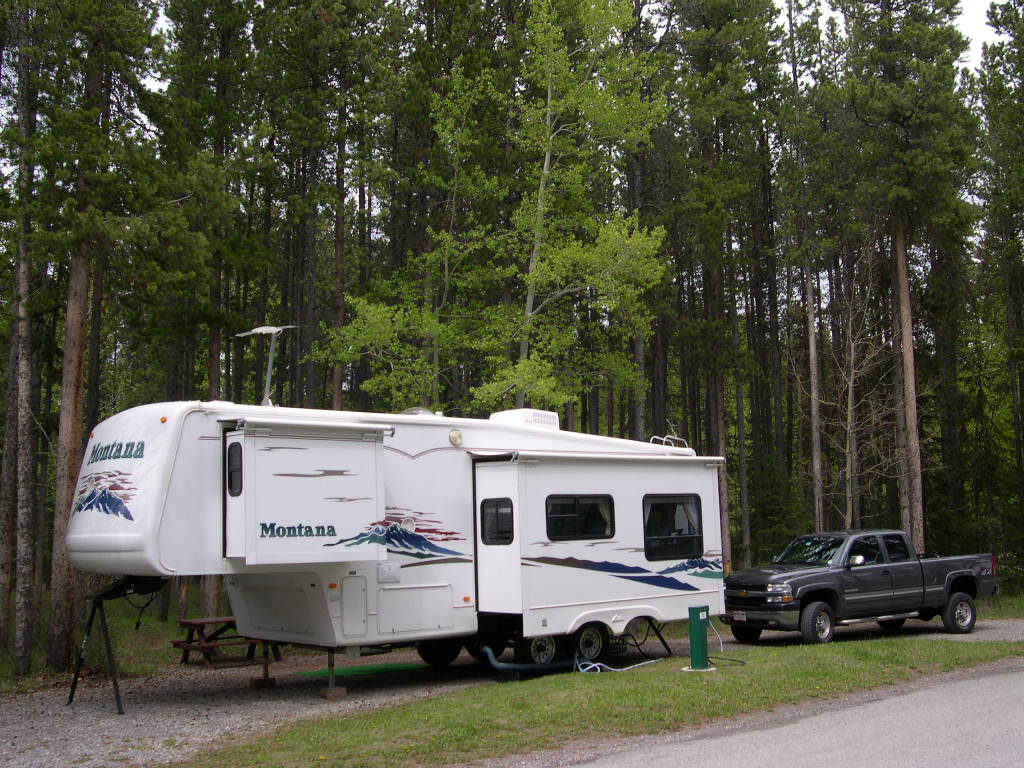
    We travel in a 2003 Montana 5th wheel trailer with two slides. The approximately 280 square feet of space provides everything we need for this lifestyle. We began RVing in 1988 and first owned a Coleman pop-up tent camper. Nine years later we moved up to a 26-ft Komfort 5th wheel, which served us well as long as we were only out a month or two a year. Now we appreciate the extra space of the slides during our six to seven months on the road each year.

    Sunday, May 21, 2006


    We have lived 63 great years and are retired (Carol at age 59, John at 60). We had busy work lives and raised two sons. Shortly before the younger left home, in 1988 we began RVing when we bought a Coleman pop-up tent camper. Travels in that trailer introduced us to a whole new sub-culture of American life. Eight and one-half years later we upgraded to a 26 ft Komfort 5th wheel, then in 2003 to a 30-ft Montana 5th wheel with two slides. Our lives and work limited us to one month and a few weekends a year at first. But as jobs allowed, we extended to two, then three months. We now call ourselves half-timers and spend half or more of the year on the road.

    We travel with our two cats, PC and Partner. We have been to Alaska, British Columbia and Alberta in Canada, Texas, New Mexico, Utah, California, Wyoming, Montana, Nevada and some points in between in the past three years.

    Why do we travel? Perhaps it is in our genes. Carol’s great-grandfather was born in England, immigrated to New York, then settled in Colorado and retired to Oregon. John’s great-grandfather moved from Ohio to Illinois to Texas, back to Illinois, and then returned to Texas. Why should we stay in the same place all the time?


    Before retirement, we had driven to the East Coast and the West Coast. Since retirement we have been to Canada and Alaska, spent three months at Bryce Canyon National Park and explored Colorado, New Mexico and Texas.