Showing posts with label Wyoming. Show all posts

Friday, July 12, 2019

Going to Prison


Thursday we toured the old Wyoming State Prison.  It was housed in this beautiful building.  When we first saw it during a drive through town I had wondered if it was the county courthouse, but I was wrong.


We have toured the Colorado prison museum in Canon City, where Colorado's prisons are still located.  The Old Max building in downtown Canon City reminds us of this one in Wyoming.

This is Lauren, the you women who led our informing and interesting tour of the old prison.  She is standing right of a display that explained how executions by hanging were carried out.  The physician who designed the mechanism didn't think any human should be responsible for executing another.  I can't explain the who process but the convict kicked over a container of water.  When the container was empty, the counter weight tipped a lever and the convict--who would have been standing in the top portion of this gray box on a trap door--would fall through the floor and die.  Some died from a broken neck, the majority by strangling.


Here our guide is showing the small opening in the door where guards could look in on a whole row of cells.  The next photo shows the view through the opening.


This is  the interior of a cell in the oldest portion of the prison.  When the prison was overcrowded, a second bunk was added on.  It would have been terribly crowded for two men.


Here is the Johnson Bar lever which jailers could use to open either one cell or all cells in the block.


This dark corridor shows two levels of cells on the right and a wire enclosed walkway for the guards to see into the cells.


The white  spots on the wall of this cell were made with toothpaste.  The convict who lived in the cell (apparently for many years) used the toothpaste to hold up photos and newspaper clippings he enjoyed.


This man is Art Orcutt,  who was sentenced to three different sentences in the Wyoming as well as time in Leavenworth Federal Penitentiary in Kansas.  During that stay one arm was injured and amputated.  In the Wyoming prison, all inmates were required to work so he was assigned to painting murals.


Lauren showed us the gas chamber.


This is the chair was used four times for executions.


The prisoners facing a death sentence were in cells on death row.  For their hour of exercise each day, one at a time they were allowed to walk back and forth in this barred space.  The man seen in there in the photo was a member of our tour.

Wednesday, July 10, 2019

Photogenic Lander

We spent a couple of relaxing days in Lander as we traveled south through Wyoming.  This small town, where we have been before, is very photogenic and has a very nice Safeway for shopping.

The old downtown buildings are well preserved.


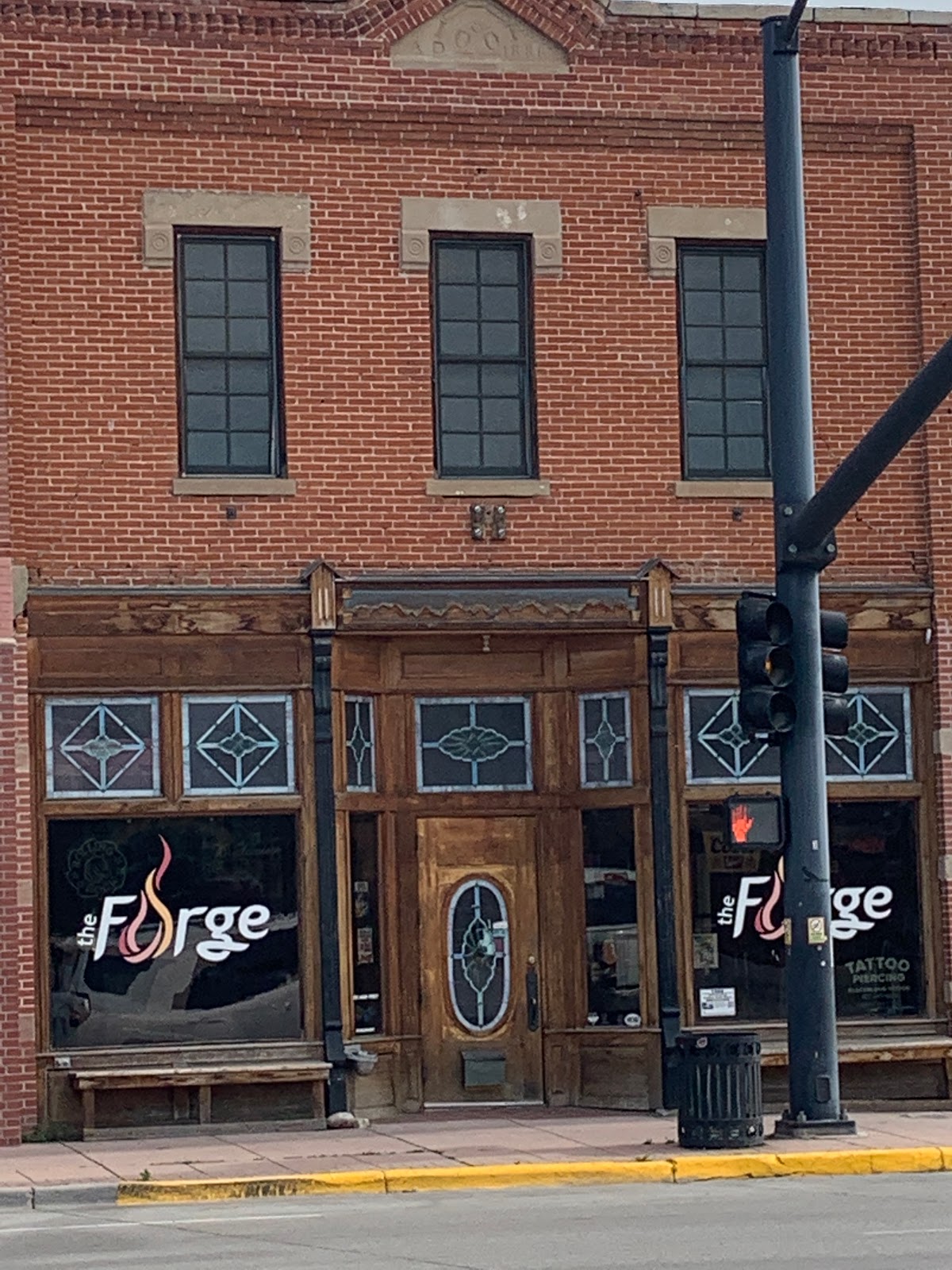
I loved the name of this restaurant.


Look at the leaded windows in this restaurant.


All small towns had a movie theater, back in the day.  This one is still showing movies.


A creative sculptor made this bike and rider outside the local bike shop.


In a park at one end of town they have a series of bronze statues of a cowboy driving some cattle.

Here is a close-up of the cowboy, followed by a look at the colorful hat band he is wearing. I wonder who added that?


I am sure we will stay in Lander again, if we drive this route. Since this is at least the second time I have included these sculptures in a blog, I will skip them if we came here again.

Sunday, July 07, 2019

Big Horn Basin

The Big Horn Basin is a plateau and basin area in northwest Wyoming, about 100 miles wide.  Ten years ago, in 2009, we spent two months volunteering at 7th Ranch in Garryowen, Montana.  When we experienced a long stretch of really hot weather, one of the owners, Sandy, suggested we head south to the Big Horn Mountains in Wyoming on our days off to cool down.  We would drive south to near Sheridan, then head west and enjoy the cooler weather.  At the time, we had no idea that the Big Horn Basin is a major archaeology and paleontology site.

This year we are heading south from Washington, Oregon and Montana through Wyoming to Colorado where we will visit family for nearly two months. After 4 nights in Billings, we spent two nights in Worland.  There we found the Washakie Museum, just down the road from our RV park.  We decided to check it out.

This mastodon statue is a landmark in town--our RV park said to go through town to the Mastodon then look for signs to the park--and it also marks the museum entrance.


Inside we found numerous exhibits of the bones and other fossil remains discovered by paleontologists and archaeologists in the basin.  Dr. George Frison found incredible specimens of the animals that lived there 15,000 years ago.  (He has been given the Society for American Archaeology's Lifetime Achievement Award, the Paleoarchaeologist of the Century Award, and was elected to the Nation Academy of Sciences,  according to Wikipedia.)   Also found was evidence of early human occupation from when the mastodons were hunted,  going forward to the Native Americans that lived in the area and the European settlers who came to raise cattle and sheep.

This is the bird-like foot of the Deinonychus, a dinosaur that shows a link between birds and dinosaurs.


These are some of the bones of mastodons who were driven over a cliff to allow the natives to kill them for food, hides and bones, which they used as tools.


We didn't realize there are lots of petroglyphs in the basin.  The display shown here in part, included lighted examples of the petroglyphs.  We could touch a button next to a description (here a hunter with a shield) to see what it looked like.  Very good idea.


Once settlers discovered that the basin was a good place to raise cows, they came in droves.  This display says that in January 1878 there were no cattle in Big Horn Basin, but by the year's end there was one herd.  Between 1879 and 1882 so many were brought that the number was too large to count.

Next came sheep and the predictable conflict between cattle barons and sheep herders.  This is an example of a sheep herders wagon.  That was interesting since we have seen numerous wagons from afar over the years.


We learned about raising sugar beets in Wyoming, with the Holly Sugar Company of Colorado getting the crop started here.

Since we are Colorado residents and lived most of our life in that state, it was good to learn more about our neighbor to the north. We often pass through here in our RV travels.

Wednesday, September 21, 2016

Traveling South

Since Cody, Wyoming, the location of my last post, we have traveled over 700 miles south to Bayfield, Colorado. The trip took us 10 days, with stops in 4 campgrounds in Lander and Rawlins, Wyoming, and Meeker and Ridgway, Colorado. We have been pretty busy and haven't had great internet part of that journey, so I have a lot to catch up on.

We saw some beautiful western landscapes between Cody and Ridgway.

This is the Wind River Canyon north of Lander.


These electric lines along the road from Meeker to Ridgway create an interesting pattern.


This was the view just a little south of those electric lines.


In Lander we saw this creative statue.


I captured the full moon while in Meeker.


This is the White River, which ran around three sides of our campground in Meeker.

Tuesday, September 13, 2016

As we made our way south and east from Yellowstone, we spent 2 nights in the small western town of Cody, Wyoming, named after William F. Cody, better known as Buffalo Bill. We stayed at the Wyoming Trout Ranch RV a few miles out of town. It was attractive, quiet and mostly empty. And it really is a trout ranch. They have a fish hatchery where they raise several types of trout. They also have tipis, "Glamping" tents, for people who don't have an RV.


We had visited Cody before and explored the Buffalo Bill museum complex. This time we checked out the Old Trail Town Museum which contains the largest collection of local  historic buildings and historic artifacts in Wyoming. They have cabins once used by members of the Hole in the Wall Gang, Kid Curry, and Butch Cassidy and the Sundance Kid. They also have lots of old wagons and a carpenter shop.


There is an old General Store and a Funeral Coach.


We were most interested in the cemetery at the Old Trail Town. Several historic persons have been reburied there, including a buffalo hunter, frontiersman, trapper, two murdered men and one famous murdered woman. In addition, Jeremiah Johnson is buried there. He is of special interest to us because he and John's great great grandfather were both involved in an Indian battle in Montana in 1868. He was made famous in the movie Jeremiah Johnson starring Robert Redford. Redford was a pallbearer in 1974 when Johnson's body was reburied in Cody.


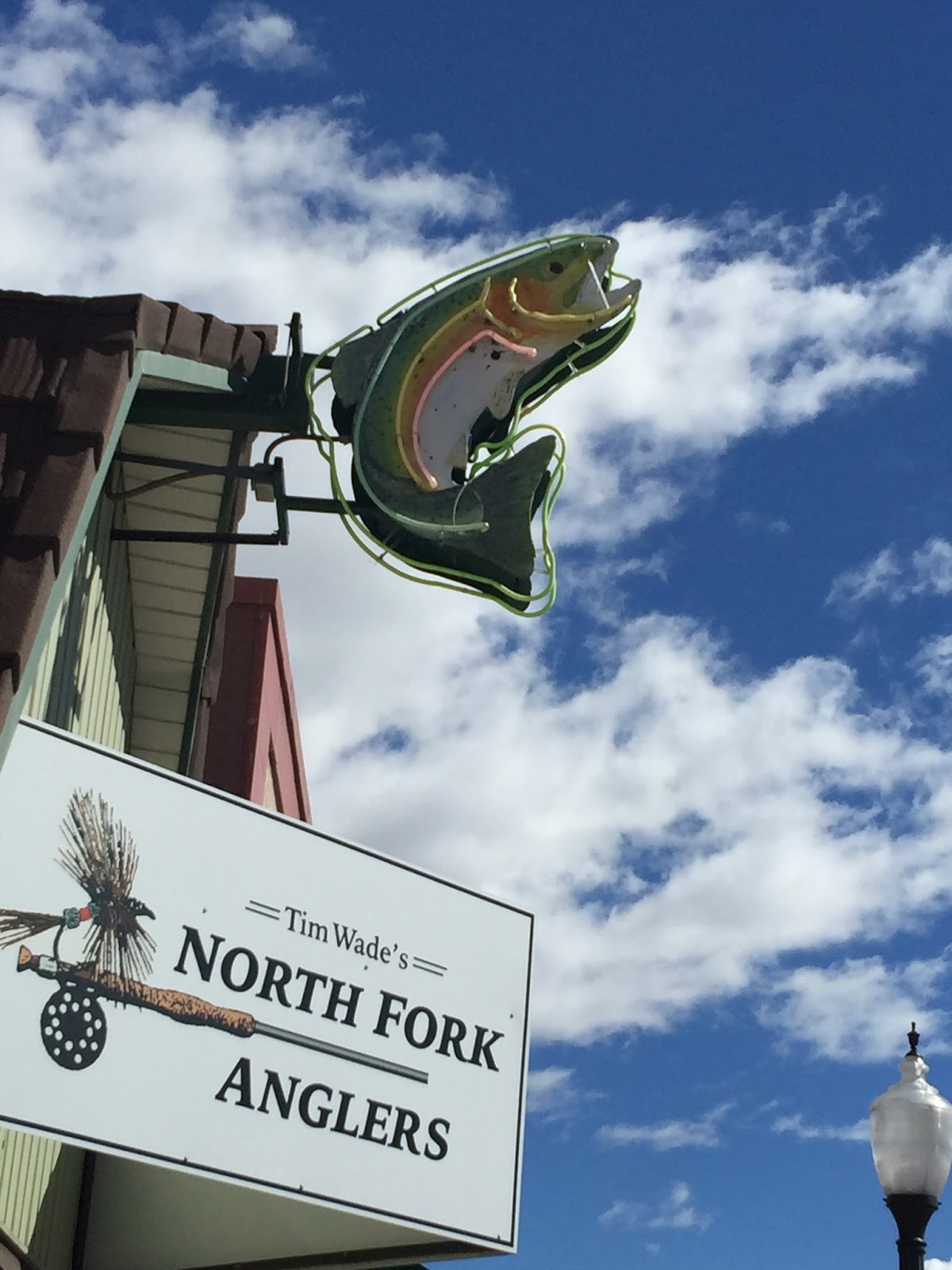
Downtown Cody has a number of attractive old signs. One store has made a bench from a bed headboard and tractor seats.


There are also a number of interesting buffalo statues in town.