Showing posts with label museum. Show all posts

Thursday, December 22, 2016

Don't Miss This

If you visit Fredericksburg, a visit to the World War II in the Pacific and Admiral Nimitz museum complex is a must. During the past year we have been reading a lot about World War I and II. Earlier this month we visited the George H. W. Bush Museum in College Station. But visiting these museums in Fredericksburg showed us we were familiar with the world wars in Europe but not in the Pacific.

This time we learned about the history of Japan and China for the centuries before the wars and gained information about many of the battles held in the Pacific during the first half of the 1940s. Since that is when we were born, we had heard of Midway and Guadalcanal and others but didn't understand them. We learned a lot. In fact we have never spent 4 to 5 hours in museums in one day. It was fascinating.

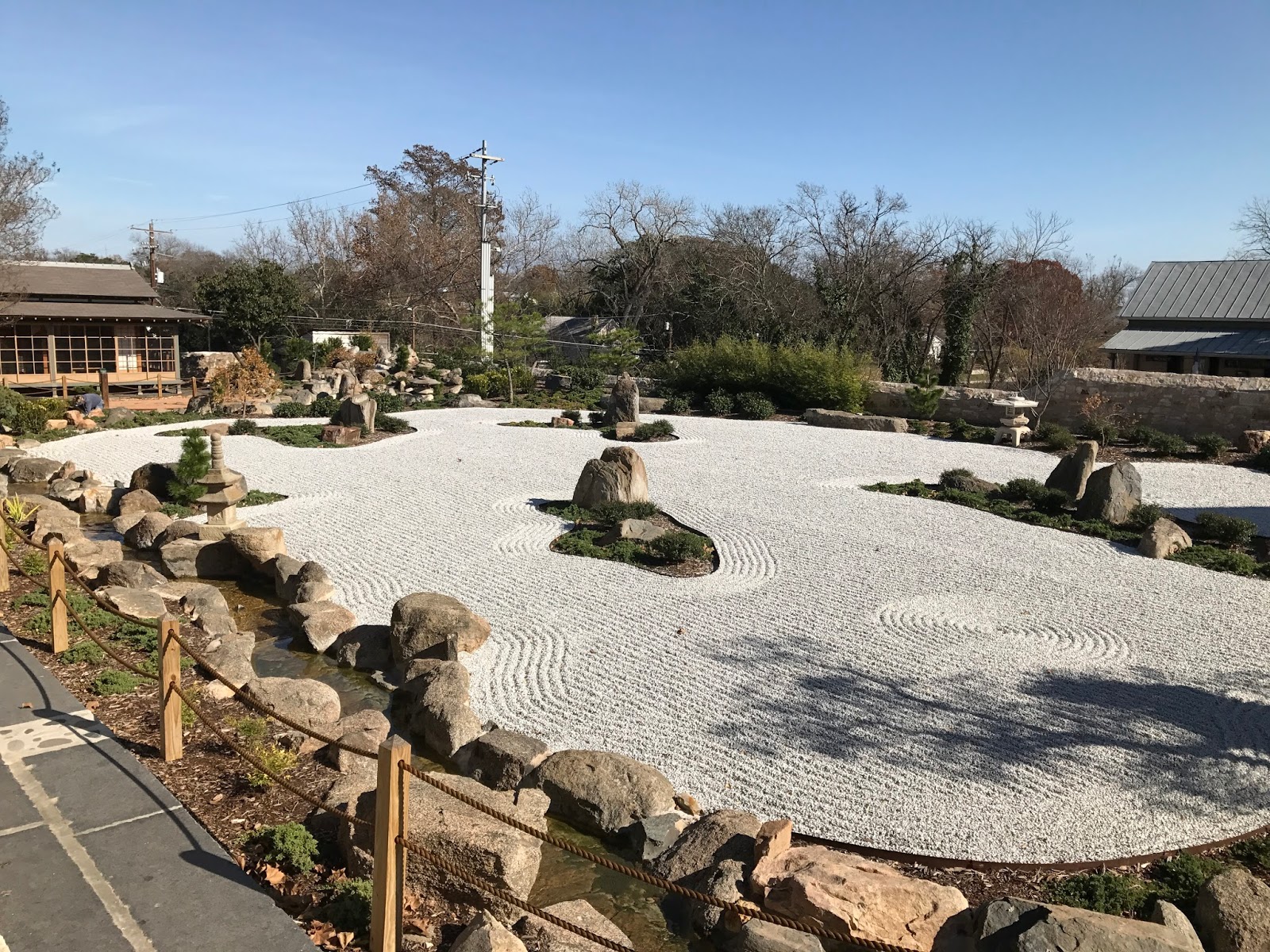
We didn't take pictures except of the Japanese Peace Garden. It was built by the Japanese in thanks for all Admiral Nimitz did to help the Japanese after the war. (Nimitz was born and grew up in Fredericksburg.)  There is a small building beside the garden was was designed in Japan and the parts made there then brought to Texas and assembled by Japanese workers.

It is a very peaceful place.


Thursday, December 01, 2016

A Somber Visit

Wednesday we visited the Holocaust Museum in El Paso, Texas. It was very thought provoking. But first, why is there a there a Holocaust museum in El Paso? After World War II, El Paso became home to nearly 100 Holocaust survivors, including Henry Kellen.  He established the museum.

The museum looks at pre-war Jewish life, the rise of Nazism, the escalation of terror and "The Final Solution" and resistance and rescue.  I gained new insight into the extent of restrictions faced by Jews in Germany, and details of mass killings--I knew about the gas chambers but wasn't aware of the trenches where Jews were shot. I knew a little about resistance to the Nazis in some countries but wasn't aware of the uprisings in Polish ghettos and some of the concentration camps.

These are propaganda headlines and magazine covers with anti-Jewish messages.


Doors of homes where Jews lived were often marked with the German word for Jew.


I didn't realize that the Nazis used the hair cut off Jews to fill mattresses.


Jews had to remove their shoes and clothes in the concentration camps.  These children's shoes were found in one of the camps.


This is the yellow Star of David that was worn by Henry Kellen before he escaped the Nazis in Germany.


These are actual shower heads from a Nazi concentration camp.  I always thought they sprayed out gas.  In truth, they were fake.  Pellets of rat poison were dropped from the ceiling.  When the pellets were exposed to air, they gave off poison gas.


This the front off one of the cremation ovens used in a concentration camp.


If you click on this image you can read about the massive extermination of Jews in European ghettos.


The Nazi guards used "Collective Responsibility" to control behavior in concentration camps.  Click on this photo to see the extent they went to in retaliation of the death of Nazi personnel.  It would have been a very hard decision to revolt or attempt escape under these policies.


For a long time people in the rest of Europe and in the US were blind to what was going on in Germany.  In Germany and the rest of the world, many who at least suspected what was happening chose to do nothing.  This quote we saw at the end of the tour of the museum really spoke to me.


If you are in El Paso, a visit to the Holocaust Museum is well worth your time.

Saturday, May 28, 2016

Oh, the Memories

After we visited the Route 66 Museum in Elk City, we walked next door to the Elk City Museum. The community has constructed a small village with a school, early home, opera house and livery stable so visitors can see what life was like in the last century. Some of the exhibits dealt with the early part of the 1900s, before John and I were born. There was a shoe shop in one corner of the stable. I wondered if the Singer sewing machine had been used to repair harnesses and bridles or if  that was just an available space to display these items.


The interior of the reconstructed Rock Bluff School was interesting.


Both of us remember school desks that looked like this.


In the old house we saw toys like this 1940s era bomb pedal car and these Raggedy Ann and Andy dolls. My grandmother made me smaller versions of these dolls.


Boy did these two items bring back memories.  I had a hairdryer in the early 1960s just like this.  It was THE way to dry my hair, once I put in the curlers.  Once when the heat went off in the dorm my first year of college, I got under the bed covers and blew warm air with the hairdryer hose to warm me up.


The restored house had been used as a funeral parlor at one time. This boxed suit (it opens down the back) and embalming machine brought back memories for John


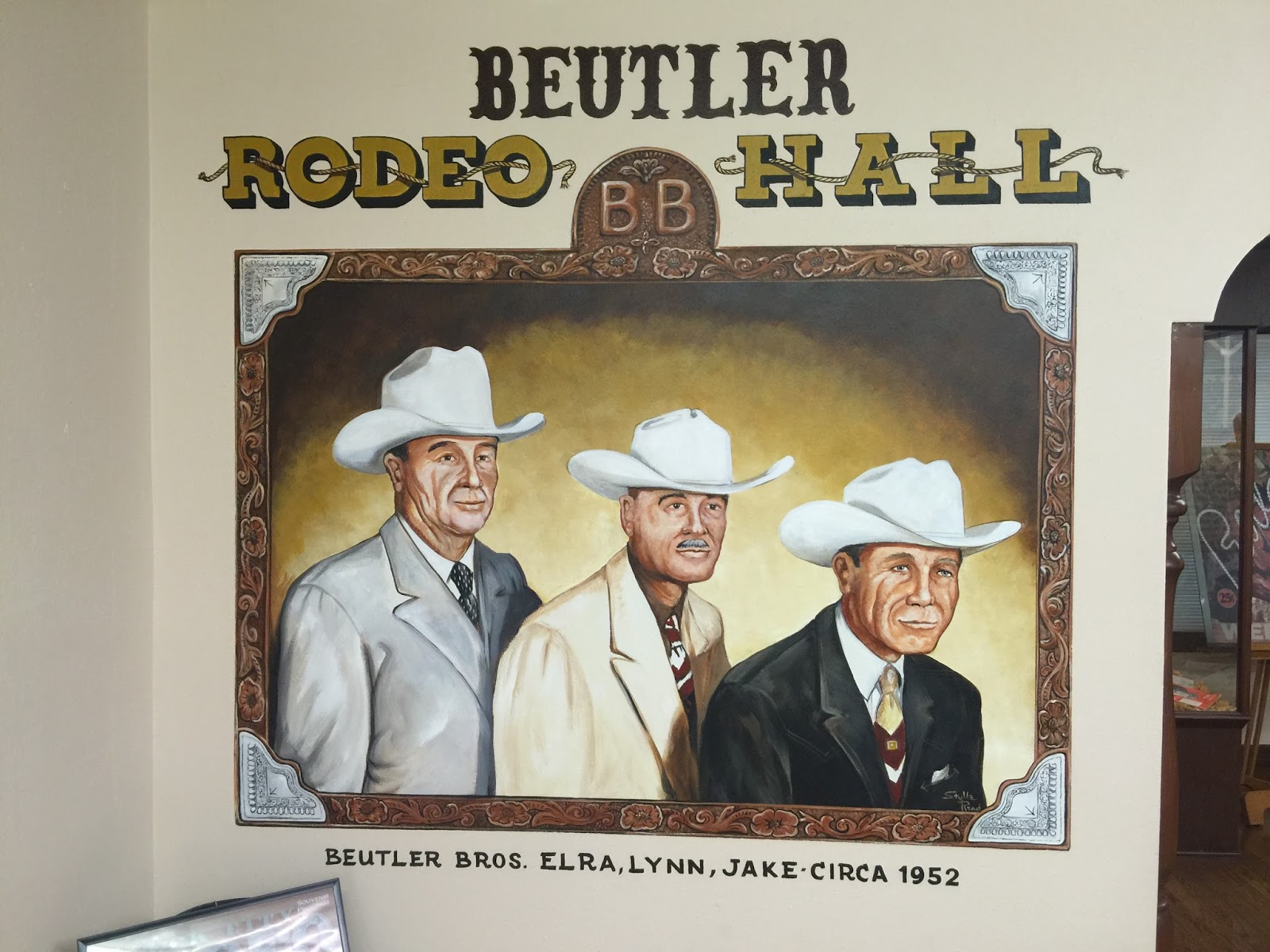
A local family, the Beutler Brothers, was famous on the rodeo circuit both for the rodeo stock they raised and because one of the brothers was a really top rodeo cowboy.


There was also a display of finely tooled leather items, including suitcases, made by George Pulley, a bull rider in the 1930s and 40s.


While at the museum, we also saw this early mail truck.


There were two sets of Burma Shave signs posted in the yard. I couldn't get a whole set in one photo, but one said "Trains Don't Wander All Over the Map Because No One Sits in the Engineer's Lap." The other read, "Guys Whose Eyes Are in Their Backs Get Halos Crossing Railroad Tracks."

Wouldn't those signs be more fun along are interstate highways than motel and restaurant ads?

Tuesday, March 22, 2016

Music and a Meal With Friends

Saturday, we met our friends Ellie and Bill for lunch at the Music Instrument Museum in northwest Phoenix.  I have been wanting to go there for several years and by the end of our visit both of us knew we would return, probably more than once.  The Cafe Allegro in the museum was a great place to enjoy lunch and talk after exploring just one part of the facility.


Bill and Ellie have been there several times before and Bill was anxious to see the special exhibit on Stradivarius.  I know nothing about violins but I do know the name Stradivarius.  The exhibit told us a lot about Cremona, Italy, where he worked and about what made his violins so special.  We learned a lot about how violins are made.  This is a viola, which is a little larger than a violin.


This one is a violin.


The decorations put on violins is very detailed, including strips of design cut into a thin layer of wood, then covered with ebony to fill in the thin grooves.  The same process is use to make the black lines along these edges, then small pieces of bone are put in the larger groove.


We saw stringed instruments--or lutes--from several European countries.  Some are small and simple, others even more richly decorated than the violins we saw in the Stradivarius exhibit.


We also saw this huge guitar--apparently the largest ever made.  These levers are how the strings are depressed.


There are steps to allow access to the levers.


Here you can get a better idea of the size of the instrument.


Each visitors is given a set of ear phones.  When you get fairly close to each exhibit, maybe 5 to 10 feet away, you can hear the music being performed and/or an explanation of what is shown.  Here are Bill and John listening to one of the displays on violins.


We only visited the special exhibit and the section on European instruments.  There are other areas on other continents.  There was no way we could see everything at one time, so we will definitely return.

Thanks, Bill and Ellie, for getting us to finally see this wonderful museum?

Friday, September 04, 2015

Interesting Museum in a Sad Town

We are slowly making our way toward Arizona, waiting for the temperatures to cool down a little. For some reason, we decided to spend 3 nights in Green River, Utah--I guess because the name of the town was familiar. The John Wesley Powell Museum was right across the street. We had both heard about his trip down the Green and Colorado Rivers to explore the area and we have twice been on Lake Powell, so we were eager to check out the museum.

The 20-minute film showed how dangerous the trip was in wooden boats. Most of the narration came from diaries and writings of the people who survived the trip. This panel on the front of the museum shows a boat going through some of the rapids.


The group started with four boats. One was lost early in the trip, as well as many of their supplies. Looking at this replica of the lost boat, No Name, I can hardly imagine going across a quiet lake in it, much less an unknown fast-flowing river.


We weren't aware that Powell had made two trips down the rivers, in 1869 and 1872. On his second trip, he often rode on a chair like this, strapped to the boat. Can you imagine?


This sculpture in the museum gives an idea of how the explorers faced and overcame numerous challenges.


Powell was an amazing man. With almost no formal education, he learned geology on his own and was a college professor in that field  at Illinois Wesleyan University.  He fought in the Civil War, losing an arm during the battle at Shiloh.   During his time in the American west, he became an expert in Native Americans of the region and in their languages. He published several books in that field.

There had been earlier expeditions to explore the river and this unknown part of the American west. Powell was the first person to complete the entire trip from Flaming Gorge in Wyoming clear through the Grand Canyon in Arizona. In addition, some of the Mountain Men had attempted to navigate parts of the river in bull boats, like this.


I enjoyed listening to this Mountain Man, who told the stories of these other river runners.


We were glad to find this museum in Green River. Other than the Tamarisk Restaurant, where we had an outstanding breakfast, there wasn't much to do there. Like I said in the title, it is a sad town. Obviously, it was a major stopping point in years past. Whether I-70 and the fast travel it provided caused a decrease in travelers stopping or what, we saw lots of abandoned motels, gas stations and other businesses. This shows on of the creative uses of an old gas station.


This bank went out of business years ago. At one time, it was used as a souvenir shop. Today it is one of many abandoned buildings in town.


This house has obviously seen better days.


A motel and cafe that are still in business had neat old Route 66-type signs.


It has been many years since this truck has driven down the road.